

If you've ever found yourself staring at patient charts long after your last appointment, you know the feeling. I was scrolling through Reddit the other day and a post from a family medicine doctor about "drowning in charting" just about jumped off the screen. It really hit home. That kind of admin overload is exactly why tools like Abridge have blown up. They promise to use AI to handle the notes and give us our evenings back.
Help me stop drowning in my charting.

Abridge is a solid tool, no doubt, but it’s not the only option. The world of AI scribes has gotten crowded, and there are now a ton of capable Abridge alternatives out there. Some are built for specific medical specialties, while others are designed to help with the operational side of healthcare, like handling patient support or internal IT questions.
I decided to just dive in and test the top contenders myself. My mission was simple: find tools that actually cut down on the administrative busywork, whether it's happening in an exam room or at a support desk. Here's a no-fluff breakdown of what I found, including the features, pricing, and who each tool is really built for.
What are AI medical scribes?
At the end of the day, AI medical scribes (sometimes called "ambient clinical intelligence" tools) are built to listen. They securely record a conversation between a doctor and a patient, and then the AI turns that audio into structured clinical notes, like SOAP notes, that you can pop right into an Electronic Health Record (EHR).
Abridge is one of the big names here, mostly known for creating notes in real-time and connecting with major EHR systems like Epic. The benefits are pretty obvious. These tools can shave hours off the time clinicians spend on paperwork, which we all know is a massive cause of burnout. They can also lead to more accurate notes and, maybe most importantly, let doctors actually look at their patients instead of a computer screen. But as you'll see, just creating a note is only part of the story.
How we chose the best Abridge alternatives
To sort through all the options, I judged each tool on a few practical points. I wasn't just looking for a fancy transcriber; I wanted a solution that makes the workday genuinely less painful.
-
Accuracy and Focus: How well does the AI get the medical terms right? Or for the operational tools, does it understand the difference between a billing question and a scheduling request?
-
Integrations: Does it connect with the software you already use every day? For doctors, that’s EHRs like Epic and Cerner. For support teams, it’s helpdesks like Zendesk and chat tools like Slack.
-
Automation Smarts: Does the tool just write stuff down, or can it actually do things? A good AI should be able to help with tasks like suggesting medical codes, creating orders, or routing support tickets to the right person.
-
Ease of Use: How quickly can you get it working? I gave extra points to tools that are self-serve and don't require you to sit through a six-month onboarding process just to get started.
-
Transparent Pricing: Is the cost clear? I looked for companies with straightforward pricing, not ones with hidden fees or mandatory annual contracts that are impossible to get out of.
Comparison of the top Abridge alternatives in 2025
Here’s a quick side-by-side look at how the top contenders measure up.
| Tool | Best For | Key Feature | EHR / Helpdesk Integration | Pricing Model |
|---|---|---|---|---|
| DeepScribe | High-volume specialty practices | High accuracy & ambient capture | Epic, OncoEMR, iKnowMed | Quote-based, per provider |
| Suki AI | Voice command enthusiasts | AI-powered digital assistant | Major EHRs | Quote-based |
| Nabla | Clinicians needing deep Epic integration | Real-time note generation & coding | Epic, Oracle Health, athenahealth, more | Free trial, then quote via sales |
| HealOS (formerly ScribeHealth) | Budget-conscious small practices | Free sign-up & SOAP note automation | 50+ EHRs | From $49/month |
| eesel AI | Patient support & IT teams | Self-serve setup & workflow automation | Helpdesks (Zendesk, etc.) & Slack | Transparent monthly plans |
The top 5 Abridge alternatives for healthcare workflows
After getting my hands dirty with each of these, here are the tools that really made an impression.
1. DeepScribe
Why it's on the list: In every clinician community I checked, DeepScribe gets mentioned for its accuracy. It's a true "ambient" tool, which just means it works quietly in the background without making you change how you talk to patients. It’s built for busy specialty practices where there’s zero room for error in the documentation.
-
Pros:
- Accuracy is its headline claim, and its notes are built for specialty workflows, especially oncology.
- The ambient tech feels invisible; it doesn't get in the way of a normal patient visit.
- It has two-way integrations with Epic, OncoEMR and iKnowMed, choosing depth over breadth.
-
Cons:
- It's definitely one of the pricier options out there.
- The pricing is a mystery. You have to schedule a sales call to get a quote, which is a pain when you're just trying to see what's available.
-
Pricing: Custom pricing only. From what I’ve gathered from users and competitors, it seems to start around $400 per provider per month for a version that isn't integrated with your EHR, with the fully integrated setups requiring a custom enterprise quote.
2. Suki AI
Why it's on the list: Suki isn't just a scribe; it's more like an AI assistant. You can use your voice to pre-chart and edit notes, and it can stage orders from the patient conversation for you to approve. This makes it a great fit for clinicians who are comfortable using voice commands to get things done.
-
Pros:
- The voice commands are really useful and can do a lot more than just take notes.
- It gives you the choice to generate notes ambiently in the background or through direct dictation.
- Connects with all the major EHRs to pull information in and push notes out, with real-time integrations for Epic, Oracle Health, athenahealth and MEDITECH.
-
Cons:
- It takes a little while to get the hang of the voice command system.
- Like DeepScribe, the pricing is hidden behind a sales call, so you can't compare costs easily.
-
Pricing: Custom pricing, available after you talk to their sales team.
3. Nabla
Why it's on the list: Nabla is a huge hit with clinicians who use Epic. It has a slick integration that uses dot phrases to drop AI-generated notes right into a patient's chart. It’s fast, you can customize it, and it’s all about getting the note finished in real-time, sometimes before the patient has even left the exam room.
-
Pros:
- The real-time note generation is seriously fast and helps you stay on top of your documentation.
- Its Epic integration is considered one of the best out there.
- They also have an API, which is a nice bonus for larger healthcare systems that want to build their own custom AI tools.
-
Cons:
- It's a bit of a newer company, so it doesn't have the same long-standing reputation as some of the others. That gap is closing: Nabla says it's deployed in 130+ health organizations with 85,000+ clinicians.
-
Pricing: Nabla offers a free trial so you can test it out. It no longer publishes a pricing page, so paid pricing comes from its sales team.
4. ScribeHealth
Why it's on the list: ScribeHealth, which now operates as HealOS, appeals because anyone can try it. You can sign up for free and its paid tiers are very affordable. This makes it a perfect entry point for solo doctors or small clinics that want to see what AI scribing is all about without a hefty price tag.
-
Pros:
- You can try it for free before paying, which is enough for a test drive.
- Its paid plans are some of the cheapest on the market.
- It automatically creates SOAP notes and even suggests ICD-10 and CPT codes to help with billing.
-
Cons:
- Direct note transfer and appointment sync with select EHRs are reserved for the $99/month Plus plan; the Core plan works through a Chrome extension.
-
Pricing: Free sign-up is available. The Core plan with unlimited patient sessions is $49 per month, and Plus is $99 per month.
5. eesel AI
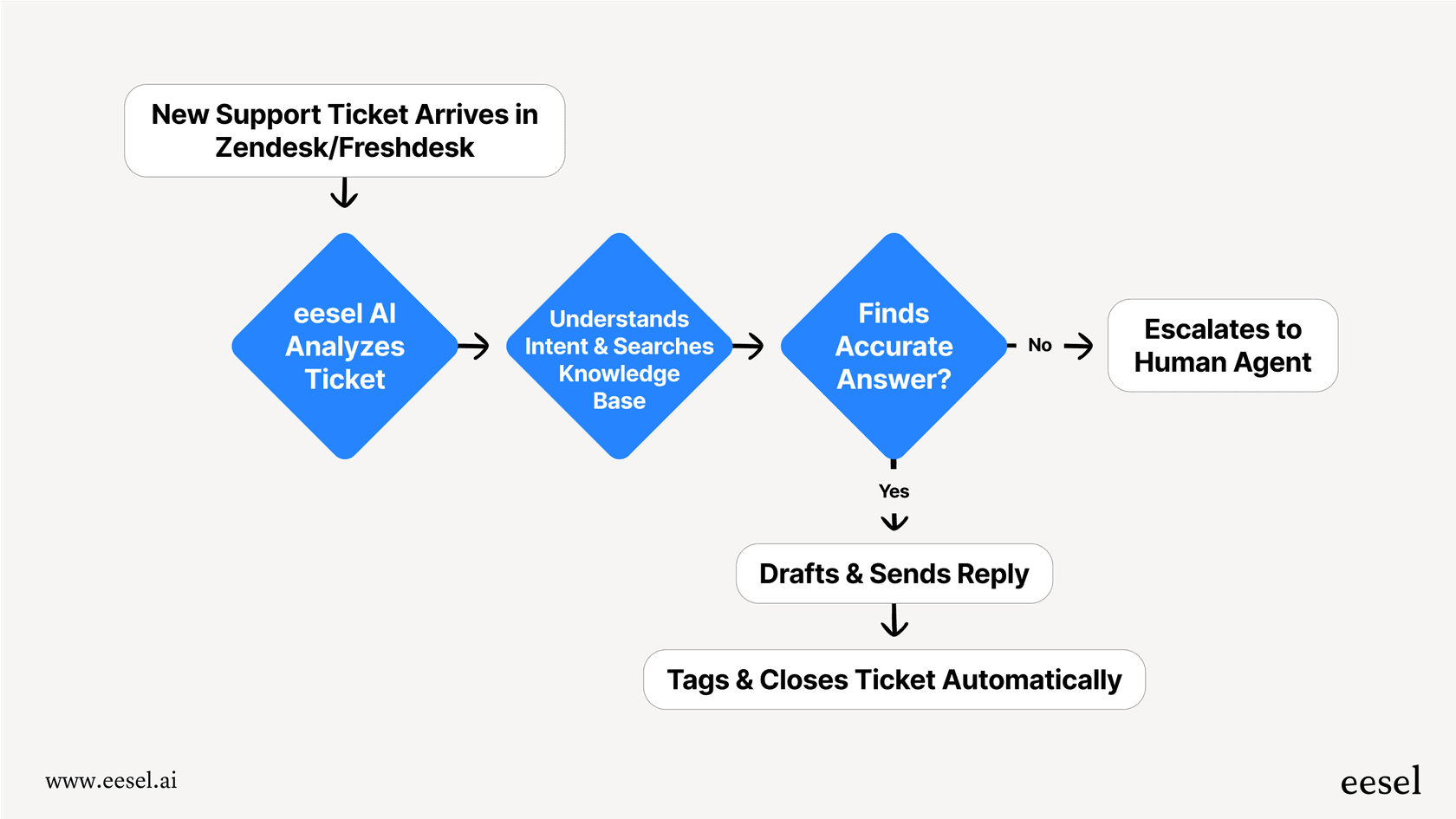
Why it's on the list: Okay, time for a change of pace. While all the tools above are for clinicians, a huge chunk of administrative work in healthcare happens outside the exam room. Think about it: patient support, billing questions, appointment scheduling, and internal IT requests create a never-ending flood of tickets. eesel AI is built for exactly that. It doesn't plug into your EHR; it plugs into your helpdesk and internal documents.
-
Pros:
- Get started in minutes, not months: This is its best feature. It's completely self-serve. You can connect eesel AI to your Zendesk, Freshdesk, or Slack and have an AI agent up and running without ever talking to a salesperson.
- It learns from everything: It doesn't just rely on a perfectly curated knowledge base. You can train it on your old support tickets, internal wikis in Confluence, Google Docs, and more to provide instant, accurate answers.
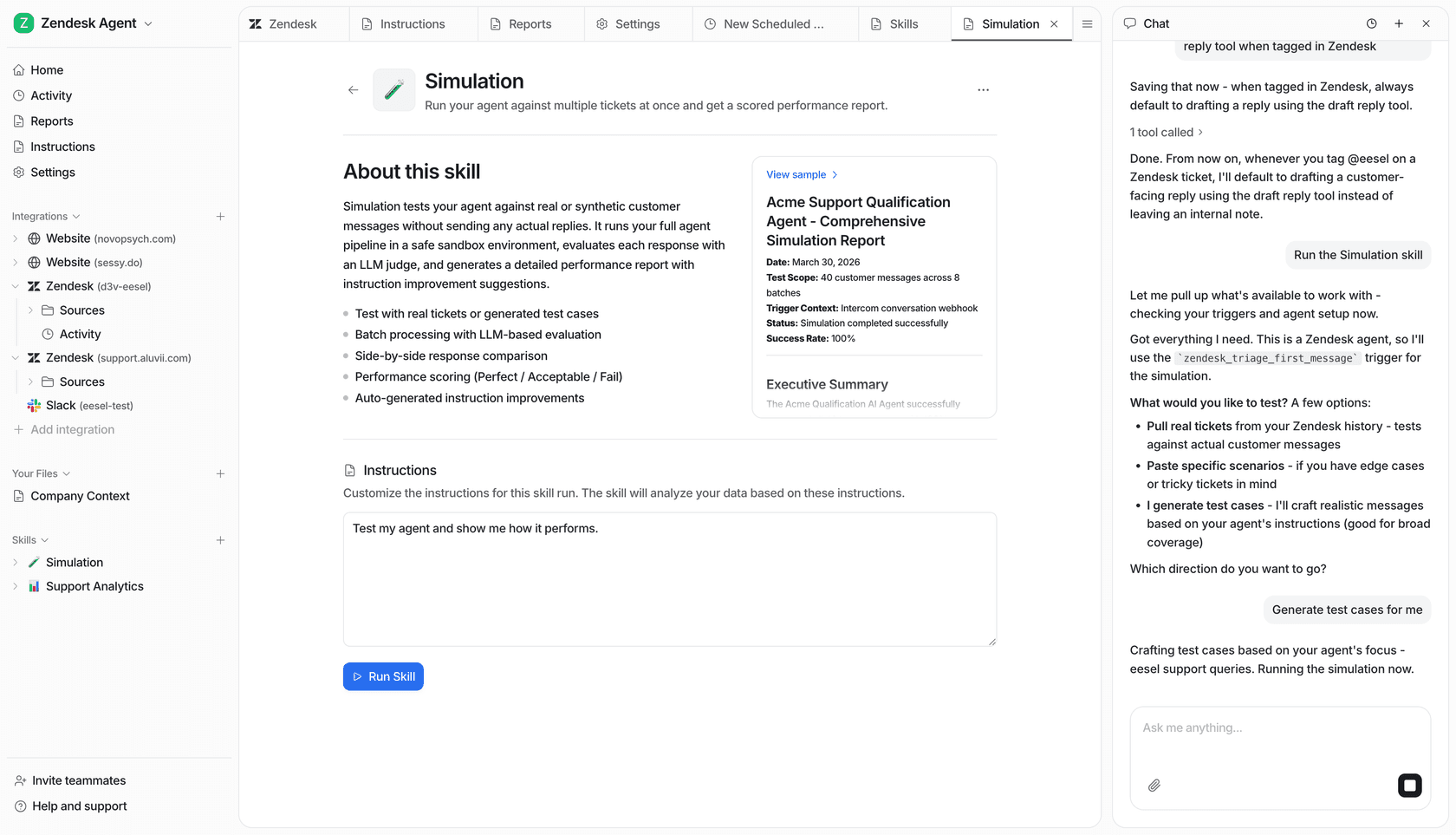
- Test without the risk: It has a simulation skill that tests the AI's answers against hundreds of your past tickets and scores them before you turn it on for real. This is awesome for rolling out automation without worrying about it going rogue.
- Clear pricing: The cost is a fixed monthly price you can actually predict. No weird per-resolution charges that punish you for having a busy month.
-
Cons:
- This is not a medical scribe. It doesn't connect to EHRs and isn't built to create clinical notes from a doctor-patient conversation.
-
Pricing: A free plan includes 100 credits, and the Teammate plan starts at $299/month for 500 credits, where a ticket or chat is 1 credit, with unlimited agents and seats. HIPAA, with a signed BAA, is an add-on arranged with sales.
Beyond the exam room: Choosing the right Abridge alternatives
After looking at all these tools, it's obvious that a modern healthcare practice needs two different kinds of AI to really get a handle on burnout.
1. Clinical Documentation AI (Abridge, DeepScribe, etc.) These tools are made specifically for the clinician-patient chat. They live in the EHR, are obsessed with medical accuracy, and have to be HIPAA-compliant. Their one and only job is to perfect the clinical note.
2. Operational Support AI (eesel AI) This type of AI is for everyone else: the patient support reps, billing folks, IT helpdesk staff, and HR teams. It lives inside your helpdesk (like Zendesk) and chat tools (like Slack). Its job is to handle things like routing tickets, answering questions about bills, helping patients book appointments, and helping internal staff find information without having to ask someone.
Trying to use a clinical scribe to answer a billing question is like using a scalpel to open a letter. It’s just not the right tool. The most efficient places I've seen are using both types of AI, which frees up time and lowers stress for the entire organization.
Reclaim your time with the right Abridge alternatives
The market for Abridge alternatives is filled with some fantastic tools, but the "best" one really comes down to what problem you're trying to solve.
For clinicians getting buried by clinical notes, specialized scribes like DeepScribe and Suki are a direct solution right inside the EHR. But for the operational teams that are dealing with the constant stream of patient questions and internal requests, you need a different approach.
That's where eesel AI comes in. It offers a refreshingly simple, self-serve way to automate your support workflows in minutes. By connecting to the helpdesk and knowledge sources you already have, it gives your non-clinical teams the same kind of AI-powered boost that was once just for doctors and nurses.
Ready to see how much time your support team could get back? Most teams have their first AI agent live within 30 minutes with eesel AI.
Frequently asked questions
What are the key differences between the clinical and operational Abridge alternatives mentioned in this review?
Clinical Abridge alternatives, like DeepScribe and Nabla, focus on generating accurate medical notes from doctor-patient conversations and integrating with EHRs. Operational alternatives, such as eesel AI, are designed to automate tasks for non-clinical teams by integrating with helpdesks and internal knowledge bases.
How do I determine which of the clinical Abridge alternatives is the best fit for my medical practice?
Consider your practice's volume, specialty, and existing EHR system for seamless integration. Also, evaluate if you prefer ambient note-taking, voice commands like Suki AI offers, or real-time note generation with deep EHR integration as seen with Nabla.
Which of the Abridge alternatives are most suitable for automating tasks for patient support or internal IT teams?
eesel AI fits patient support and internal IT teams. It integrates with helpdesks like Zendesk and communication tools like Slack to answer questions, route tickets, and automate workflows using your existing knowledge sources.
What types of pricing models should I expect when looking into different Abridge alternatives?
Pricing models vary widely, from custom, quote-based plans (DeepScribe, Suki AI) to flat monthly plans (HealOS, formerly ScribeHealth, from $49/month) and transparent monthly plans (eesel AI). Some tools, like HealOS and Nabla, let you try them for free first.
How important are integrations with existing systems when evaluating Abridge alternatives?
Integrations are crucial for efficiency. Clinical Abridge alternatives must connect seamlessly with major EHRs like Epic or Cerner, while operational tools need strong integrations with helpdesk systems and internal chat platforms to automate tasks effectively.
How accurate can I expect the AI-generated notes to be from the leading Abridge alternatives?
The leading Abridge alternatives, especially those for clinical documentation like DeepScribe, are built specifically for clinical conversations and aim for high accuracy in generating clinical notes. While highly reliable, it's always good practice to review and verify AI-generated content.