


"Where is my order" is the ticket AI was made for
Across nearly every ecommerce support call I sit in on, the same three queries dominate the queue: order tracking, refunds, and unsubscribes. One multi-brand operator I spoke with, running 500+ tickets a day across roughly 70 countries, described their volume as almost entirely repetitive refund, unsubscribe, and order-tracking requests. An ops lead at a DTC supplements brand doing around 7,000 tickets a month on Gorgias was blunter: their team couldn't keep up, and they needed AI to auto-resolve at least half of email volume, specifically "WISMO, subscription management, and basic product questions."
WISMO ("where is my order") is the industry shorthand, and it is the perfect candidate for automation for three reasons:
- It's high-volume and repetitive. The same question, thousands of times, with the answer sitting in a database.
- The answer is factual, not judgment-heavy. Unlike an angry escalation, an order-status reply has one correct answer at any moment.
- It's the question customers most want answered instantly. Nobody wants to wait 12 hours to find out a parcel is two days away.
The catch is that "the answer sits in a database" is also why a naive chatbot fails at it. The status changes every few hours, it's different for every customer, and it lives in your order system, not your FAQ.
Why a doc-trained chatbot can't actually track orders
Most "AI support" tools are, under the hood, a retrieval system over your help center. Feed them your articles and macros, and they answer policy questions well: return windows, shipping zones, sizing guides. Ask one "where is my order #10432?" and the best it can do is repeat the generic shipping policy, because that order doesn't exist anywhere in the documents it was trained on.
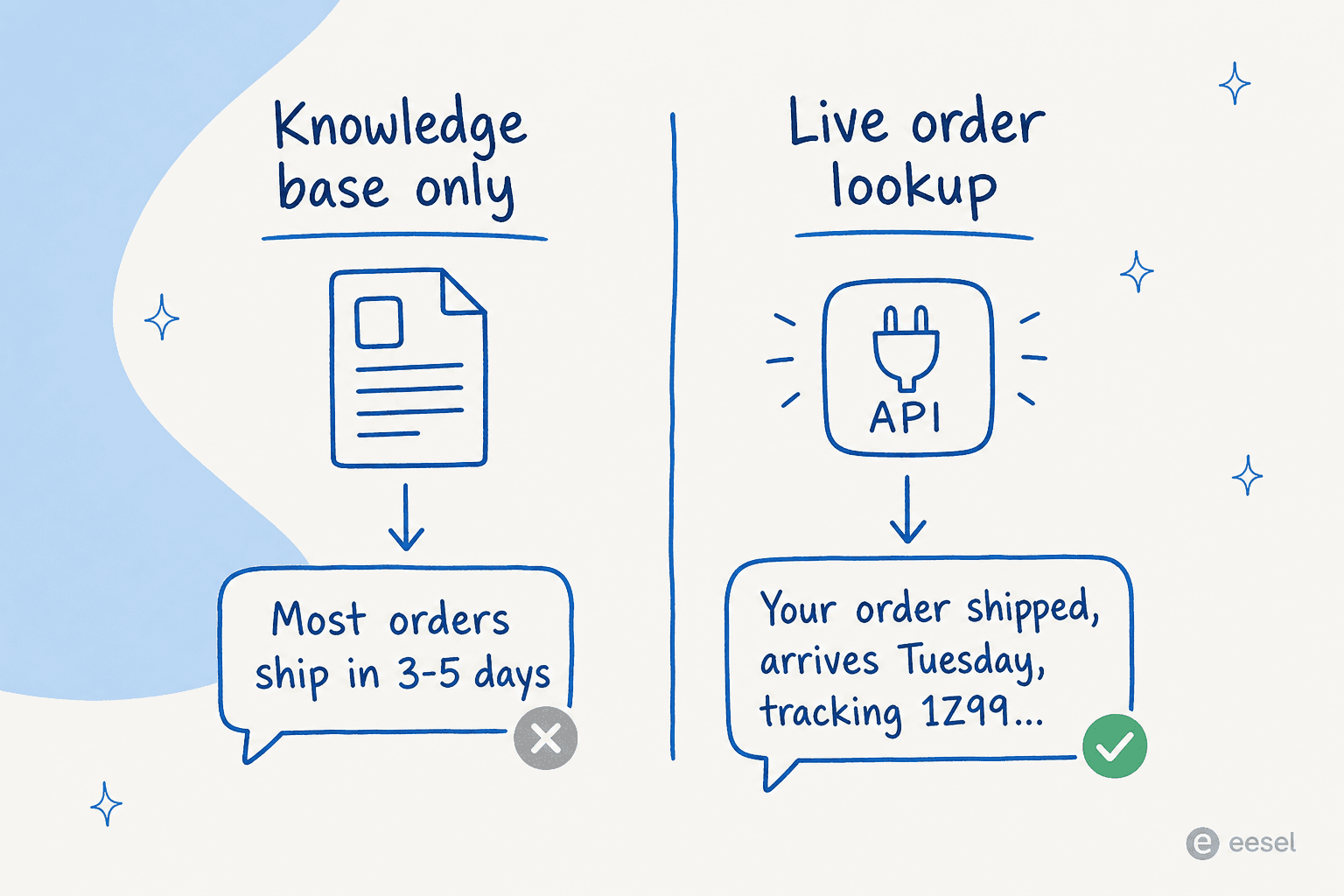
I saw this distinction most clearly in a customer we lost. Their core data source for order status was a Google Sheet that updated daily, and when a sync to it silently broke, the answers went stale and they churned. The lesson stuck with me: WISMO automation lives or dies on a live order lookup that stays in sync, not on a pile of crawled help articles. If the AI can't read fresh order data, it isn't tracking orders, it's guessing about them.
So the real architecture question isn't "how good is the language model?" It's "can this AI reach my live order data, reliably, on every ticket?"
How AI order tracking actually works
Mechanically, an order-tracking answer is an API call wrapped in a sentence. At eesel we model every integration as three things: sources (what the AI can read), triggers (when it wakes up), and actions (what it can do). Answering a doc question uses a source. Tracking an order uses an action, the AI calls out to your order system, gets live data back, and uses it to write the reply.
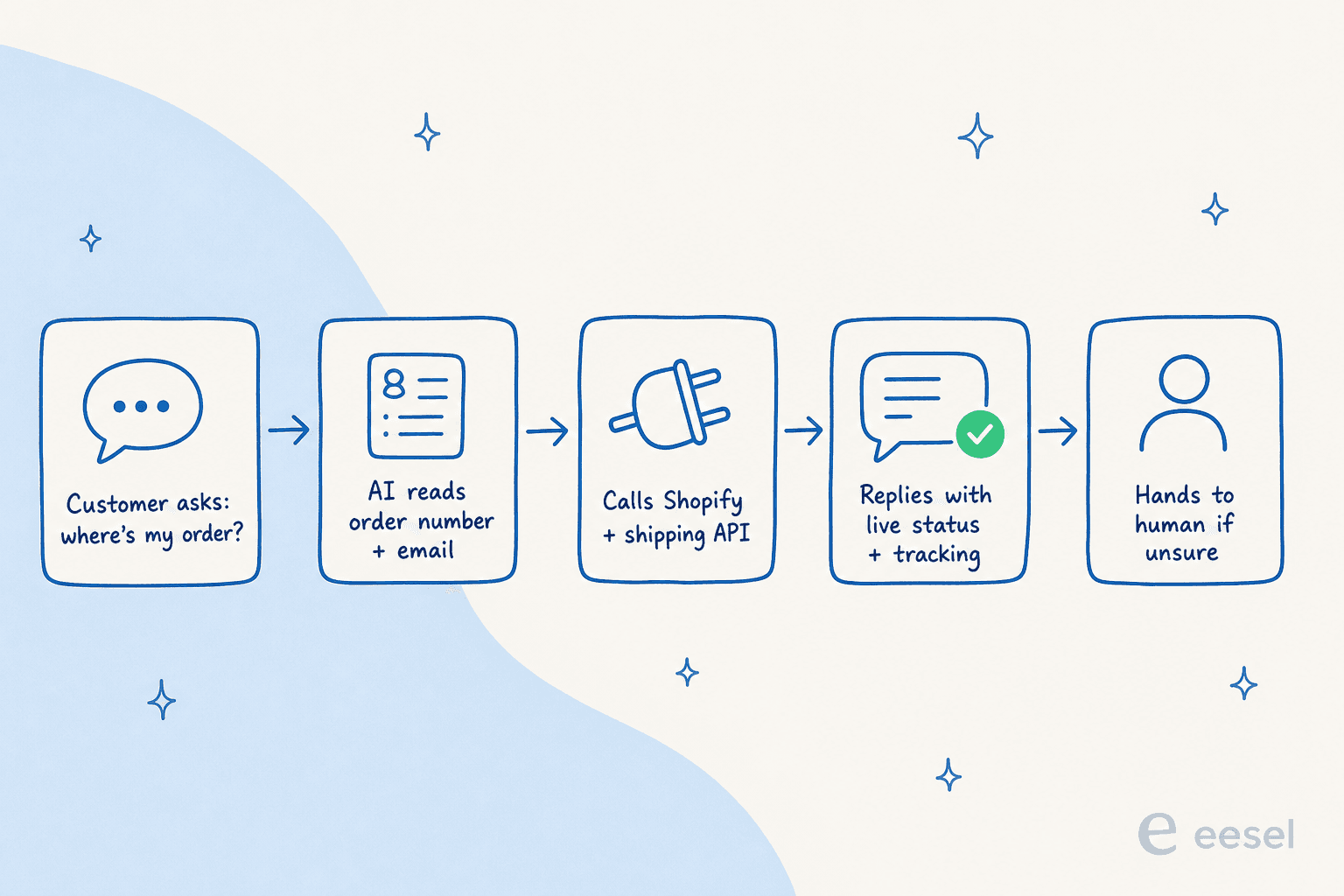
Here's the flow for a typical WISMO ticket:
- A customer asks. Either in your helpdesk (Gorgias, Zendesk, Freshdesk) or a chat widget on your store.
- The AI extracts the identifier. Order number, email, or both, pulled from the message or the ticket metadata.
- It calls your order API. For most stores that's the Shopify order-detail API; the AI passes the order number and gets back status, fulfillment, and tracking. If you ship through a 3PL or carrier, it can hit the shipping API too.
- It writes the reply. "Your order shipped yesterday and is out for delivery, here's your tracking link," in the customer's language and your brand voice.
- It hands off if anything's off. No clear match, an address problem, a "this is the third time I'm asking", it escalates to a human instead of bluffing.
The work here is the plumbing, not the prose. One thing we found building these: for an order system without a pre-built connector, handing the AI an API key, the docs, and a reference script works better than waiting for a heavy vendor integration. That means the lookup can run against effectively any order or shipping API, not just the marquee ones.
Because it's a real integration, the AI can do more than read. The same action layer that fetches status can tag the ticket, set status, and route it, which is exactly the kind of grunt work that piles up alongside WISMO.
What you could automate (and what it saves)
WISMO is usually the single biggest slice of an ecommerce queue, so it's worth doing the napkin math on what automating it actually clears. The widget below is a rough estimator: pick the volume of order-status tickets you handle a month and it'll show the deflected count, the agent time you get back, and the eesel plan that covers it. Assumptions are baked in (about 80% of clean order-status questions auto-resolve, ~5 minutes of handle time saved each, and 1 credit per auto-resolved ticket), so treat it as a directional sketch, not a quote.
What could AI order tracking clear for you?
Pick your monthly order-status (WISMO) ticket volume:
These aren't pulled from thin air. On a real German jewelry retailer running about 1,000 tickets a month on Zendesk + Shopify, a trial on live traffic showed drafts that were 100% useful on refund-status questions, 93.8% on returns and refunds, with 93% triage accuracy and zero false positives flagging spam. A gig-economy app on Zendesk resolved 73% of tier-1 requests in its first month after a 7-day trial, as their team wrote on G2. Order-status questions are the easy, factual end of tier-1, so they tend to sit at the high end of that range.
The part everyone gets wrong: don't let it guess
Here's the failure mode that keeps support leaders up at night, and rightly so. An order-tracking bot that confidently invents a delivery date is worse than no bot at all, because the customer believes it. We've watched confident-sounding bots give wrong answers when the underlying data had no clean match, which is exactly why we now simulate every rollout against historical tickets before it ever touches a live customer.
The fix is selective automation. The AI should only auto-reply when the order lookup returns a clear, unambiguous answer, and quietly leave everything else for a human. One CX lead at that 7,000-ticket-a-month brand put the requirement perfectly:
"The AI will never be able to answer 100% of the questions... I need an AI who is only handling the tickets that it's confident to handle and all the other ones, leave them alone."
That's the bar. Not "answer everything," but "answer what you're sure of, escalate the rest cleanly."
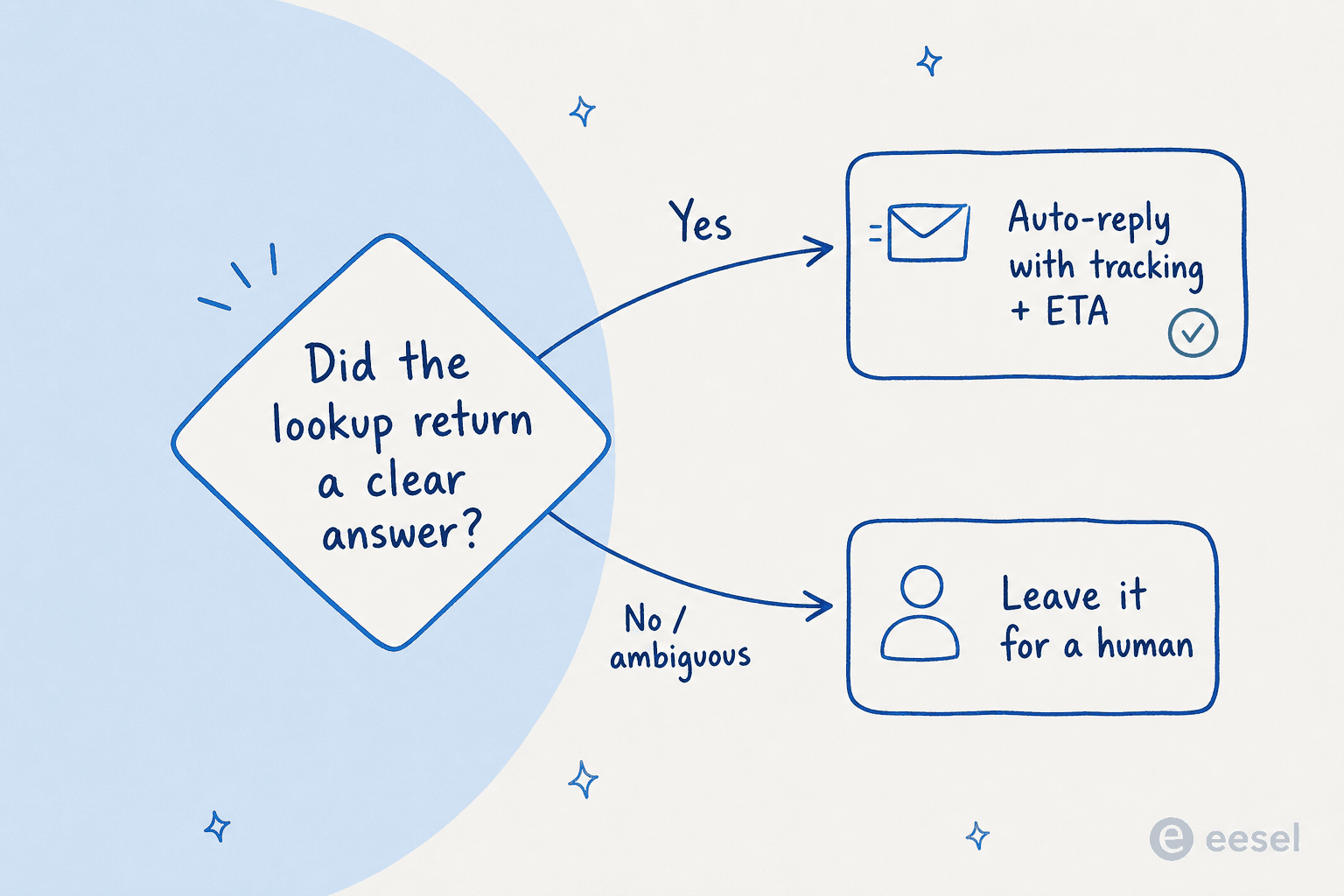
In practice that means a few guardrails: the AI handles a clean lookup (order found, single match, status returned) on its own; it hands off to a human when the order can't be matched, the customer is upset, or the question goes beyond status; and you watch it on past tickets first so you trust the accuracy before going live. Get that right and you capture the volume without the risk.
How to set up AI order tracking, step by step
You don't need an engineering project for this. The realistic path:
- Connect your helpdesk and store. Point the AI at your existing helpdesk (Gorgias, Zendesk, Freshdesk) and your store. The Shopify integration is the common one; this is what gives the AI both the conversation and the order data.
- Wire up the order-lookup action. Map the action to your order API so the AI can fetch status and tracking by order number or email. For non-Shopify stacks, this is where an order-detail API or a 3PL endpoint gets connected.
- Train it on your real tickets and docs. Let it learn from past order-status replies and your help center so its tone and structure match how your team already answers, which lifts first-contact resolution.
- Simulate before you launch. Run it against historical WISMO tickets to see what it would have replied, and tune the confidence threshold there, not in production.
- Go live on a slice. Start with order-status only, in one channel, then widen to refunds, returns, and subscription changes once you trust it.
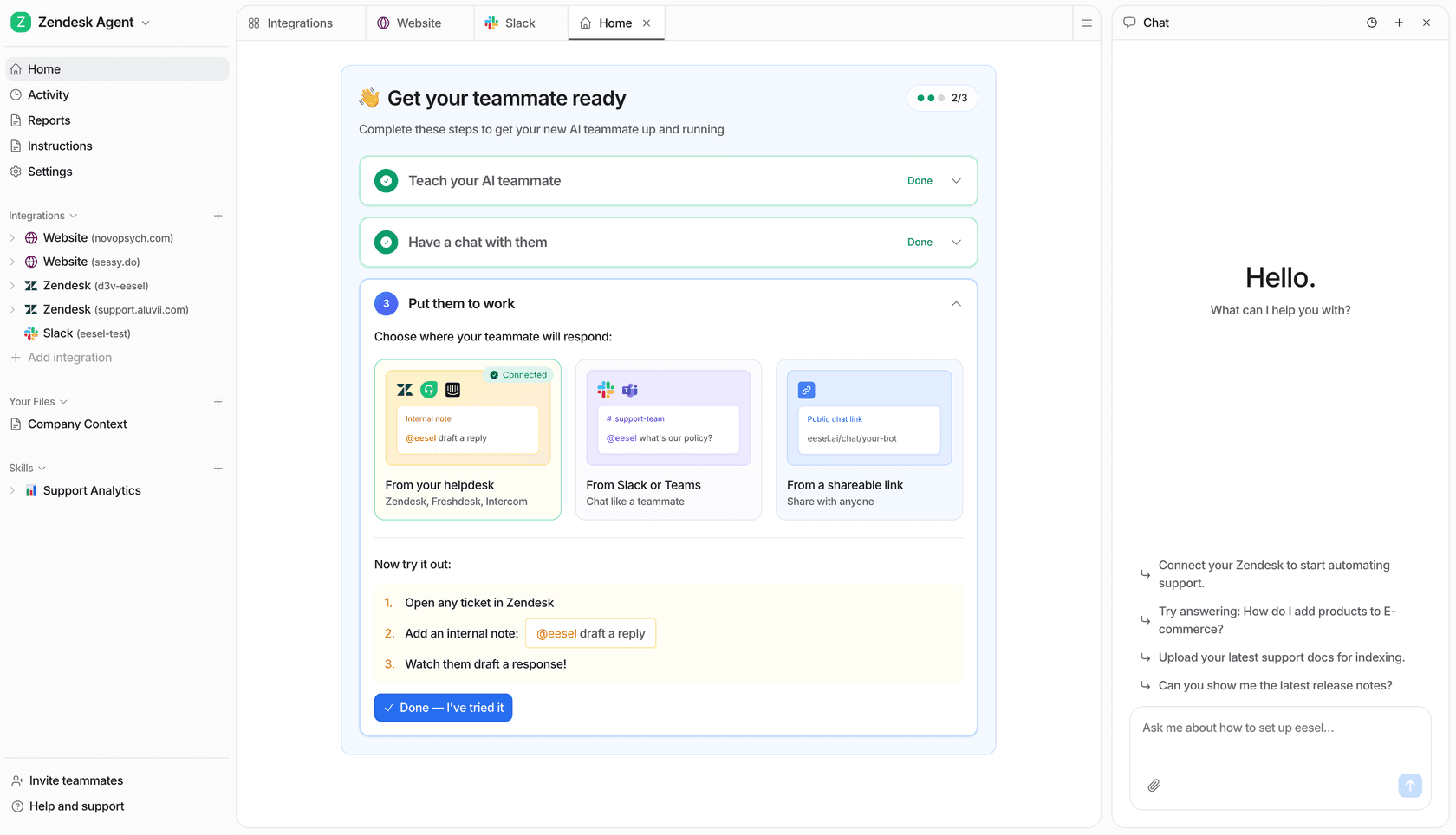
A note on scope creep: order tracking is the wedge, not the whole job. Once the lookup action is live, the same pattern extends to refund vs exchange intent, automatic RMA generation, and the order management flows that cluster around shipping issues. Start narrow, prove it, expand.
What it costs, and the seasonal trap
Pricing is where ecommerce has a specific gotcha, because your volume isn't flat. A model that charges per resolution looks fine in March and then detonates your bill during Black Friday, exactly when WISMO volume spikes hardest. Some of those models also count auto-closing spam as a "resolution," which inflates what you pay for. On one real ecommerce inbox we analyzed, 22% of tickets were spam.
eesel has one fixed monthly price sized to volume, from $299/month for 500 credits (1 credit per ticket or chat, however long), with no seat fees. Only tickets the agent actually works on count, so spam doesn't eat your credits, and if a busy season runs past your plan you can turn on overage at $0.80 per extra credit with a monthly cap you set. Compared to a human agent picking up the same repetitive WISMO question, the cost difference on tier-1 volume is large, and it's the clearest place to start measuring ROI.
Try eesel for order tracking
If you're running ecommerce support and "where is my order?" is eating your queue, this is the exact problem eesel was built for. It plugs into your existing helpdesk and your Shopify store, looks up live order data through a real API action, and only auto-replies when it's confident, handing the rest to your team. You can simulate it against your own past tickets before it answers a single live customer, so you see the accuracy first.
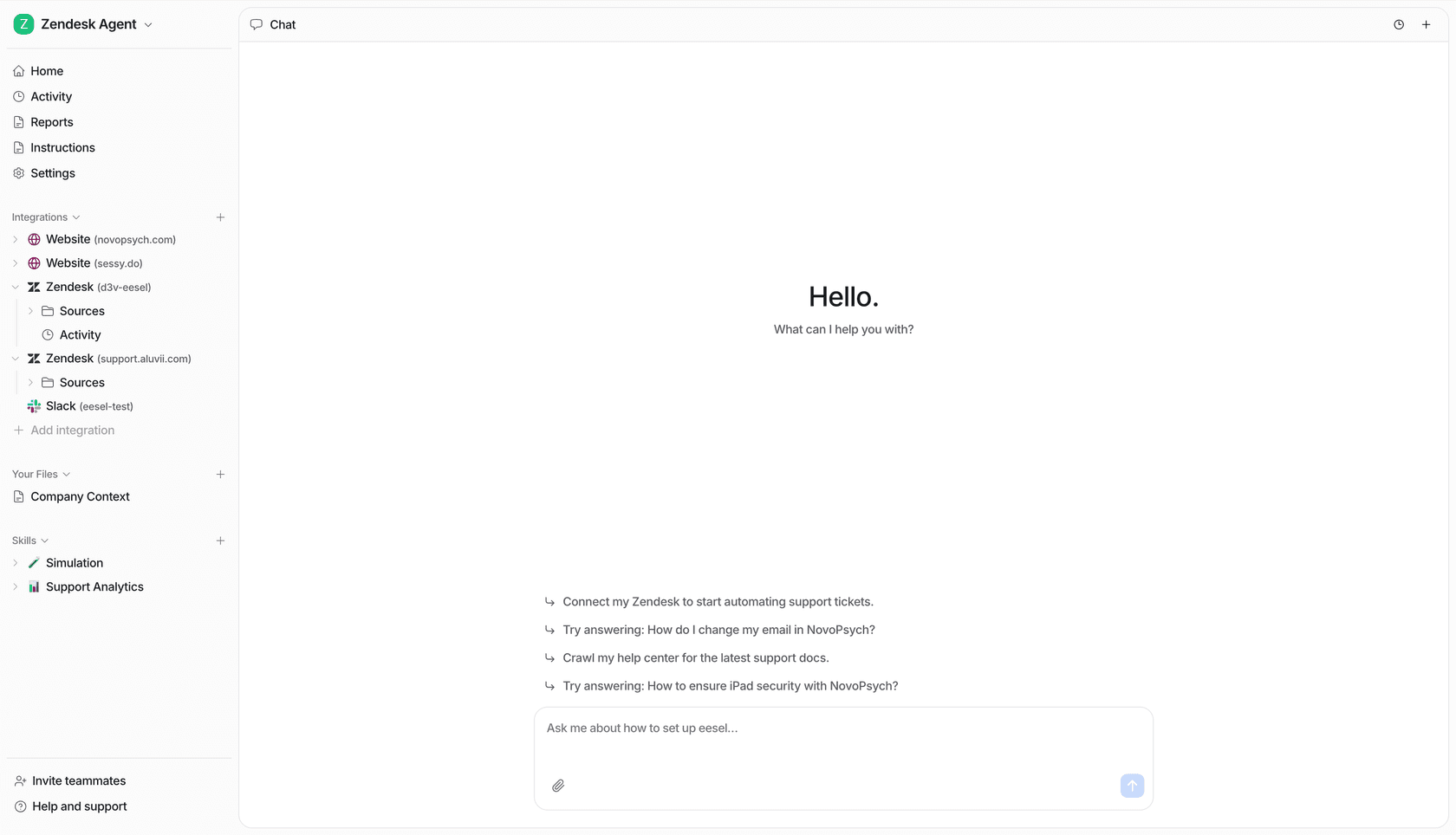
It's free to try, and setup is measured in minutes, not a quarter. Connect Shopify, point it at order tracking, and watch how much of that repetitive volume disappears.