

What is an AI texting bot?
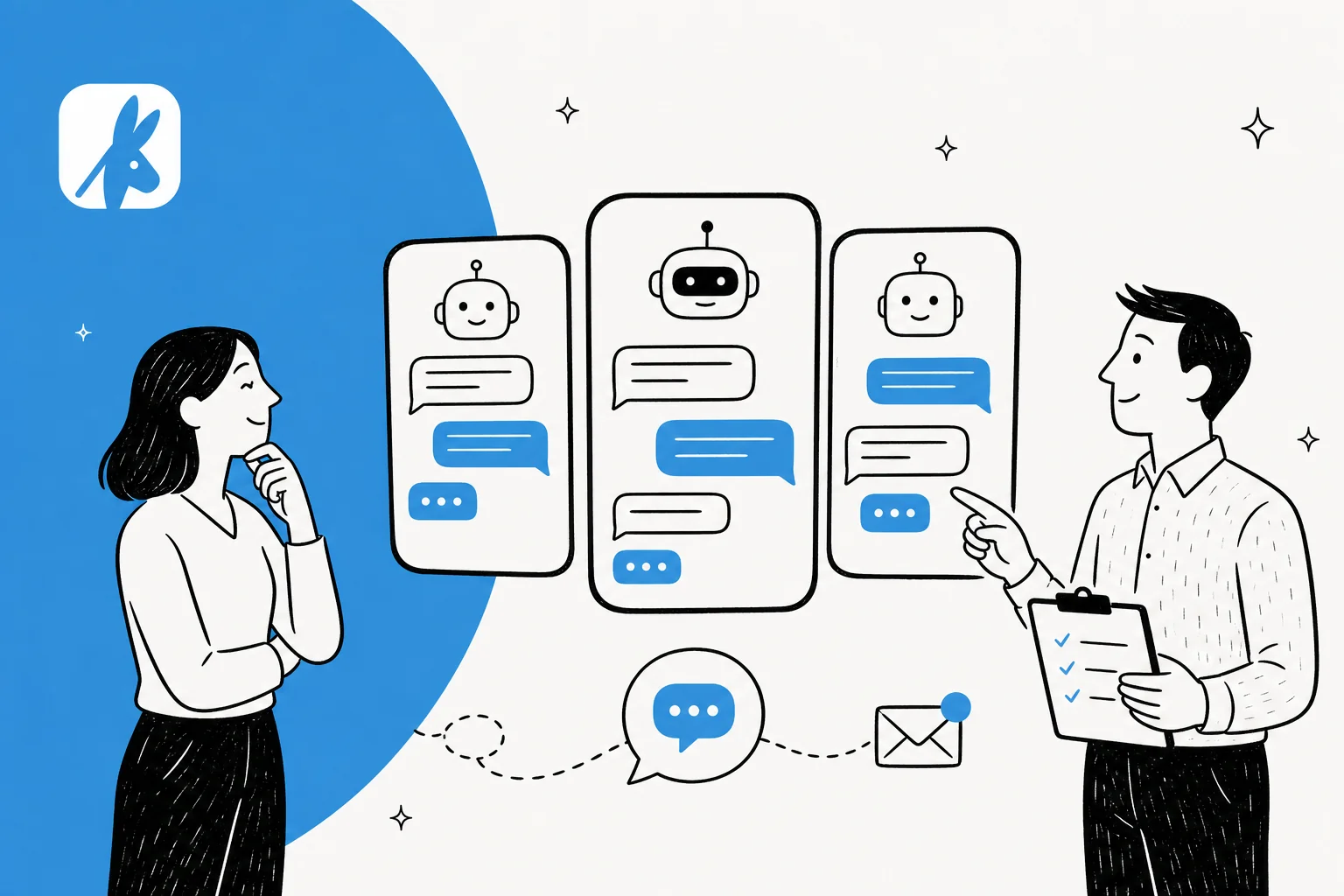
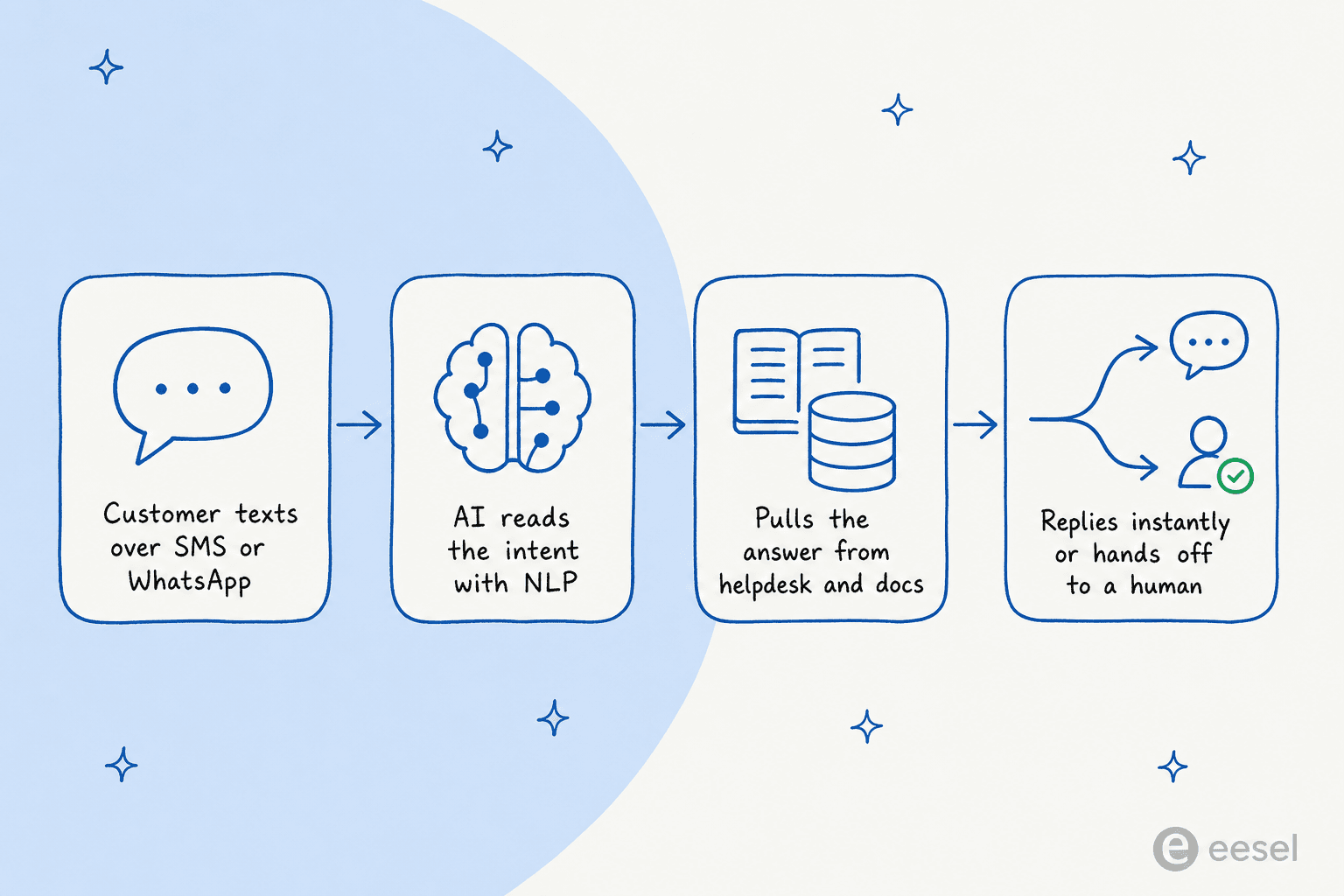
Simply put, an AI texting bot is a program that uses artificial intelligence to read and reply to text messages on its own. Think of it as an automated team member who handles conversations over SMS, WhatsApp, or whatever messaging app you're using.
It uses something called natural language processing (NLP) to figure out what a person is actually asking. From there, it dives into a knowledge base to find the right information and sends back a reply that sounds like it came from a person. They generally come in a few flavors:
- Customer Support Bots: These are your digital front line. They connect to helpdesks like Zendesk or Gorgias to solve common customer problems directly through text.
- Sales & Marketing Bots: These bots are all about growth. They can chat with new leads to see if they're a good fit, help book demos, and send follow-ups so you don't have to.
- Productivity Bots: These are more for you than your customers. You could text a bot to add an item to your grocery list, save a link you want to read later, or set a quick reminder.
Under the hood, most modern bots are running on large language models, the same tech behind tools like ChatGPT. This lets them go off-script and handle a much wider range of questions than older, rule-based bots.
How I picked the best AI texting bot tools
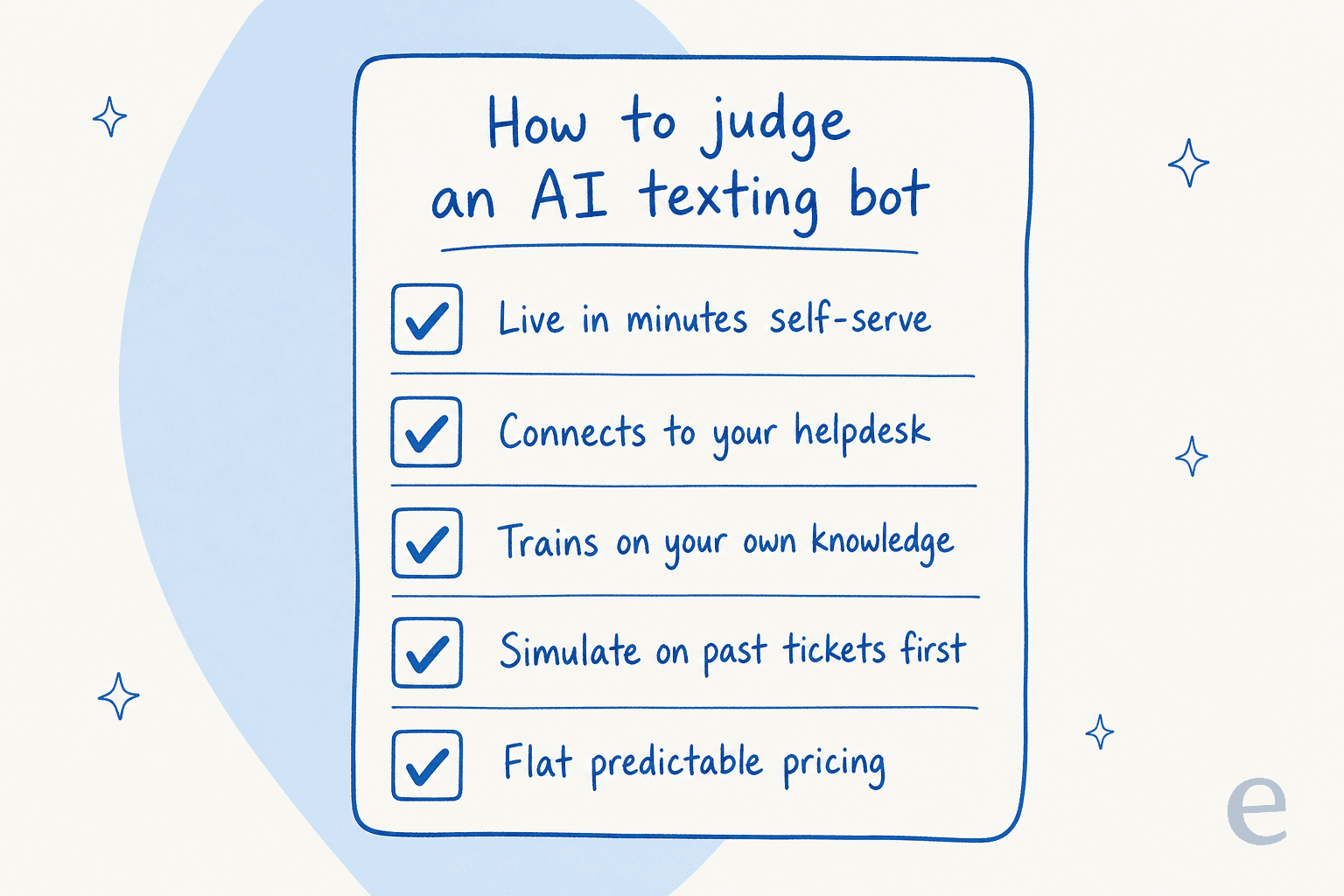
Finding the right bot is less about flashy features and more about finding something that solves a real problem without creating three new ones. Here’s the checklist I used to sort the good from the bad:
- Speed to setup: How quickly can you get it running? I gave extra points to platforms that were truly self-serve. If I had to schedule a demo with a sales rep just to try the product, that was a huge turn-off. You should be able to get started in minutes, not weeks.
- Plays well with others: A bot that doesn’t connect to your other software is just another information island. The best ones integrate smoothly with the tools you already use every day, like your CRM or helpdesk. Any tool that forced me to constantly switch tabs just to get something done didn't make the list.
- Actual intelligence: How smart is the bot, really? I looked for tools that could be trained on your specific company knowledge, not just generic FAQs. A great bot learns from your past conversations, lets you customize its tone, and can be told to perform specific tasks.
- Test before you go live: You wouldn't launch a website without testing it, right? The same goes for your bot. I prioritized platforms that let you run simulations on your past conversations. This way, you can see its likely resolution rate before it talks to a single live customer.
- No-surprise pricing: Is the price clear and predictable? I have a strong preference for platforms with transparent pricing. Tools that charge you per message or per "resolution" can spring some nasty bills on you, basically punishing you for being successful.
The best AI texting bot platforms at a glance
If you're just looking for the highlights, here’s a quick rundown of the top tools.
| Tool | Best For | Key Feature | Pricing Model |
|---|---|---|---|
| eesel AI | Integrated Customer Support | Unifies knowledge from helpdesks & docs | From $299/mo (500 credits) |
| Aloware | Sales & Lead Nurturing | AI-powered SMS campaigns | Per-user + usage fees |
| Zapier Chatbots | Building Custom Workflows | Connects to 6,000+ apps | Freemium + tiered plans |
| Mei | Personal Coaching & Custom Builders | Emotionally intelligent AI | Freemium |
| Botsonic | Versatile Chatbot Builder | Trains on website & cloud data | Tiered subscription |
| Personal AI | Creating an AI Persona | Learns your personal communication style | Tiered subscription |
The top 6 AI texting bot tools, reviewed
Every tool has its sweet spot. Here’s a closer look at what each platform is built for and who it’s right for.
1. eesel AI: The best for integrated customer support
eesel AI isn't your typical standalone bot. It's a full-on AI agent layer that plugs right into the helpdesk you already use, whether that's Zendesk, Freshdesk, or Gorgias. This is what makes it so different. It handles SMS chats with the complete history of your customer conversations, support tickets, and internal docs. The result is support that's surprisingly on-point and personal, all without making you change how you work.
Pros:
- Go live in minutes: The setup really is self-serve. You connect your helpdesk with one click and can have a bot ready to test, no sales call required.
- Learns from everything: It doesn't just read from a manually uploaded FAQ. It pulls knowledge from old tickets, your help center, Confluence pages, and Google Docs to give answers that are actually complete.
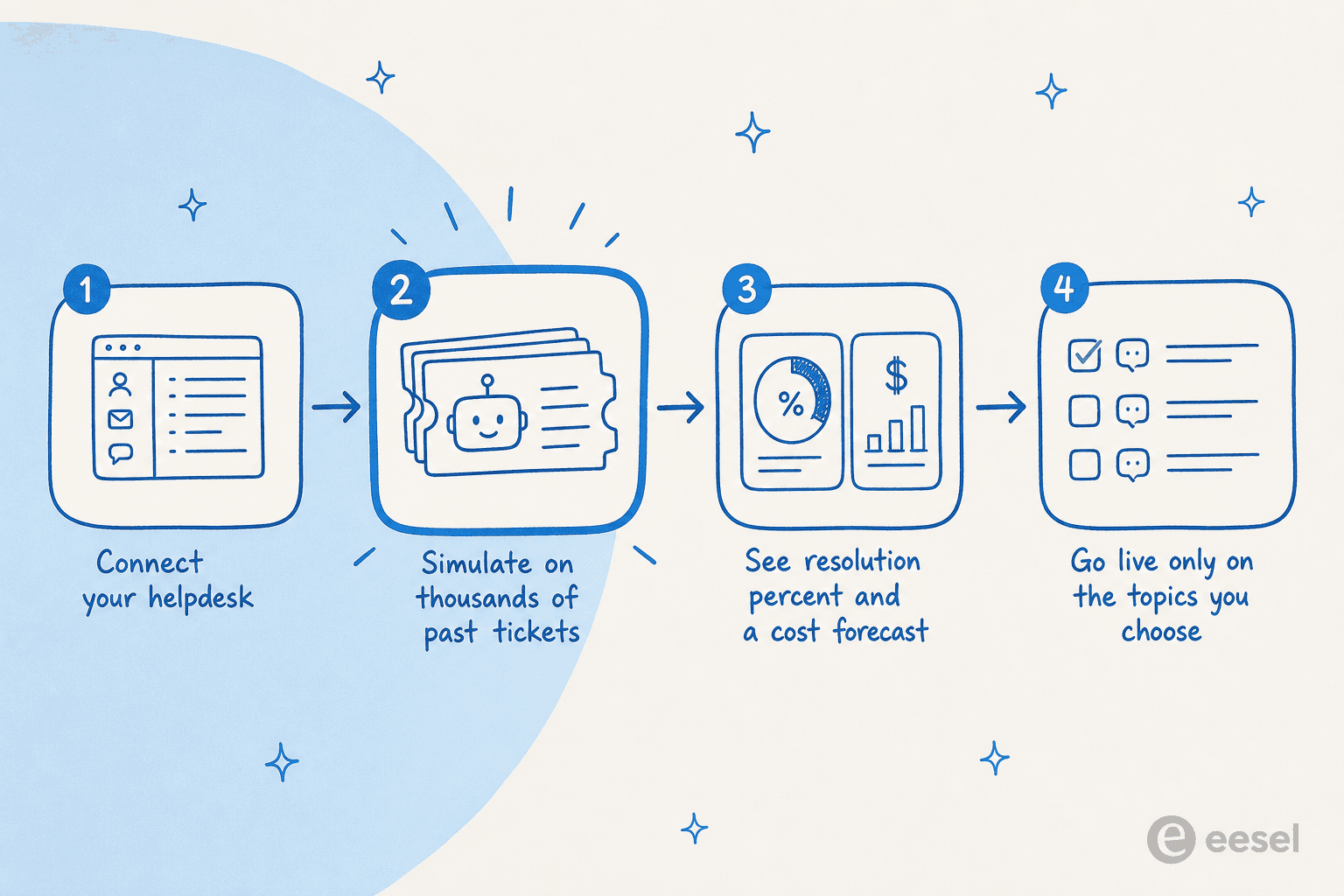
- Risk-free simulation: Before you flip the switch, you can run a simulation on thousands of your past tickets. It gives you a clear report card on what it can automate and how well it does.
- You're in control: You get to decide exactly which kinds of texts the AI takes on. You can start small by automating simple "where's my order?" questions and hand anything trickier to a human.
Cons:
- It’s built for support and internal knowledge, so it isn't really designed for running outbound SMS sales campaigns.
- It shines when connected to an existing helpdesk where your SMS is already set up.
Pricing: eesel's pricing is one fixed monthly price sized to volume, from $299/month for 500 credits (1 credit per ticket or chat the AI actually works on), with no per-seat fees and no per-resolution surprise bills. There's a free plan with 100 credits (no card), and you can turn on overage with a monthly cap you set, so the bill never runs away from you as volume grows.
Why I chose it: For any company that already has a helpdesk, eesel AI is the smartest and smoothest option. Instead of adding another tool to juggle, it makes the one you already have better. Because it learns from your real business data, the support it provides isn't just fast, it's helpful and sounds like you. I've spent years watching confident-sounding bots quietly give wrong answers, which is exactly why eesel makes you simulate on your own history before going live.
2. Aloware: The best for SMS sales automation
Aloware is a contact center platform with an AI SMS Bot built specifically for sales and lead engagement. Its whole purpose is to start conversations, warm up cold leads, and book appointments automatically, which is a big help for busy sales teams.
Pros:
- Laser-focused on sales and marketing outreach.
- The conversational style is designed to feel human, which helps with engagement rates.
- Connects with major CRMs to keep your lead data organized.
Cons:
- It's not meant for handling complicated, after-sale customer support questions.
- It's a separate system from your helpdesk, which can easily trap conversations in a silo. If a sales text suddenly becomes a support issue, you're stuck copying and pasting everything over.
Pricing: Aloware's pricing includes a base plan plus costs that go up based on usage (like per lead or per message), which can get unpredictable as your volume grows.
Why I chose it: If your one and only goal is to automate top-of-funnel sales chats over text, Aloware is a tool that’s built for exactly that job.
3. Zapier Chatbots: The best for custom-built solutions
Zapier's Chatbots tool is for anyone who likes to build and customize their own tools. It gives you a no-code platform to create your own chatbot, feed it your own documents, and then hook it up to the thousands of other apps in the Zapier universe.
Pros:
- You can connect it to pretty much anything, they have over 6,000 app integrations.
- The builder itself is clean and simple to use.
- You can embed it on your website and connect it to an SMS service like Twilio to rig up your own texting bot.
Cons:
- It's a complete DIY project. You have to put all the pieces together yourself, including figuring out and connecting the SMS service.
- It doesn't have the specialized helpdesk features you'd get from a tool like eesel AI, like analyzing old tickets or automatically sorting incoming requests.
Pricing: Zapier has a free plan to get your feet wet, with paid plans that scale up based on the features and number of automations you run each month.
Why I chose it: For tech-savvy folks who want to build a totally custom AI texting workflow from the ground up, Zapier gives you a massive and flexible box of Legos.
4. Mei: The best for personal coaching and custom builders
Mei is a bit different. It focuses on emotionally intelligent AI for personal use, offering AI coaches and companions you can chat with for free. On top of that, it provides a self-serve platform for building your own custom AI agents.
Pros:
- Cool focus on emotional intelligence and personal coaching.
- The self-serve builder is great for individuals and small businesses who want to experiment.
- Offers a free Android SMS app that includes an optional AI assistant.
Cons:
- It's not really built as a customer support tool for business teams.
- The business side of the platform feels less developed than tools made specifically for support or sales.
Pricing: Mei uses a freemium model. You can access the coaches for free, with paid plans for building more advanced custom bots.
Why I chose it: Mei is an interesting option for personal productivity or individual projects. It’s a neat example of how AI can be used for more than just typical business tasks.
5. Botsonic: The best for a versatile chatbot builder
Botsonic is a flexible chatbot builder that you can train with data from your website, your documents, or even cloud storage. It’s designed to be an all-around solution for creating more personalized customer service and shopping experiences.
Pros:
- Can pull in data from a wide variety of sources to train the bot.
- Gives you good control over branding and the bot's tone of voice.
- Lets you choose from different AI models to power your bot.
Cons:
- Since it's a general builder, it's missing the deep, specific integrations for support teams that a platform like eesel AI has. You won't find features like simulating performance on past tickets.
- The setup can be more work than a tool that connects to your helpdesk with a single click.
Pricing: Botsonic has a few tiered subscription plans that are based on your message volume and the features you need.
Why I chose it: Botsonic is a solid middle-of-road choice for businesses that want a flexible no-code chatbot but don't want to go full DIY with something like Zapier.
6. Personal AI: The best for creating an AI persona
Personal AI is a really interesting tool that focuses on creating an AI that learns to communicate just like you. It studies your messages, documents, and notes to build a "personal language model" that can then reply to people on your behalf.
Pros:
- It's amazing at capturing an individual's unique voice and style.
- Once it's trained, you can set it on autopilot to handle conversations for you.
- Handy for creating AI personas for specific roles, like a CEO or founder who gets a lot of inbound messages.
Cons:
- It's designed to mimic one person, not to help a whole team manage support with a single source of truth.
- The main goal is to extend an individual's reach, not solve common team support problems.
Pricing: Personal AI offers tiered subscription plans based on how personalized you want the AI to be.
Why I chose it: For solo founders, consultants, or executives looking to automate their own communications, Personal AI offers a unique and pretty powerful solution.
How to pick the right AI texting bot for your business
Feeling a bit lost in all the options? Totally understandable. Here’s a simple way to think through the decision.
- First, what's your main goal? Are you trying to close more deals, or do you need to answer support tickets faster? A sales bot like Aloware is built very differently from a support platform like eesel AI. Be honest about your number one pain point.
- Look at the tools you already use. If your team basically lives in a helpdesk like Zendesk, choosing a bot that connects deeply with it is a must. A separate, standalone bot will just cause headaches and make your team jump between windows all day. This is where an integrated solution like eesel AI really makes a difference.
- Think about setup and training. Do you have a few weeks to spend on implementation calls and manually feeding a bot information? Or do you need something that just works? Look for self-serve platforms that can sync with your knowledge base and analyze old tickets to get up and running fast.
- Insist on clear pricing. Don't get punished for growing. Bots that charge per resolution or per message can lead to some eye-watering bills at the end of the month. A transparent, fixed monthly price with an optional capped overage lets you budget predictably.
AI texting bot: What's next?
The world of AI texting bots is huge, with tools built for almost every job you can think of. The best one for you really does come down to your goals and the tools you're already using.
But for businesses that are truly serious about great customer support, one thing is clear: you need a platform that brings all your scattered knowledge together. It's the only way to deliver the fast, correct, and consistent answers that customers now expect. The best way to see the difference an integrated AI agent can make is to try it with your own company's data.
A better way for your SMS support with eesel AI
If your SMS queue is just your help center questions arriving by text, an AI agent should be able to clear most of them on its own. eesel AI plugs into the helpdesk you already run, learns from your past tickets and docs, and starts drafting or sending replies over text the same day.
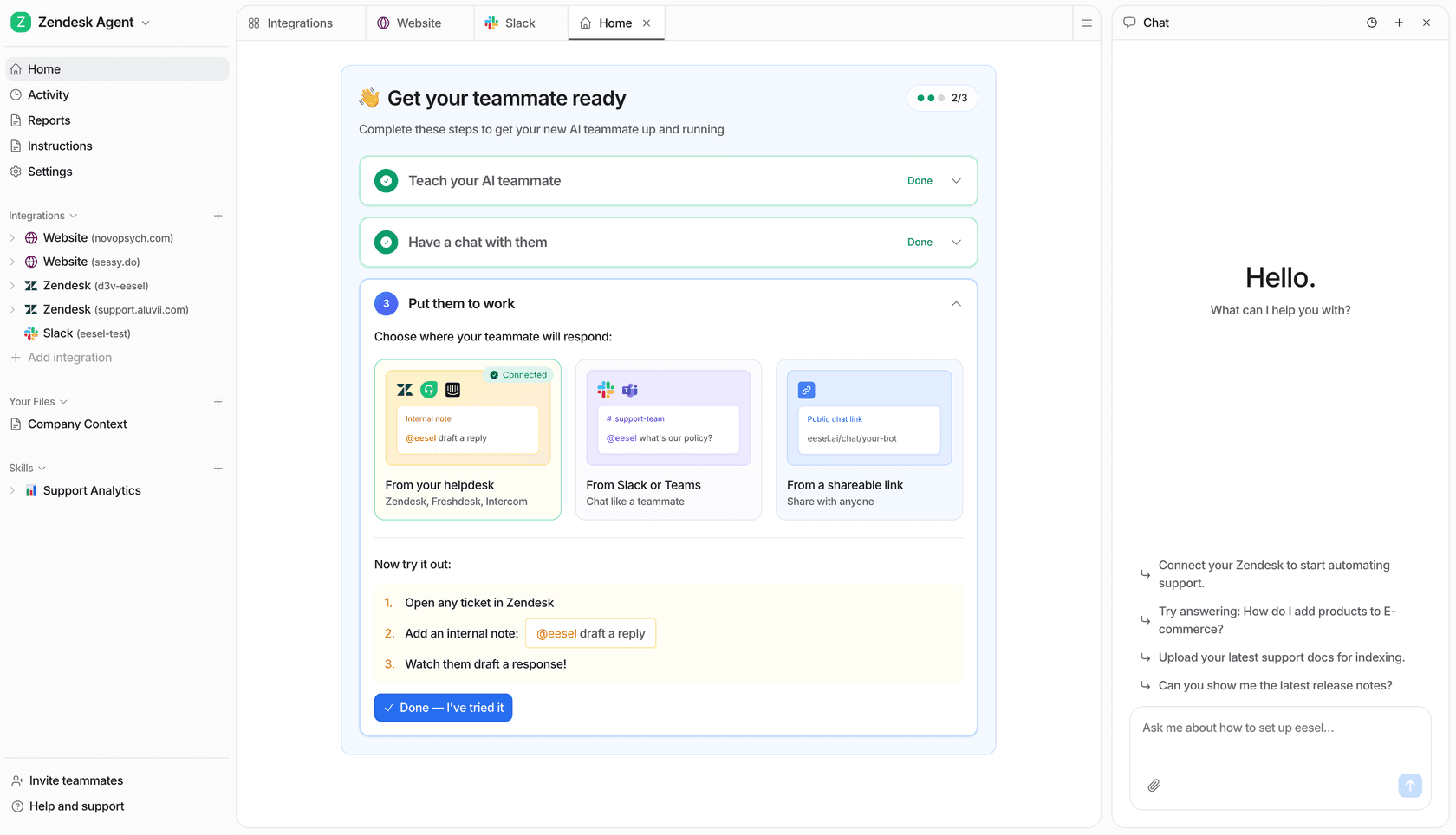
The part most teams care about: you can run a free simulation on thousands of your historical conversations and see exactly how many you can automate, and what it'll cost, before a single customer gets an AI reply.
Try eesel free, or book a demo with the eesel team.
Frequently asked questions
I'm worried about a long setup process; how quickly can I actually get an AI texting bot up and running?
The setup time really depends on the tool. Simpler, integrated platforms like eesel AI can be live in minutes because they connect directly to your existing helpdesk and knowledge bases, so there's no blank slate to fill in. More DIY options take longer since you build out the connections yourself. If speed matters, look for a self-serve product you can onboard without a sales call.
My biggest concern is that using an AI texting bot will sound robotic; can I make it match our brand's voice?
Absolutely. Most modern bots can be trained on your company's past conversations and internal documents to learn your specific tone and style. Many platforms also offer settings to customize the bot's personality, so it sounds like a real part of your team. If tone is a priority, it's worth reading up on keeping a consistent AI support brand voice.
I'm nervous an AI texting bot might give a wrong answer or get stuck. How do these tools handle situations they can't solve?
The best bots are designed with a safety net. They can be set to recognize when a question is too complex or outside their knowledge and then hand the conversation over to a human agent. Getting the handoff timing right is what keeps customers from getting frustrated, and it's also how you avoid confident wrong answers.
Do I have to manage the AI texting bot in a totally separate dashboard, or can it connect to the tools my team already uses?
Top-tier platforms are built for integration. A solution like eesel AI plugs directly into your existing helpdesk, so your team works in a familiar environment. Avoid standalone bots that create yet another information silo and force your team to constantly switch between tabs.
Can a single AI texting bot be used for both sales and customer support, or do I need different tools?
While some general builders can be adapted for multiple roles, most bots are specialized to be effective. A sales-focused tool is tuned for lead nurturing, while a support platform is built for deep knowledge and problem-solving. It's best to choose a customer service chatbot that excels at your primary business goal.