

What conversational AI for sales actually is
Let's be precise, because the term gets stretched to cover everything from a pop-up form to an autonomous outbound machine.
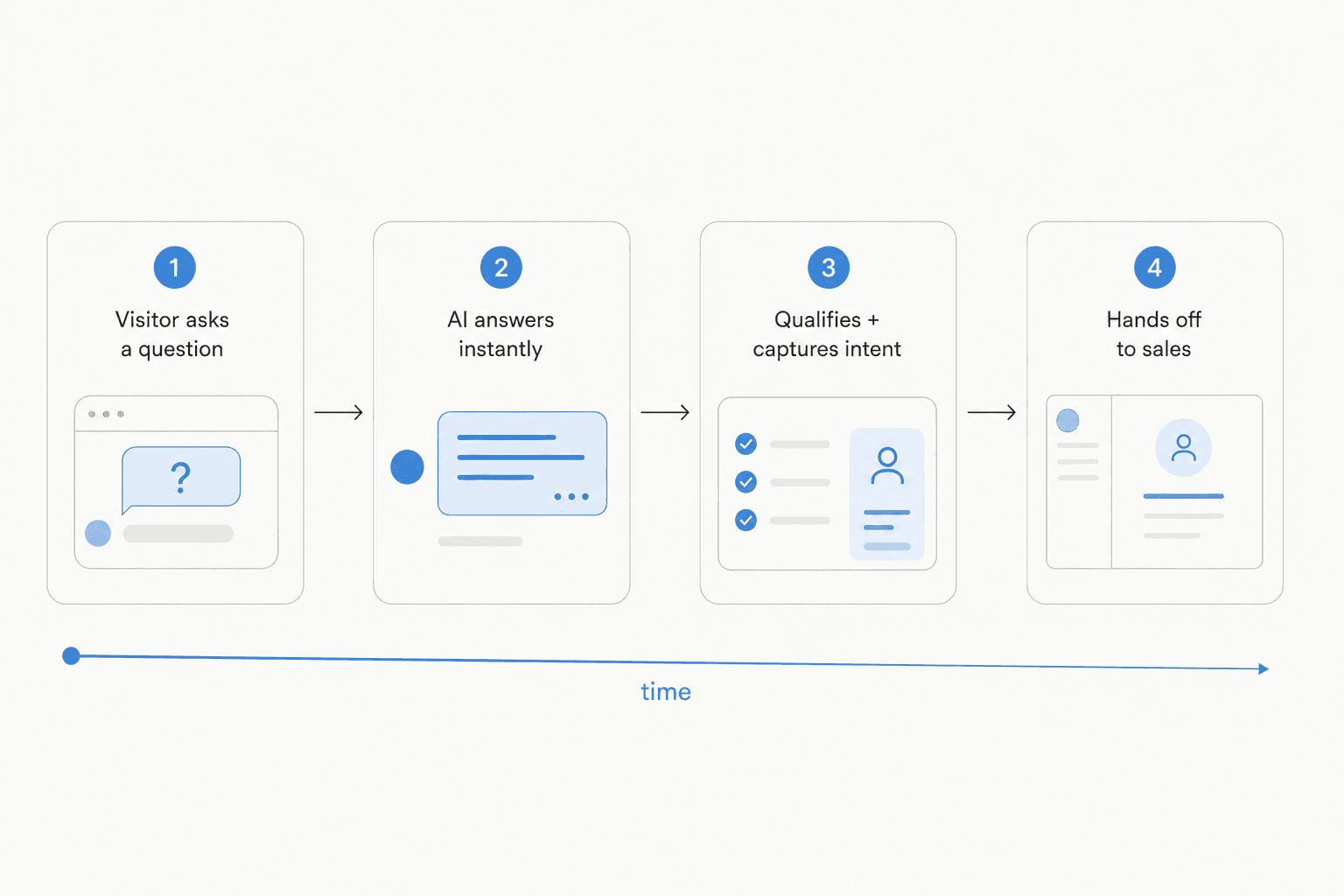
Conversational AI for sales is software that holds a genuine back-and-forth with a prospect in natural language, understands the intent behind what they typed, and responds with an answer pulled from your real knowledge, your pricing, your product docs, your policies. Then it does something useful with the conversation: books a call, captures the lead's details, or routes them to a rep. It's the difference between a menu and a conversation.
That's a real step up from the scripted chatbot most people picture. A scripted bot runs on decision trees: "Press 1 for pricing, press 2 for demos." The moment a buyer types something off-script ("do you work with Shopify Plus and can I keep my current theme?") it falls over. A conversational AI reads that as one question with two parts and answers both.
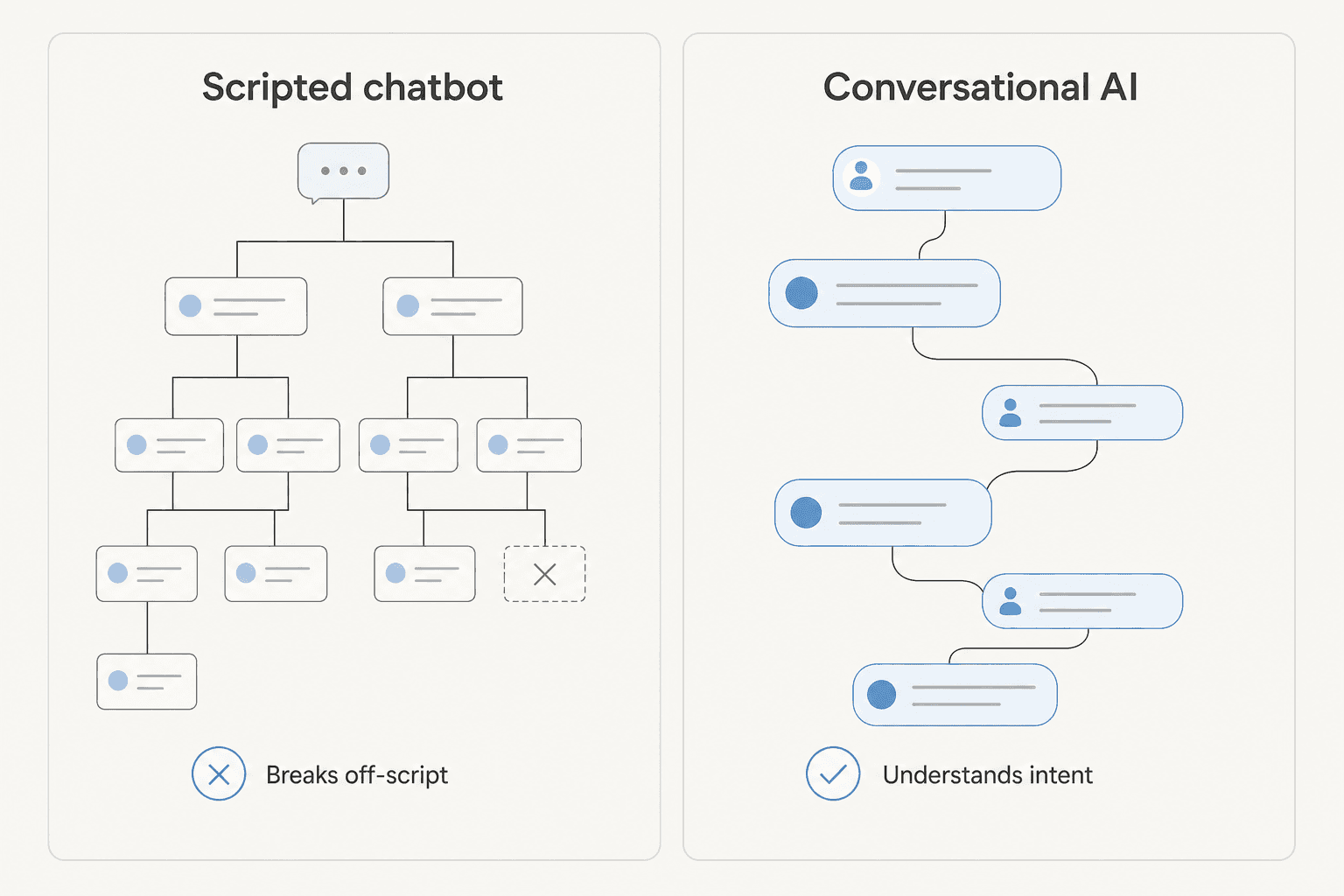
The distinction matters for sales specifically because buyers don't ask questions in the order your script expects. They arrive mid-decision, comparing you against two other tabs, and the one that answers their exact question first tends to win the moment.
Where it actually moves revenue (and where it doesn't)
Here's the honest map, because the marketing around "AI sales agents" oversells one half and ignores the more valuable half.
Where it genuinely works:
- Pre-sales question answering. The bulk of it. A prospect on your pricing page asks "is there a free trial and does it need a credit card?" and gets a correct, instant answer instead of a form. This is conversational commerce at its most useful.
- Lead qualification and capture. The AI asks the two or three discovery questions a rep would ask, captures the answers, and enriches the lead before a human ever sees it.
- Routing on intent. It recognizes "I need this for a 40-person team by next quarter" as a sales-qualified signal and hands it to a rep with the full transcript attached.
- After-hours coverage. A buyer in a different timezone gets answered at 2am, which is the whole point of a 24/7 sales layer.
Where it falls short:
- Closing complex deals. Multi-stakeholder, negotiated, security-review deals need a human. AI qualifies the top of that funnel; it doesn't sign the contract.
- Cold outbound. A bot that spams strangers is not what serious teams mean by conversational AI for sales, and it's a fast way to torch your domain reputation.
- Reading nuanced buying signals. It catches the obvious ones. The subtle "this buyer is frustrated and about to walk" read still belongs to an experienced rep.
There's a number from our own trial data that reframes this whole thing. In one week-long helpdesk cohort, the chat quality was excellent, 96% good answers across 581 chats, yet only 1 of 10 activated trials converted to paid. Our own read at the time was blunt: the problem wasn't product quality, it was that nobody followed up. Great answers don't convert on their own; the follow-up does. That's the honest limit of any sales AI, and it's exactly why the handoff matters more than the chatbot.
How the good ones work under the hood
The mechanism is simpler than the hype suggests, and understanding it is the difference between a sales AI that helps and one that invents a discount you never offered.
A capable conversational AI for sales does three jobs in sequence. First, it grounds every answer in your actual knowledge, so it retrieves from your help center, product docs, and pricing rather than guessing from a general model. This is the RAG pattern, and it's what keeps the agent from confidently making up your refund policy. Second, it scores its own confidence: high confidence, it answers; low confidence or a clear buying signal, it routes to a human. Third, it takes an action, capturing the lead, tagging the conversation, or opening a ticket, rather than leaving the transcript to rot.
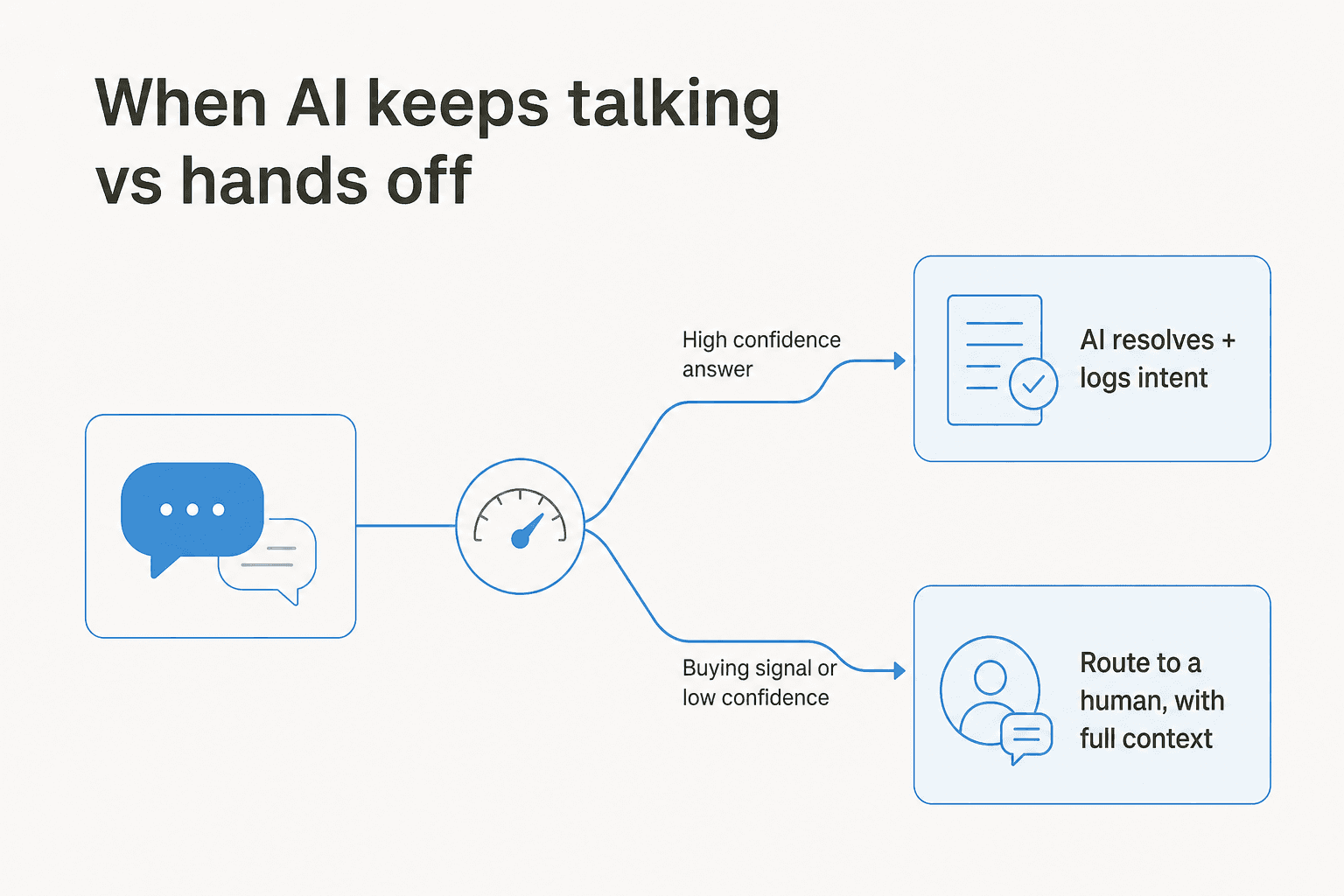
That confidence-based routing is the part buyers of these tools care about most, and rightly. The most repeated concern I hear is some version of what one DTC supplements CX lead put to us perfectly: the AI will never answer 100% of questions, so they only wanted it handling the ones it was confident about and leaving the rest alone. Applied to sales, that's the whole game: answer the FAQ-shaped buying questions perfectly, and get out of the way on the deal-shaped ones. A tool that auto-replies to everything with equal confidence will eventually tell a prospect something wrong about your product, and you'll lose the deal you were trying to win.
Conversational AI vs live chat for sales
This gets framed as a fight. It isn't. They cover different shifts.
| Dimension | Human live chat | Conversational AI |
|---|---|---|
| Availability | Business hours, staffed | 24/7, instant |
| Best at | High-intent, nuanced deals | Repetitive pre-sales questions |
| Cost to scale | Linear (more chats, more agents) | Scales with a plan or per-conversation fee, no extra headcount |
| Buying-signal read | Excellent | Good on obvious signals |
| Consistency | Varies by agent and mood | Same answer every time |
| Off-hours leads | Missed or delayed | Captured and routed |
The teams that get the most out of this run both. AI takes first contact and handles the long tail of "does it do X" questions; the human gets pulled in the instant there's a real deal on the line, with the AI's transcript already summarizing what the buyer wants. If you're weighing the two in more depth, we broke it down in live chat vs chatbot.
A real example of that handoff done right: on one SEO tool's website chat, a visitor asked two how-to questions, got clean self-serve answers, then typed "can I talk to a human?", and the agent handed off to the helpdesk the instant they asked. No loop, no "let me get that for you" dead end. That clean deflect-then-handover is the behavior to look for, not raw deflection percentage.
What to look for when you pick one
If you're shopping, the demo will look magical no matter what. These are the questions that separate the tools that hold up:
- Does it learn from your real content? It should train on your help docs, past tickets, and pricing, not a hand-built script. Ask how long setup takes, real answer, not the demo answer.
- Can you test it before it's live? The single most underrated feature. You want to run it against past conversations and see what it would have said before it says anything to a prospect.
- How does it handle "I don't know"? Confidence-based routing and a clean handover, or a confident hallucination? This is where cheap tools fail.
- Does it fit your stack? It should sit inside the helpdesk and channels you already run, not force a migration.
- How does the pricing scale? Per-seat pricing punishes you for growing. A sales chat can spike 5x during a launch, so a credit plan with a fixed monthly price and no per-seat fee is usually kinder to the budget.
On that last point, watch the billable unit closely, because "per resolution" and "per conversation" and "per seat" are not the same thing and the difference shows up on your invoice. We wrote about the real cost of AI agents if you want to sanity-check a quote.
Try eesel for pre-sales conversations
Most "conversational AI for sales" tools are outbound gadgets. eesel comes at it from the other side: it's an AI agent that lives inside the helpdesk and channels you already use, answers the pre-sales questions hiding in your support queue, and hands off cleanly the moment a real buying conversation starts.
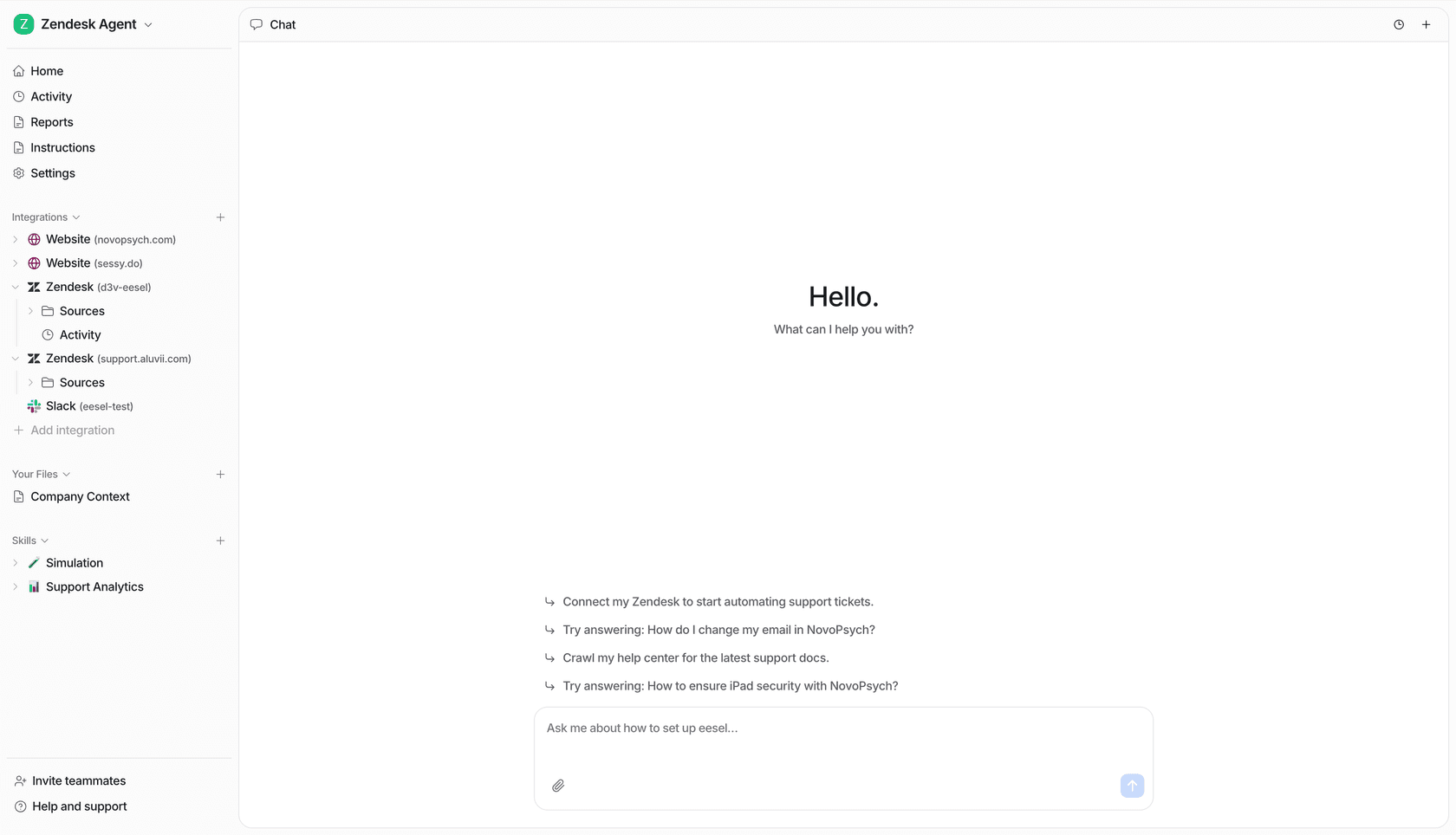
The differentiator is that you can simulate it on thousands of your past conversations before it goes live, so you see exactly how it would have answered real buyers, tune it, and only then let it talk. It learns from your existing docs and tickets, routes on confidence so it never bluffs about your product, and connects to 100+ tools including Zendesk, Freshdesk, Shopify, and Slack. It's free to try with no credit card, and a fixed monthly price with optional capped overage means a launch-day chat spike doesn't blow up your bill.
If a big chunk of your "support" volume is really buyers asking whether they should buy, that's the exact gap eesel was built to close.
Frequently Asked Questions
What is conversational AI for sales?
Conversational AI for sales is software that holds a real, free-form dialogue with a prospect, answers their buying questions instantly, and captures intent so a rep can pick up a qualified lead. It's a step past a scripted AI chatbot: instead of branching menus, it understands what the buyer actually asked and pulls the answer from your own docs and pricing.
Can conversational AI qualify leads on its own?
Yes, for the front end of qualification. It can ask the discovery questions, capture company size and use case, and route the hot ones to sales, which is the core of most lead qualification workflows. It shouldn't make the final buy/no-buy call on a complex deal, though. Use it to filter and enrich, then let a human close.
How much does conversational AI for sales cost?
It varies a lot by pricing model. Some tools charge per seat, some per resolution, some per conversation. Credit-based tools like eesel AI start at $299/month for 500 credits (1 credit per conversation) with no per-seat fee, which matters when a sales chat can spike unpredictably during a launch.
Is conversational AI better than live chat for sales?
It depends on your volume. A human on live chat converts high-intent visitors beautifully but can't cover every hour or every question. Conversational AI handles the always-on, repetitive pre-sales questions and hands the buying-signal conversations to a human, so the two work best together rather than as either/or.
Will a sales AI give wrong answers to prospects?
It can if it's ungrounded, which is why answering from your own knowledge and using confidence-based routing matters. A well-set-up agent answers only what it's sure about and escalates the rest instead of confidently making something up about your pricing.