

Let's be honest, Corti AI is a big deal in the healthcare world. Its medical-grade speech-to-text, coding, and agent APIs are genuinely impressive technology.
But that laser focus on healthcare, combined with its enterprise-first model, can be a real issue for teams that need something more flexible, easier to set up, or that just works outside of a clinical environment. If you're not a massive hospital system, you might find it's a bit like trying to fit a square peg in a round hole.
That’s why we rolled up our sleeves and tested the best Corti AI alternatives we could find. This list covers everything from direct medical competitors to versatile AI support platforms that give you a ton more control and can be used in pretty much any industry.
What is Corti AI?
At its core, Corti AI is an artificial intelligence platform that positions itself as "the AI platform for healthcare & life-science developers." It offers Corti models, a Speech to Text API, a Text Generation API, a Medical Coding API, an Agentic Framework, and 20+ pre-built agents, with a Console and SDK to build on them. It also ships Corti Assistant, an AI scribe app for clinicians.
Its main job is to give healthcare teams the building blocks to transcribe clinical conversations, generate documentation, predict medical codes, and run agents across clinical and operational workflows. Corti Assistant adds real-time clinical insights and one-click export to the EHR. Pricing is usage-based: $0.0065 per minute for speech to text, $4 / $16 per million input / output tokens for agents and medical coding, plus $50 of free credits to start.
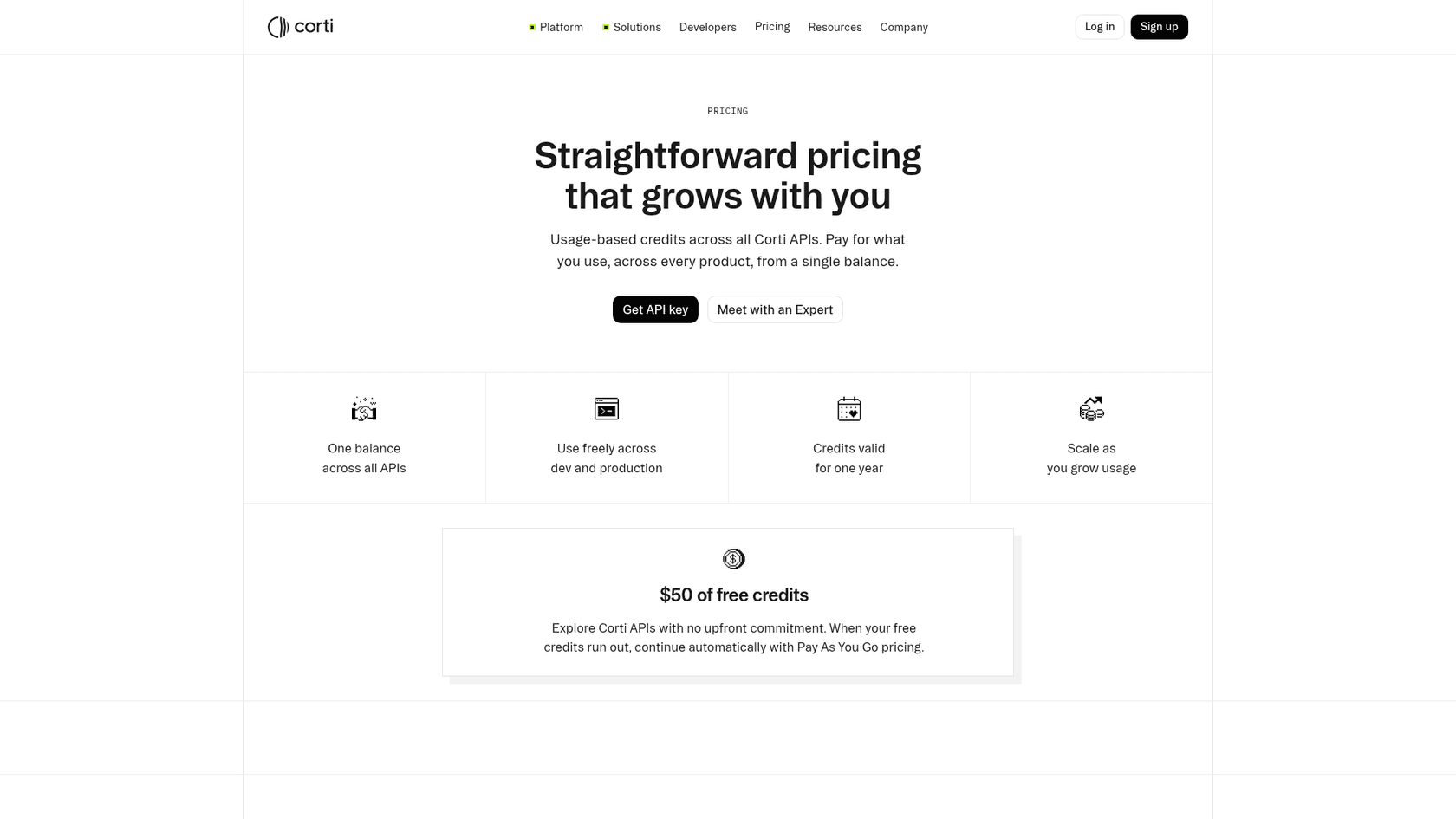
This makes Corti incredibly powerful, but also super specialized. It's built from the ground up for medical workflows and for developers. That's great if that's all you need, but not so helpful if your support needs are a bit broader. This specialization is exactly why so many people start looking for alternatives that can bend to their way of working.
Our criteria for choosing the best Corti AI alternatives
So, how did we pick these tools? We didn't just pull names out of a hat. We put each one through its paces to see how they handled the stuff that actually matters when you’re picking an AI partner.
Here’s what we looked for:
-
Core functionality & use case: Does it do its main job well? Whether that’s writing up notes, helping patients, or sorting through support tickets, we wanted to see real-world effectiveness.
-
Ease of implementation: Can you sign up and get going in a few minutes on your own? Or are you stuck in a months-long sales cycle with mandatory demos just to get a peek at the product?
-
Flexibility & customization: Is the tool a one-trick pony, or can you actually mold it to your team's workflow? We gave extra points to tools that let you control the AI's personality, behavior, and the actions it can take.
-
Pricing & transparency: Is the pricing easy to understand? We looked for simple subscription models and stayed away from platforms with confusing, usage-based fees (like charging per ticket solved) that can lead to some nasty surprises on your bill.
Top 6 Corti AI alternatives at a glance
Here’s a quick rundown of the best Corti AI alternatives we found and who they’re a good fit for.
| Tool | Best For | Starting Price | Key Feature | HIPAA Compliant |
|---|---|---|---|---|
| eesel AI | Flexible, self-serve AI support for any industry | From $299/mo (500 credits) | AI helpdesk teammate that drafts, replies, tags, and routes, with an AI agent | Custom (Enterprise) |
| Abridge | AI-powered clinical documentation | Custom | Real-time note generation from conversations | Yes |
| DeepScribe | Automated medical scribing | Custom | Ambient AI that captures patient visits | Yes |
| Glass Health | Clinical decision support & ambient scribing | $90/mo (Pro) | AI for differential diagnosis generation | Yes |
| Replicant | Voice-based customer service automation | Custom | Autonomous contact center voice agents | Yes |
| Lindy | AI-powered workflow automation | $29.99/mo | AI agents for automating cross-app tasks | Enterprise (BAA) |
The 6 best Corti AI alternatives in 2026
Alright, let's get into the details of each tool, what makes it tick, and where it might not be the right choice.
1. eesel AI
eesel AI is the best pick for teams who want serious AI power without being boxed into one industry or a stuffy, old-school sales process. It’s an all-in-one platform that connects to the tools you already use, like Zendesk or Freshdesk, and your knowledge bases to automate support, help agents draft replies, and answer internal questions.
While Corti is built only for healthcare, eesel AI is a powerful and fully customizable tool for any support team, including those in regulated fields. The biggest difference is how you get started. You can connect your info, train your AI, and go live in a matter of minutes, not months. It learns from your past tickets, docs, and help articles to get up to speed on your business right away.
Pros:
-
Genuinely self-serve: You can sign up, set up your AI agents, and launch all by yourself. No need to sit through a sales call if you don't want to.
-
You're in control: It has a visual, no-code workflow builder that lets you decide exactly which tickets get automated and what the AI is allowed to do, from tagging tickets to looking up order details.
-
Connects to everything: It doesn't just learn from your helpdesk. It can pull knowledge from Confluence, Google Docs, Slack, and over 100 other places to give complete, accurate answers.
-
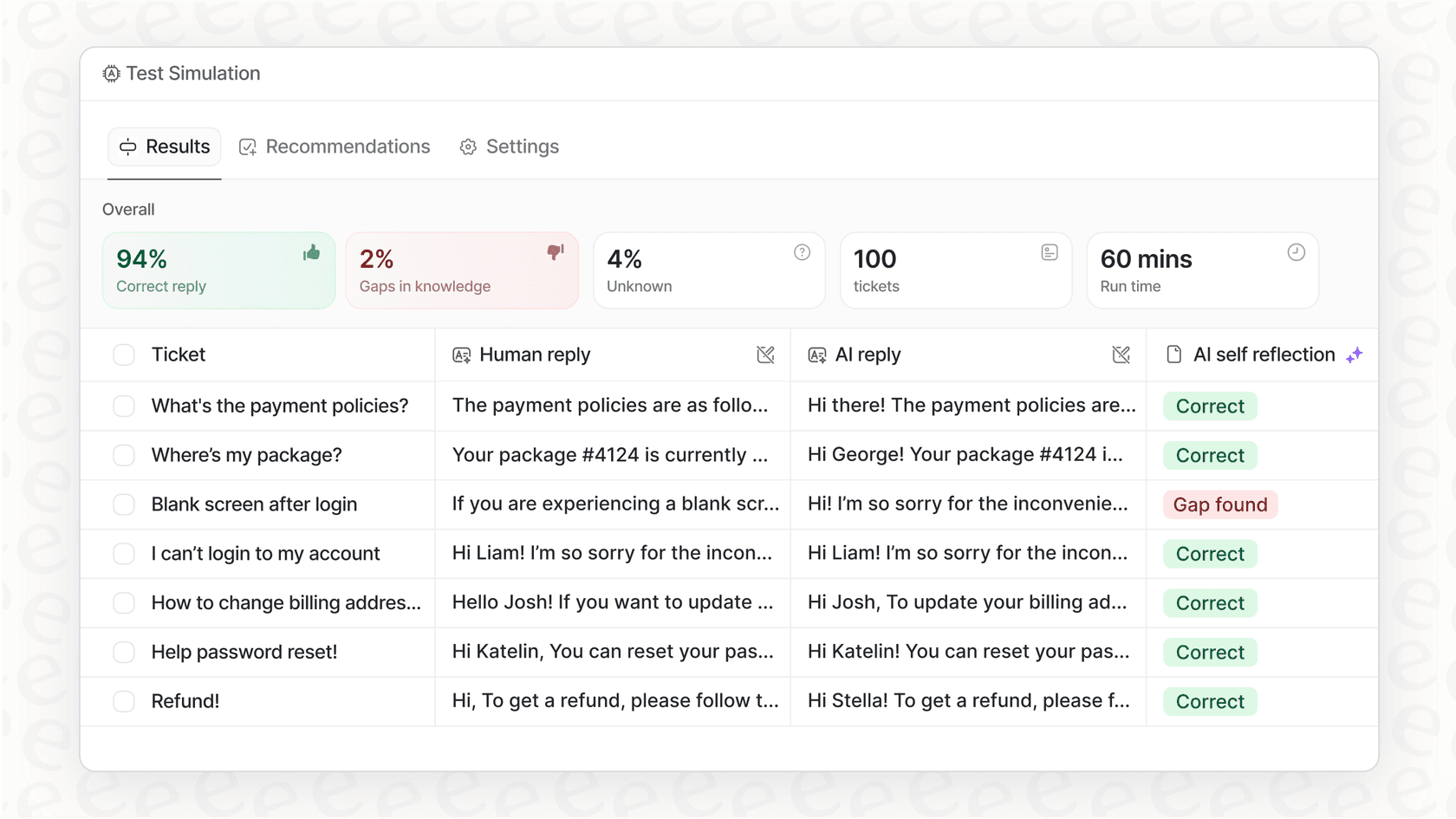
Test it safely: You can test your AI against hundreds of your past tickets: it scores each answer and suggests fixes before you ever turn it on for customers.
-
Clear pricing: You pay a fixed monthly plan, where a ticket or chat counts as one credit. No per-resolution charges that punish you for having a busy month.
Cons:
-
It isn't pre-trained on specific medical dictionaries like Corti because it's designed to learn from your company's unique data.
-
It's built for support and operations teams, not for giving real-time clinical diagnoses.
-
Free: 100 credits, no card needed.
-
Teammate: one fixed monthly price sized to volume, from $299/month for 500 credits, $499/month for 1,000 credits, up to $1,899/month for 5,000 credits. 1 credit covers one ticket or chat. Unlimited agents and seats, every integration included.
-
Pay a year upfront: two months free. Add-ons like SSO and MFA (from $199/month) and data residency ($500/month) are available.
2. Abridge
Abridge is a direct competitor to Corti that focuses on tackling one of the biggest time-sinks in healthcare: clinical documentation. It uses generative AI to listen to, organize, and summarize conversations between doctors and patients, turning a normal conversation into a properly structured medical note.
It’s a great alternative if your main goal is to reduce the mountain of paperwork clinicians have to deal with. Abridge creates AI-generated notes in real-time that can plug right into Electronic Health Records (EHRs), giving doctors and nurses more time to focus on their patients.
Pros:
-
Highly specialized in understanding medical conversations.
-
Proven to cut down on administrative work for clinicians.
-
Integrates with major EHR systems like Epic.
Cons:
-
It's focused on documentation, and Corti's developer APIs and agents cover a broader build-your-own scope.
-
It's an enterprise tool, so you have to jump through the hoops of demos and sales calls to get started.
Pricing:
- Abridge doesn't list its prices publicly. You have to talk to their sales team for a custom quote, which usually means it's aimed at large healthcare systems with big budgets.
3. DeepScribe
DeepScribe is what's known as an "ambient AI" platform, which basically means it's a virtual medical scribe. It just runs in the background during a patient visit, listening to the conversation and automatically creating complete, compliant medical documentation that's ready for billing.
This is a strong alternative to Corti if you're trying to solve the documentation problem. Instead of helping with diagnoses, DeepScribe puts all its energy into automating the scribing process, a huge source of burnout for clinicians.
Pros:
-
The ambient AI is low-key and works in the background without getting in the way.
-
Deep oncology-focused EHR integrations (iKnowMed, OncoEMR, Epic).
-
Helps cut down on the "pajama time" clinicians spend charting after hours.
Cons:
-
It's a documentation tool, not a real-time diagnostic assistant.
-
Like other enterprise healthcare tools, you won't find pricing on their website. It's all behind a "request a demo" button.
Pricing:
- DeepScribe’s pricing isn't available online. You have to schedule a demo to get a custom quote for your organization.
4. Glass Health
Glass Health is an AI tool that goes head-to-head with Corti's main feature: helping clinicians make better decisions, faster. It's built to help medical professionals create differential diagnoses and develop clinical plans using patient information.
This is a fantastic alternative for doctors who want an AI partner to help them think through complicated cases and make sure they aren't overlooking anything. It works like an intelligent sounding board, helping to organize thoughts and check them against evidence-based medicine.
Pros:
-
Specifically designed to help improve diagnostic accuracy.
-
Helps clinicians create well-structured assessments and plans.
-
Built by doctors, for doctors, with a clean, easy-to-use interface.
Cons:
-
It’s built around the clinician's own decision support and scribing, not patient communication or call-center workflows.
-
It feels more like a personal productivity tool for individual clinicians than a big, integrated system for a whole hospital.
Pricing:
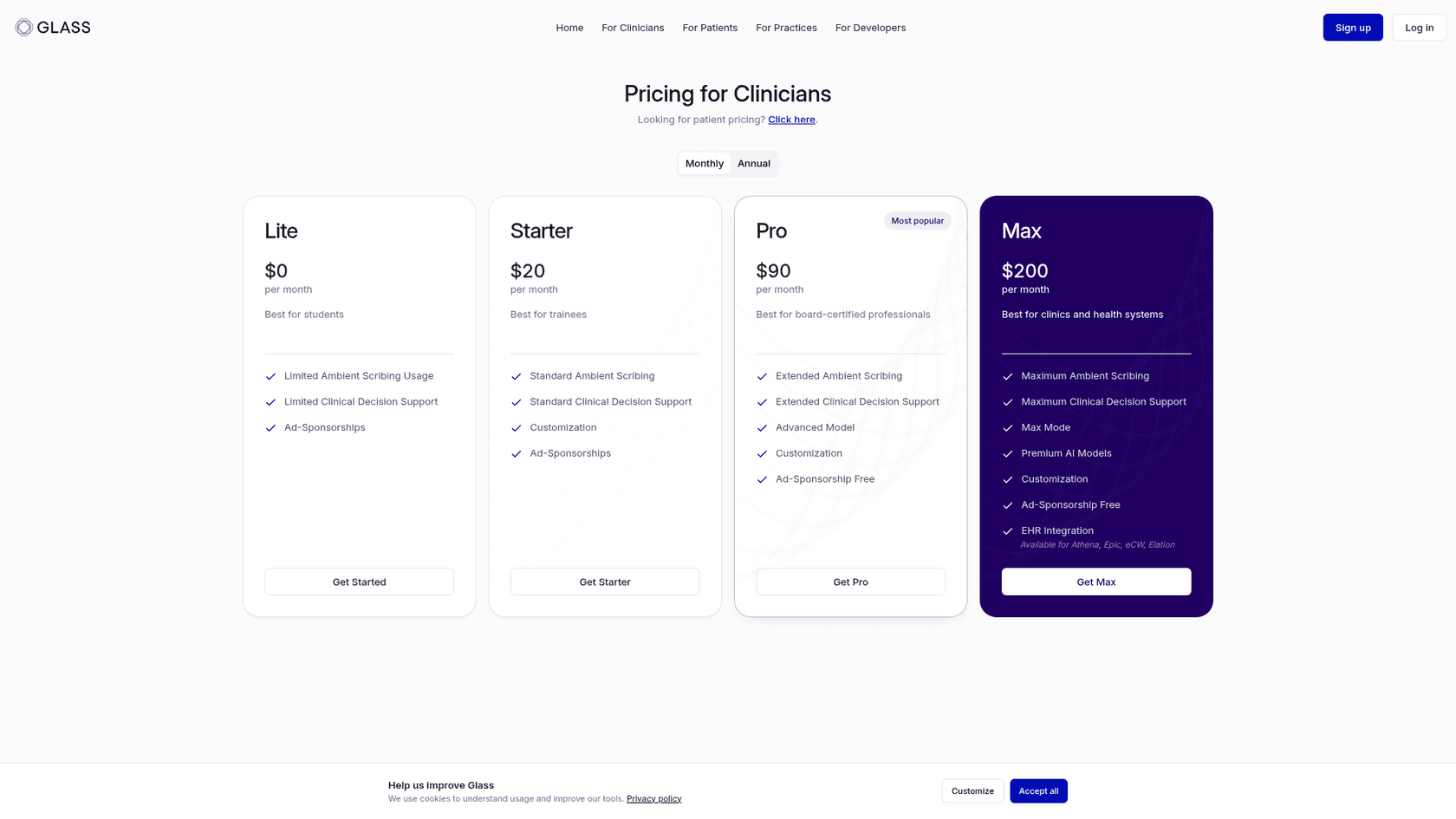
- Glass Health lists clinician plans from a $0 Lite tier and $20 Starter up to Pro at $90/month and Max at $200/month, and every tier includes ambient scribing. That keeps it accessible for individual doctors and small practices.
5. Replicant
Replicant shows what voice AI can do outside of a hospital. It provides autonomous AI voice agents for call centers that can handle pretty complex customer service calls from beginning to end, often without needing to escalate to a person.
This is an interesting Corti AI alternative if you're drawn to the voice analysis part of Corti but need it for a general customer service team. It's a good example of how advanced conversational AI can navigate tricky, unscripted conversations to solve problems around the clock.
Pros:
-
Incredibly advanced conversational AI for phone support.
-
Can resolve complicated customer problems over the phone on its own.
-
Connects with major CRM and call center platforms.
Cons:
-
It's not made for healthcare and won't understand medical terms.
-
It’s a complex, enterprise-level tool that likely has a high price and takes a while to set up.
Pricing:
- Replicant doesn't post its pricing online. You have to go through their demo and sales process.
6. Lindy
Lindy is a broader AI automation platform that lets you create custom "AI agents" to take care of all sorts of business tasks, from scheduling meetings and sorting your inbox to finding new leads and sending follow-up emails.
It's a different kind of AI tool that goes beyond just analyzing conversations. Lindy is for teams that want to build custom, multi-step AI workflows that work across all the different apps they use.
Pros:
-
Very versatile for automating a huge range of business tasks, not just support.
-
Has a no-code builder for creating your own AI agents from scratch.
-
Integrates with thousands of different applications.
Cons:
-
It's not specifically built for real-time conversation analysis or customer support.
-
The focus is more on automating individual tasks rather than building a complete support system.
-
Free: $0 with $50 in credits that last 7 days.
-
Team: from $29.99/month for 3,000 credits, $99.99/month for 15,000, and $199.99/month for 35,000, with credits pooled across the team.

Choosing between Corti AI alternatives: Specialized tool vs. a flexible platform
Figuring out whether to go with a niche tool or an adaptable platform really just depends on what you value most.
A specialized tool (like Corti or Abridge) makes the most sense when you're in a heavily regulated industry with a very specific, rigid workflow. These tools come with deep knowledge of the field baked right in. They get medical lingo and are already set up for things like clinical documentation. But that specialization comes at a cost. They're often inflexible, can't be used for general customer support, and lock you into long, pricey enterprise contracts.
A flexible platform (like eesel AI) is for teams who want power and control without the rigid guardrails. A platform like eesel AI is designed to adapt to your business, not force you to adapt to it. It connects to the tools you already have and learns from your unique company knowledge, no matter where it's stored.
The perks are pretty clear:
-
Quick setup: You can be up and running in minutes, not waiting for months.
-
Total customization: You're in the driver's seat. You control the AI's tone, what it knows, and what it's allowed to do.
-
Unified knowledge: The AI learns from how your business actually runs, pulling context from past support tickets, Google Docs, or Slack conversations.
This makes eesel AI a great choice for teams that need a solution that is both powerful and refreshingly simple to manage, without getting stuck in a single-purpose box.
Choosing the right Corti AI alternatives for your team
At the end of the day, the right tool is the one that solves your team's specific problems. If you need a dedicated, deeply integrated clinical tool for diagnostics or documentation and you have the time and budget for a big enterprise rollout, a direct competitor like Abridge or Glass Health is a solid choice.
However, if you're looking for a powerful, flexible, and easy-to-use AI platform that can automate support, help out your agents, and work with all the tools you already use, eesel AI is the clear winner. It gives you enterprise-level control in a self-serve package, with transparent pricing that won't give you a heart attack. You get the best of both worlds, minus the usual headaches.
Ready to see how easy it can be to automate your support? Start your free eesel AI trial today.
Frequently asked questions
Why might a team explore using Corti AI alternatives?
Corti AI is a developer platform specialized for healthcare, often making it inflexible or too complex for teams outside clinical environments or those needing simpler setup processes. Many alternatives offer broader applicability or different specialized functions better suited to diverse business needs.
What kinds of Corti AI alternatives are highlighted in this review?
The review covers a range of tools, including direct medical documentation and clinical decision support platforms, as well as flexible AI support solutions for general customer service and broader workflow automation tools applicable across various industries.
Are there Corti AI alternatives that are easier to implement than Corti?
Yes, some tools like eesel AI are designed for self-serve setup, allowing teams to connect their data and launch AI agents in minutes. This contrasts sharply with the longer enterprise sales and implementation cycles often associated with highly specialized platforms like Corti.
How do the pricing models of Corti AI alternatives typically compare?
Pricing models vary significantly among Corti AI alternatives. They range from transparent published prices (e.g., eesel AI, Glass Health, Lindy) to custom enterprise quotes requiring sales consultations (e.g., Abridge, DeepScribe, Replicant), and some combine per-seat fees with usage-based charges.
Are the suggested Corti AI alternatives HIPAA compliant for healthcare use?
Many of the direct medical tools reviewed, such as Abridge, DeepScribe, and Glass Health, position themselves for HIPAA-regulated use; check each vendor's agreement. eesel AI offers HIPAA support with a signed BAA on its Enterprise plan, so confirm the agreement you need before using it with patient data.
Can I customize the behavior and personality of Corti AI alternatives?
Yes, especially with flexible platforms like eesel AI. These tools often feature visual, no-code builders that let you extensively control the AI's tone, knowledge sources, and the specific actions it's allowed to take, allowing you to tailor it precisely to your team's workflow.