

When it launched, OpenAI's Sora 2 stole the show. It whipped up incredibly realistic video clips from just a few words, and businesses were all asking the same thing: how can we get this on Facebook? The idea of creating instant, eye-catching video ads and Reels is a marketer's dream, but actually "integrating" the two was never as simple as clicking a "connect" button.
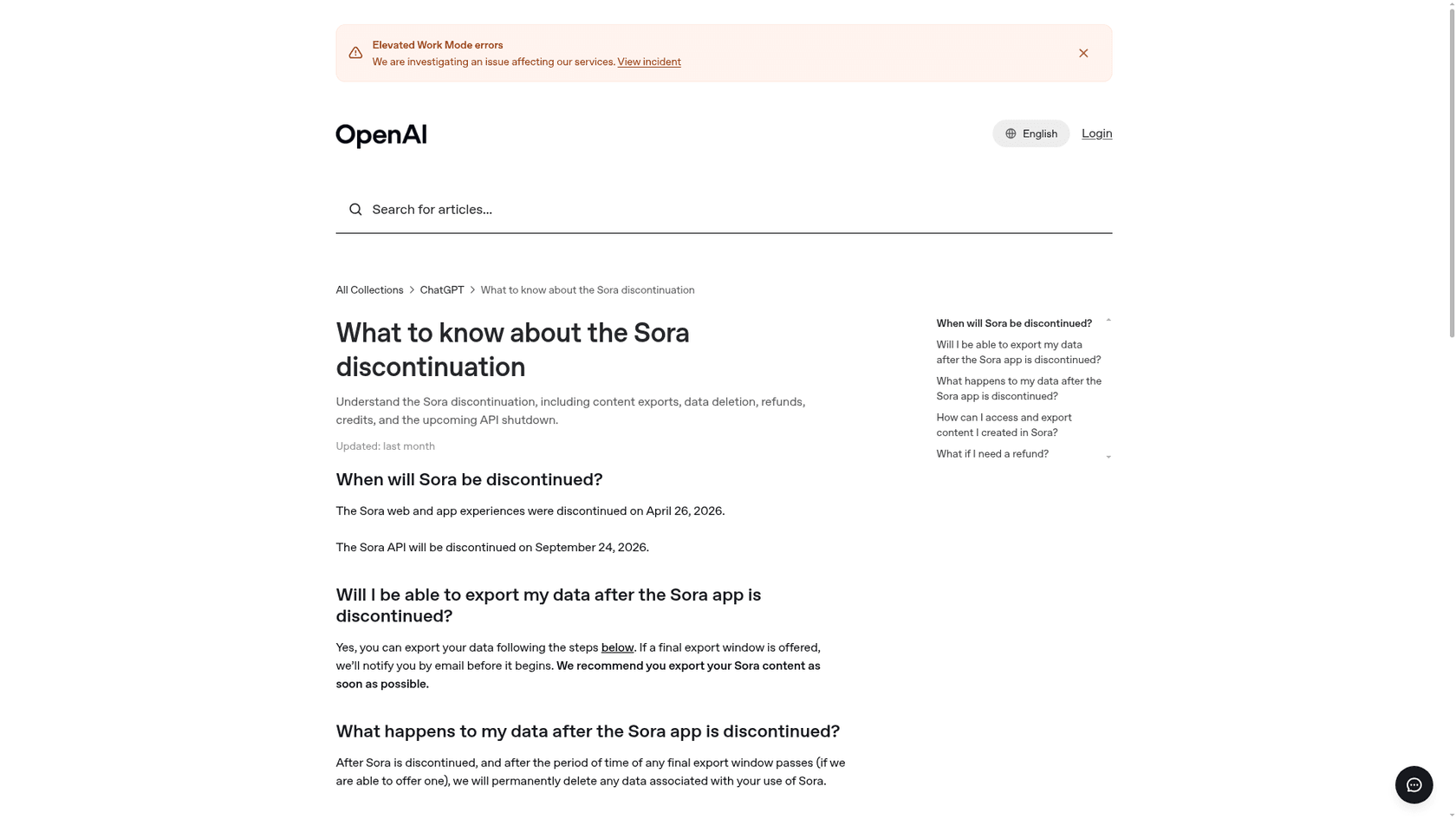
OpenAI discontinued the Sora web and app experiences on April 26, 2026, and the Sora API is scheduled to shut down on September 24, 2026. That changes the advice in this guide, so I have marked what no longer applies.
This guide will walk you through the real story behind Facebook integrations with Sora 2. We'll cover what people did with it, what the shutdown changes, look at Meta's own AI tools, and dig into the practical problems that pop up when you try to turn AI-generated videos into real customer conversations.
What are Facebook integrations with Sora 2?
Before we jump in, let’s get on the same page. Knowing what Sora 2 and "integrations" actually mean in this context will help you set some realistic expectations for how they can (and can't) work together.
What was Sora 2?
Sora 2 was OpenAI's text-to-video AI model, and at launch it was a big leap forward. It created videos that looked and felt more real and made more sense than what came before. Its main tricks included:
-
High-quality video: It generates clips that can look so real you'd swear they were shot with a camera.
-
Synchronized audio: The model doesn't just make silent films; it creates matching background sounds and effects that sync up with what's happening on screen.
-
The Sora App: OpenAI released Sora 2 as its own social app, kind of like TikTok, where people can create, share, and remix their AI videos.
-
Cameos: This is the feature that gets everyone talking. It lets you stick your own face and voice into AI-generated scenes, which makes creating personal content way easier and a lot more fun.
What does 'integration' mean in this context?
Normally, an "integration" is an official, behind-the-scenes connection between two apps that lets them share data and automate tasks. Think of how your calendar app can pull events from your email automatically.
In the case of Sora 2 and Facebook, a direct connection like that never existed. When people talk about integrations here, they're mostly talking about a grab-bag of manual uploads, clever workarounds using other tools, and just generally how Facebook as a platform handles AI content.
The current state of Facebook integrations with Sora 2
There was never an official "Sora 2 for Facebook" button, but there were a few ways to get the two to play together. You also have to remember one crucial thing: Meta (Facebook's parent company) is a direct competitor to OpenAI. That changes the whole game.
Direct sharing: The simple, manual approach
The most straightforward way to get your Sora 2 masterpiece on Facebook is the old-fashioned way. You download the video from the Sora app, then manually upload it to your Facebook Page, Group, or as a Reel.
Honestly, since Sora 2 can spit out a high-quality clip in minutes, this is already a huge time-saver compared to the days of needing expensive camera gear and hours of editing. The only downside? It’s completely manual. You're just moving a file from point A to point B. It works, but it's not going to scale if you're trying to build a sophisticated marketing machine.
Facebook's algorithm and Sora 2 content
So, is Facebook going to penalize you for posting AI-generated videos? Not necessarily. According to Facebook's VP of Product, Jagjit Chawla, the algorithm treats AI content just like human-made stuff. What really matters are the classic user signals: likes, comments, shares, and watch time.
If your audience enjoys your Sora 2 videos, Facebook will show them to more people. But if your content comes across as low-effort "AI slop" and people quickly scroll past it, its reach will get squashed. Meta also has policies for labeling AI content, so transparency is part of the deal.
The big catch: Meta's "Vibes"
You can't really talk about using Sora 2 on Facebook without acknowledging the awkward situation in the room. Meta isn't just a neutral playground for your AI videos; it's an active competitor with its own AI video tools.
Meta launched "Vibes," an AI short-video feed inside the Meta AI app. It's built specifically for creating quick, shareable clips that fit perfectly on Instagram and Facebook. This head-to-head competition is a huge reason why a deep, native integration between Sora 2 and Facebook probably isn't coming anytime soon. It just wouldn't make sense for Facebook to help promote a rival's star product.
| Feature | OpenAI Sora 2 | Meta Vibes |
|---|---|---|
| Core Focus | Realistic storytelling & social entertainment | Social sharing & community creation |
| Standout Feature | Cameo (inserting real people), audio sync | Prompt recipe sharing, deep Meta app integration |
| Platform | Standalone iOS app and website (discontinued April 26, 2026) | Integrated into the Meta AI app |
| Target User | Creators and entertainment seekers | Casual social media users |
How to build your own Facebook integrations with Sora 2
For businesses that want to do more than just manually upload videos, automation platforms like Make.com are your best friend. These tools act like digital duct tape, letting you connect apps that weren't built to talk to each other.
Using automation for a custom integration
Tools like Make.com or Zapier let you create "if this happens, then do that" recipes without needing to write any code. For example, you could set up a workflow where every time you add a new product to your Facebook Catalog, it automatically triggers the OpenAI API (which powered Sora 2) to create a promotional video for it. Because the Sora API is scheduled to shut down on September 24, 2026, the same workflow now needs another video model at the generation step.
Now, this isn't a simple, one-click setup. It’s not like eesel AI, which offers helpdesk integrations that are live in minutes. Building these custom workflows takes a bit of technical comfort to get the triggers, actions, and prompts set up just right. But for marketing teams willing to tinker, it opens up some really interesting possibilities.
Practical ideas for businesses
Once you get an automated workflow running, you can start doing things like:
-
Generate video ads on the fly: Automatically create a unique promo video for every new product you add to your Shopify store and post it right to your Facebook page.
-
Scale up your content creation: Build a huge library of on-brand video assets for your social campaigns without needing a massive production budget.
-
Test creative ideas faster: Come up with five different versions of an ad, with different scenes, styles, or calls to action, to see what your audience likes best, all in the time it takes to grab a coffee.
The not-so-obvious challenges
While all of this sounds great, going all-in on Sora 2 for your Facebook strategy comes with a few big hurdles, especially when it comes to brand consistency and customer support.
The 'AI slop' problem
The ease of creating AI video can be a trap. If you're not careful, you can quickly flood your feed with generic, off-brand content that just feels... weird. Without a human eye and strong creative direction, your page can fill up with what people are calling "AI slop," which can do real damage to your brand's reputation.
Sora 2 is an amazing tool, but it doesn't know your company's brand voice, your customer service policies, or the little details that make your products special. It just follows a prompt; it doesn't actually understand your business.
The missing piece: From content to conversation
Here’s the biggest challenge of all: Sora 2 makes content, but it can't handle conversations.
Imagine your beautiful, AI-generated Facebook ad gets a comment: "Where is my order?" At that moment, the whole automated dream grinds to a halt. Sora 2 has no idea how to answer that question, look up order details, or offer any real help. Its job was done the second the video was made.
This is where a dedicated AI tool for customer service makes all the difference. An AI Agent from eesel AI, for example, plugs directly into your helpdesk and knowledge sources. It doesn't create the video, but it can instantly and accurately resolve the support ticket that comes from that Facebook comment. By learning from your past tickets, help center articles, and even your internal Google Docs or Confluence pages, it makes sure every customer response is on-brand and genuinely helpful. It turns a potential customer service headache into a smooth experience.

What would a Facebook and Sora 2 integration have cost?
Sora 2 no longer has a price to quote, so the useful number today is the automation layer you would keep using with a different video model.
-
OpenAI Sora 2: There is nothing left to buy. The app was discontinued on April 26, 2026, and the API is scheduled to close on September 24, 2026, per OpenAI.
-
Automation Tools (like Make.com): Make's free plan includes 1,000 credits a month. Paid plans are priced per 10,000 credits a month: Core is $12, Pro $21, and Teams $38 (annual billing).
Facebook integrations with Sora 2: Where do we go from here?
Facebook integrations with Sora 2 were always a mix of doing things by hand and setting up some fairly technical automations, and with Sora now discontinued that is history rather than a plan. These methods are opening up exciting new ways to create marketing content at scale, but they also bring new problems, like keeping your brand voice consistent and managing the customer questions that follow.
The future of AI in business isn't just about making more stuff, faster. It's about intelligently connecting all the different parts of the customer's journey. The smartest strategy will likely combine the creative firepower of AI video tools with the conversational smarts of AI support platforms. That way, you can be sure your cool, innovative marketing is backed by fast, accurate, and on-brand customer service every single time.
Worried that all your new video content will create a flood of customer questions? eesel AI connects to your existing tools and learns from your company's knowledge to resolve support tickets instantly. You can go live in minutes, not months, and even simulate how it would have performed on your past tickets, risk-free.
Frequently asked questions
Are direct, official Facebook integrations with Sora 2 currently available for users?
No, a direct, official integration between Sora 2 and Facebook never existed, and OpenAI discontinued the Sora app on April 26, 2026. Most current methods involve manually uploading videos or using third-party automation tools.
How does Facebook's algorithm view content created using Facebook integrations with Sora 2?
Facebook's algorithm treats AI-generated content much like human-made content, prioritizing user engagement signals such as likes, comments, shares, and watch time. Transparency is also important, as Meta has policies for labeling AI content.
Why isn't there a deeper, native connection for Facebook integrations with Sora 2?
Meta, Facebook's parent company, is a direct competitor to OpenAI and has its own AI video tools like "Vibes." It's unlikely for Facebook to deeply integrate with a rival's flagship product.
What are some ways businesses can automate aspects of their Facebook integrations with Sora 2?
Businesses can use automation platforms like Make.com or Zapier to create custom workflows. These tools allow you to connect apps and automate tasks, such as triggering Sora 2 to create a promotional video when a new product is added to a catalog.
What challenges should businesses be aware of when pursuing extensive Facebook integrations with Sora 2?
A major challenge is the "AI slop" problem, where easily generated, generic content can dilute brand consistency and reputation. Video models like Sora 2 create content but lack understanding of brand voice or customer service policies.
If I leverage Facebook integrations with Sora 2 for marketing, how can I manage customer inquiries effectively?
Sora 2 focuses on content creation and cannot handle customer conversations directly. It's crucial to pair it with a dedicated AI customer service tool, like an AI Agent from eesel AI, to resolve support tickets stemming from social media engagement.
What is the estimated cost for businesses looking to implement Facebook integrations with Sora 2?
Sora 2 can no longer be bought: the app was discontinued on April 26, 2026 and the API is scheduled to shut down on September 24, 2026. Automation tools like Make.com still apply to a replacement video model; Make has a free plan and paid plans from $12 per month.