Ginzi pricing in 2026: what it cost and what to use instead

Kurnia Kharisma

Katelin Teen
Last edited September 28, 2026

What did Ginzi cost?
Honest answer: no one published a number. Ginzi's homepage carried a Pricing tab in the top nav, alongside Home, Solutions, Blog, and Book a demo, so a price presumably lived there once. The primary CTA everywhere was Sign up, which is the classic shape of a product that gated pricing behind a signup or a sales call rather than a public plan.
What I can say for certain is what's still live. The Ginzi Macro Craft listing on the Zendesk Marketplace is marked "Free integration", carries a 3-star rating from 4 reviews, and shows 10+ installs. Its one-line pitch is "turn generic macros into personal answers using GPT-4."
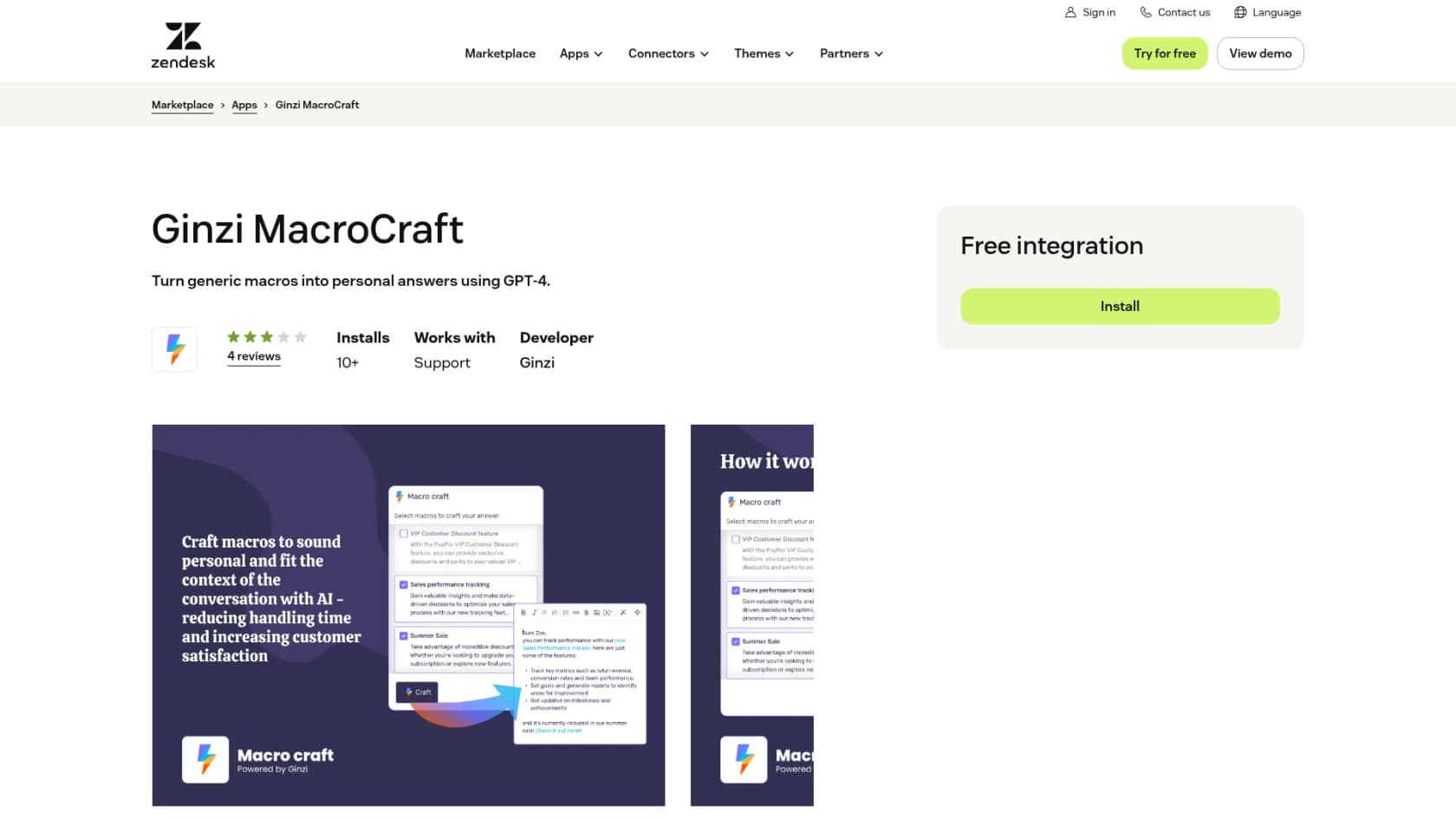
That "free" label is worth pinning down, because it's easy to read it as "Ginzi is free." It isn't quite. The free tag only ever covered the Zendesk Marketplace app, the macro personalizer. The wider Ginzi platform, the part that scanned inboxes and drafted answers, sat behind the Sign up flow with no public price. So the real state of things is: a free macro helper you can still install, and a paid platform whose price was never disclosed and can no longer be bought.
For context on what a full product in this space charges, the numbers in our AI customer service cost breakdown are a far better anchor than anything Ginzi left behind.
Why there is no Ginzi pricing page today
Ginzi was founded in Tel Aviv in 2021, came out of stealth around May 2023, and raised roughly $1.5M from Jumpspeed Ventures, Fresh.Fund, and Atooro Fund. On April 15, 2024, Argmax acquired it for undisclosed terms, and the Ginzi development team moved across.

The press release framed it as a strategic expansion. Argmax's CEO, Uri Goren, described the deal:
"Acquiring Ginzi allows us to enhance our market presence significantly."
Here is why the pricing page matters as a signal. Argmax today describes itself as a search and discovery ML shop working across advertising, marketing, and finance. There is no Ginzi-branded support product on its site, no relaunch, and no live pricing to point at. Read against that, the acquisition looks less like "we're scaling Ginzi" and more like an acqui-hire that ended the product. The dead pricing page isn't an oversight, it's the natural end state when the team that would maintain it has moved on to a different business.
None of that is a knock on the people who built Ginzi. It's just the reality a buyer needs before they spend an afternoon hunting for a Ginzi quote in 2026. "Is this still sold, and is it still supported" is a fair first question for any tool, and for Ginzi the answer is no on both counts.
What "Ginzi pricing" was actually buying you
Before you compare Ginzi's price to anything, it helps to be clear on what the paid product did, because it changes the math. Ginzi was an agent-assist layer, not an autonomous agent. It read your team's past conversations, spotted resolution patterns, and helped a human reply faster. The person stayed in the loop on every ticket.
It shipped as two pieces:
- Ginzi Mail turned your inbox into an AI workflow for customer service automation, scanning incoming email and attachments and suggesting an answer inside the email environment.
- Macro Craft was the Zendesk Marketplace app that personalized a canned macro in one click so it stopped sounding robotic, leaning on GPT-4 to draft from your knowledge base.
That's real, useful work. But it matters for pricing, because an assist tool and an autonomous AI agent charge for completely different outcomes. An assist tool typically bills per agent seat, so your cost climbs with headcount, and a human still sends every reply. An autonomous agent bills on volume or a flat plan, and it can actually close the ticket, so the cost tracks demand rather than the size of your team. If you're doing the human agent cost sum, that distinction is the whole thing.
There's a second gap that Ginzi's model never had to price in: trust. When a human sends every reply, a wrong AI suggestion is caught before it ships. The moment you let an AI reply on its own, you need a way to know it won't confidently say something wrong, which is exactly the hallucination problem every serious rollout has to solve.
Before you pay for any acquired AI tool, run this check
Ginzi is a clean example of a broader trap: a tool that still ranks, still has a marketplace listing, and still looks buyable until you try to actually purchase it. Here's the quick check I run on any AI support tool before trusting a live queue to it. Tick what's true, and see where it lands.
What to pay instead: pricing a live AI for Zendesk
If you came here for Ginzi pricing because you have a Zendesk queue to fix, the practical move is to price a tool that still exists. The thing to look for is an AI that resolves front-line tickets and handles ticket triage, not one that only drafts them, and a plan you can model before you sign.
That's the gap eesel fills. It plugs into Zendesk, learns from your past tickets and help center, and works like a new hire that already knows your product, so it can resolve tier-1 tickets instead of only suggesting replies.
On pricing specifically, the two things that make it easy to budget are worth naming. First, it's a predictable plan you can model up front rather than a per-agent seat fee that balloons as you hire. Second, you simulate it on your real ticket history before it replies to anyone, so you see the resolution rate and the likely cost per ticket in a safe environment first, instead of flipping a switch and hoping.
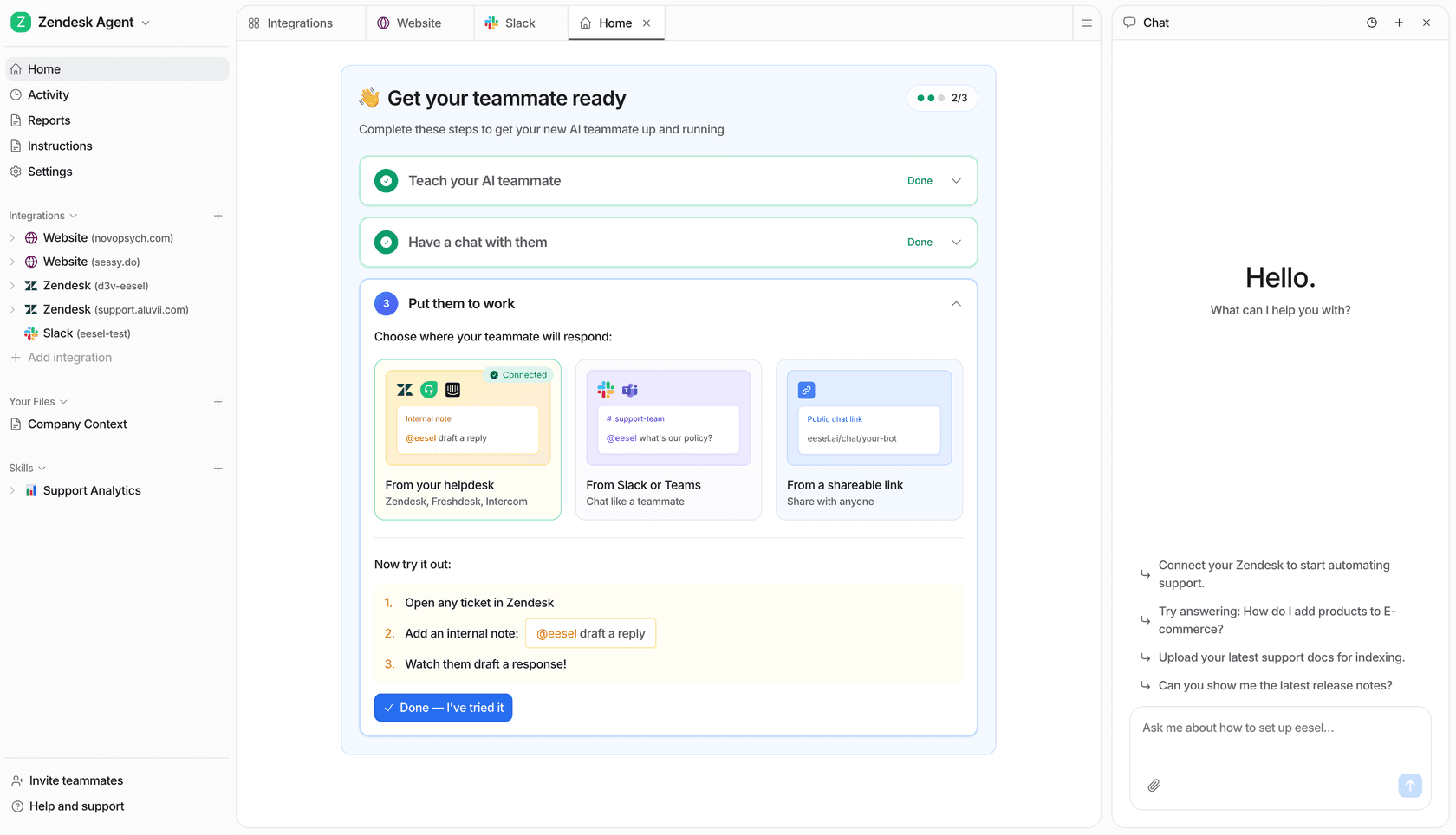
That simulation step is also the honest answer to the trust problem I mentioned. Running the AI over thousands of your past tickets and seeing exactly how it would have answered each one is the difference between "our AI is smart, trust us" and knowing your numbers before a single customer is affected. It's the piece an assist-only tool like Ginzi never had to build, because a human was always the backstop, handling every escalation by default.
If you want the wider field before you decide, our roundups of the best AI helpdesk software and the best AI agent for support both price the live options side by side, and the deflection rate guide covers the metric your pricing math actually rides on.
The bottom line on Ginzi pricing
Ginzi pricing is a search that no longer has an answer. There's a free macro app still sitting on the Zendesk Marketplace, and a paid platform that was never publicly priced and can no longer be bought. The tool had a sensible idea and a soft landing, but the market it aimed at moved from "help my agents type faster" to "close the ticket for me, safely," and the pricing model moved with it.
So price the thing you'd actually use. Look for a live product, a plan you can model, and a way to see your cost savings and the support metrics that matter before you commit. That's a real pricing decision, and it's the one worth your time in 2026.
Want an AI for Zendesk you can actually price and turn on? eesel plugs into Zendesk in a few minutes, already knows your help center, and lets you simulate on your own tickets before it replies to a customer. Free to try eesel.