

The deflection-versus-engagement framing
Give Gladly credit, because this is a real idea and not just marketing spin. Most AI support is sold on deflection rate: how many tickets can you stop a human ever seeing. Gladly argues that framing is backwards for consumer brands, where a support conversation is a chance to retain a high-LTV customer, and that optimizing purely for deflection trains your AI to brush people off.
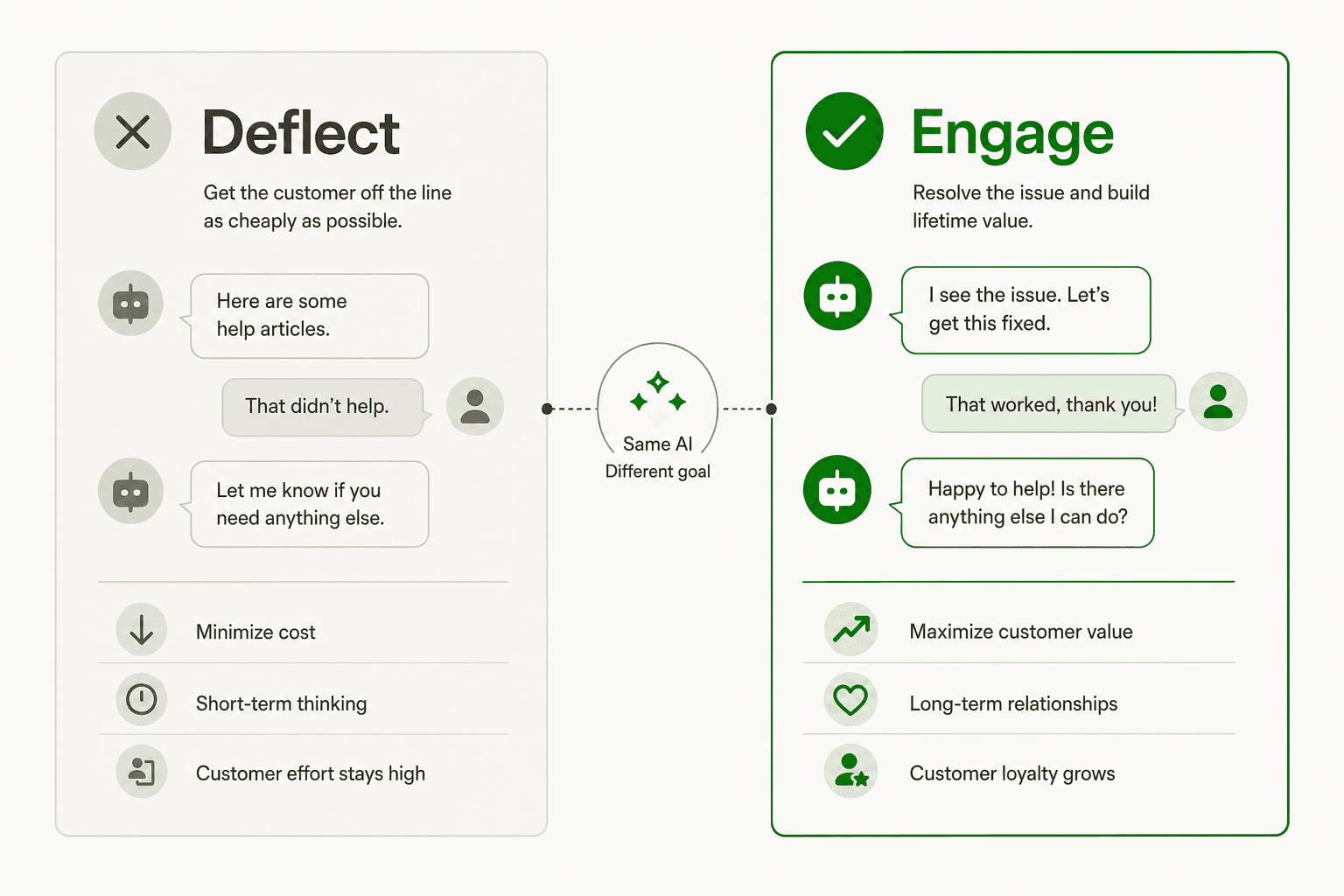
There's truth in it. An AI tuned to close tickets at any cost can absolutely tank your CSAT. But there's also a sleight of hand: whether you call it engagement or deflection, the operational reality is the same, a ticket gets resolved without a human. The distinction is about how well the AI resolves, not whether it deflects. And on that, Gladly's Sidekick is the thing doing the work.
What Sidekick actually does
Gladly is built on a "people, not tickets" model, one lifelong conversation per customer rather than discrete tickets, aimed squarely at DTC and retail brands (its roster includes TUMI, Ulta, UGG, and Nordstrom). If you're cross-shopping the category, our Kustomer vs Gladly and best AI for Gladly comparisons are useful. The AI layer, Sidekick, runs on top of that.
What makes Sidekick more than a chatbot is that it takes real actions, not just answers. It can cancel an order, process a return or exchange, and make a price adjustment, across chat, voice, email, SMS, and social, working from a unified 360-degree customer profile so customers never repeat themselves. Gladly claims a 3x resolution-rate increase in the first 30 days and 300M+ conversations to date.
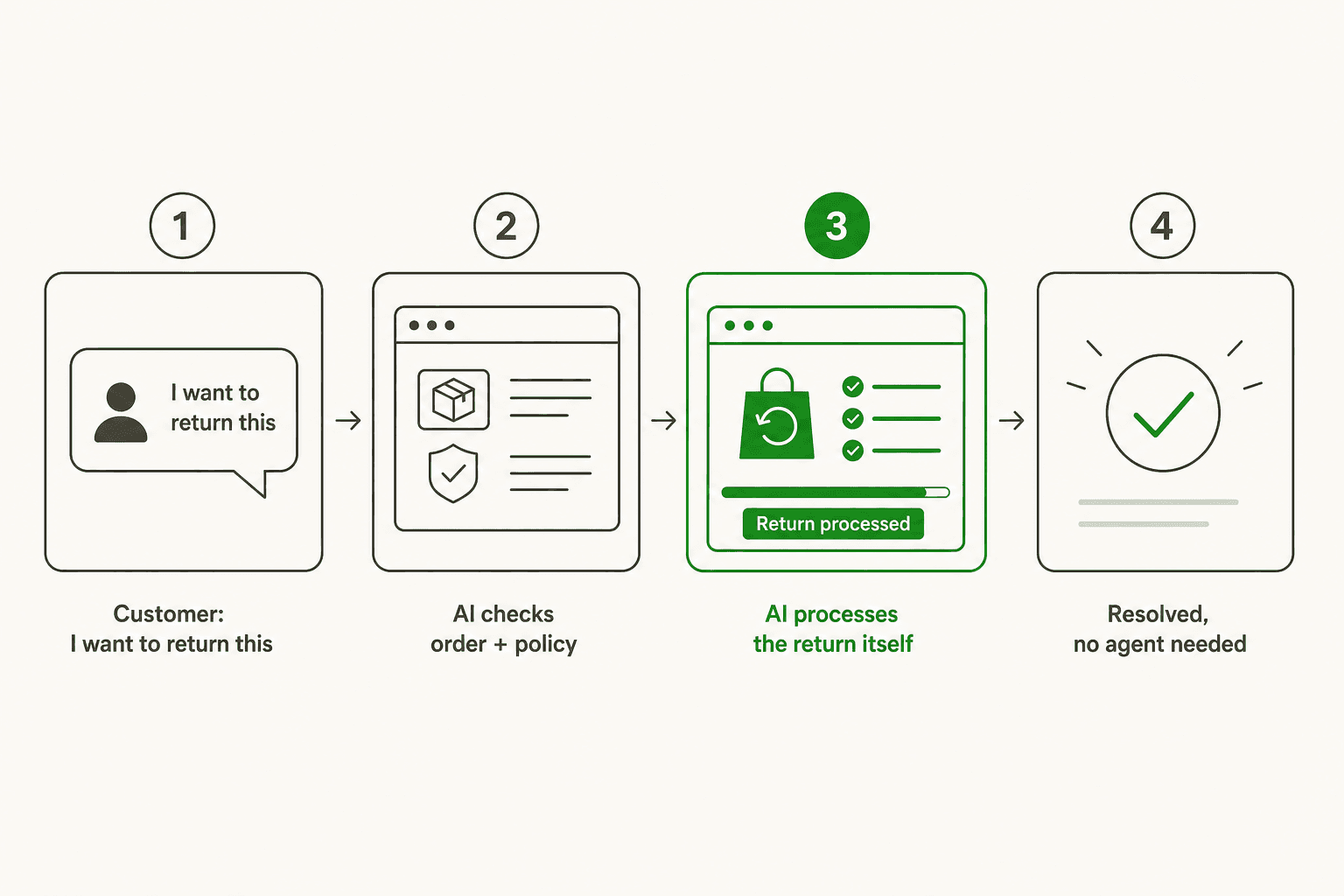
That action-taking is the part worth respecting. Answering "here's how to return an item" is deflection-lite; actually processing the return is real resolution. This is the bar a modern AI customer service agent should clear for ecommerce support, and Sidekick clears it for retail use cases.
What it costs (and the catch)
Here's where the LTV story gets complicated. Gladly doesn't publish platform pricing, the core "Hero" platform is contact-sales only. The one place it shows real numbers is its Shopify App Store plan.
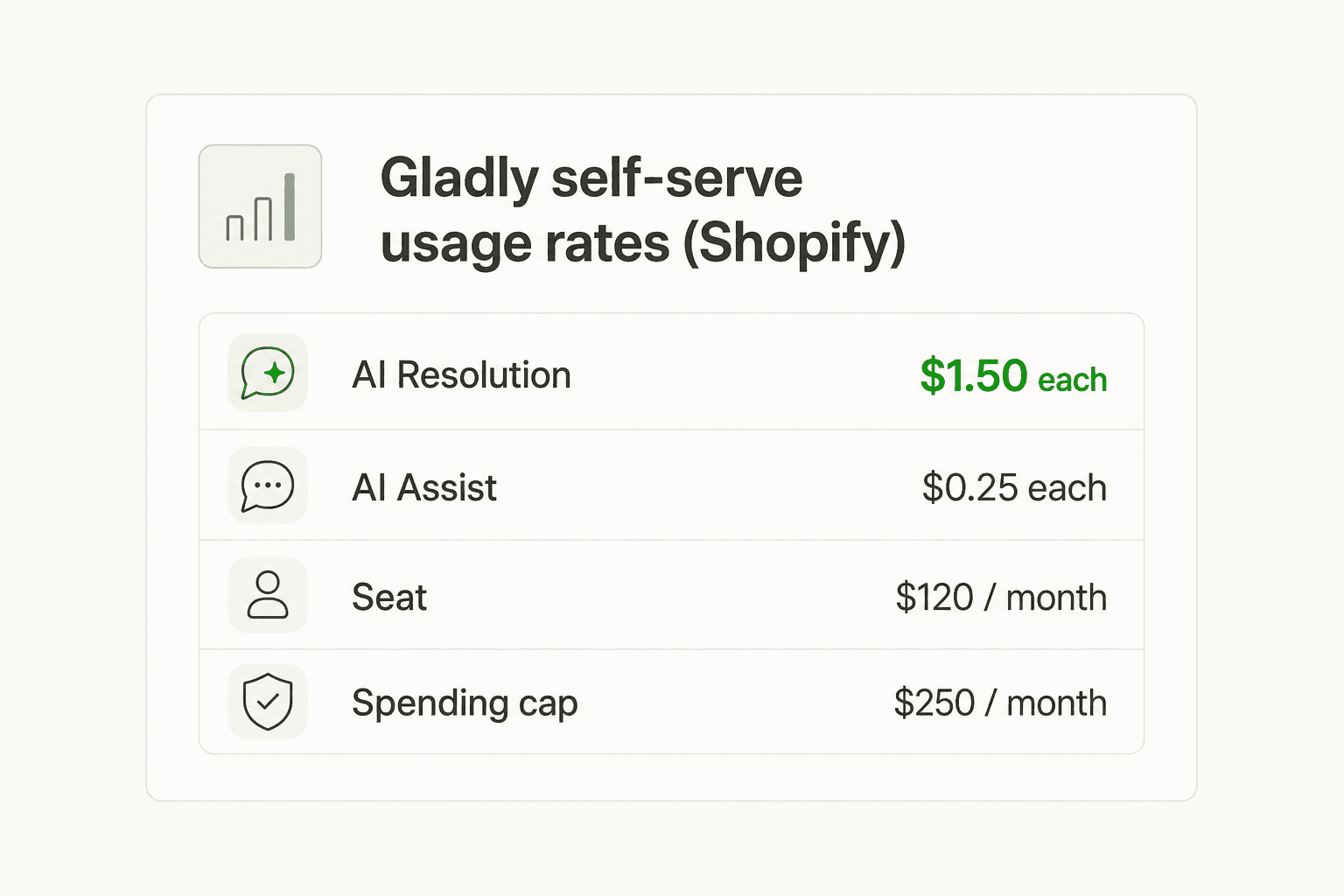
Read those numbers carefully, because they reveal the model: $1.50 per AI Resolution is per-resolution pricing. For a platform that argues against optimizing for deflection, the AI is billed by the deflection. The more Sidekick resolves, the more you pay, which is exactly the volume-scaling cost that makes per-resolution pricing nervy for high-volume brands. Third-party sources peg the full Hero platform at roughly $180 to $210 per seat per month, but since Gladly doesn't publish it, treat that as directional. Our full Gladly pricing breakdown digs in.
Where this leaves you
Gladly is a strong pick if you're a consumer brand that wants an all-in-one CX platform, your AI to take real actions, and you're comfortable with quote-only pricing and per-resolution AI costs. The engagement framing is more than spin, it's a real design philosophy that suits high-LTV retail.
The ceiling-first version: Gladly is built for DTC brands that want to migrate onto a complete platform. If you don't want to move helpdesks, or you want pricing you can see before a sales call, it's not the natural fit, and our best Gladly alternatives roundup covers where to look instead.
A layered, see-the-price-first alternative
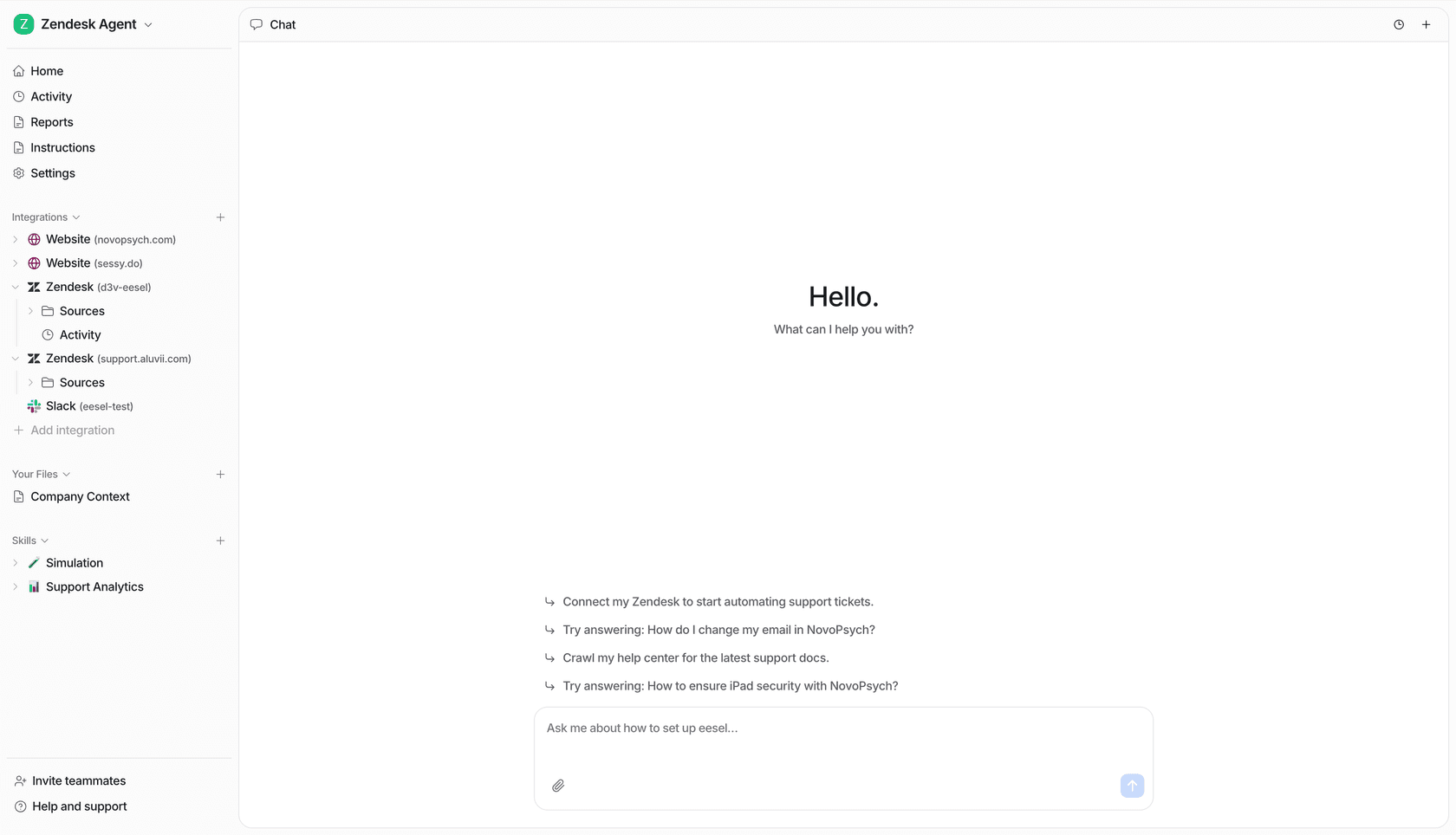
If what you want is the autonomous resolution, not a platform migration, the layered approach gets you there on your current stack. eesel AI sits on top of the helpdesk you already run and resolves tickets the same way, takes actions, hands off with context, but with two differences that matter here: it trains on your own past tickets so it sounds like your brand from day one, and it has a simulation mode so you can see exactly what it would resolve across your historical tickets before going live. Pricing is public, one fixed monthly price with 1 credit per ticket or chat, so you're not deducing your bill from a Shopify listing.
Try eesel
If you like the idea of action-taking AI resolution but want to prove it and price it before you commit, eesel AI lets you simulate against your real past tickets, see the resolution rate, then go live confidence-gated, all on your existing helpdesk.
It's a transparent fixed monthly price (from $299/month for 500 credits) with 100 free credits to start, no demo gate. Try eesel and see your real resolution rate before deciding anything.