

It feels like every week there's a new team-up between a big cloud company and a top AI lab, and the partnership between Google Cloud and Anthropic is a big one. They’ve brought Anthropic's impressive Claude models, particularly the developer-focused Claude Code, onto Google's powerful Vertex AI platform, which Google now brands the Gemini Enterprise Agent Platform. It's a duo that promises a whole lot of power for anyone building custom AI solutions.
But what does it really take to get something like this up and running? This guide will walk you through what Google Vertex AI Claude Code is, what the setup looks like, its most common uses, and the often-tricky pricing model. We’ll cover what you need to know to figure out if it’s the right tool for your team.
What is Google Vertex AI Claude Code?
First thing to know: this isn't a single, off-the-shelf product. It’s a combination of three different pieces working together: Google’s AI platform, Anthropic’s AI models, and a specialized tool for coding.
Google Vertex AI: The enterprise AI platform
Think of Vertex AI as Google Cloud's mission control for all things AI. It’s a platform that handles all the backend infrastructure for building, deploying, and scaling machine learning models. This lets your team focus on building cool stuff instead of managing servers. It comes loaded with tools like the Model Garden, which has over 200 different AI models to choose from, and agent-building tools for creating your own custom AI agents.
Anthropic's Claude: The AI model family
Anthropic’s Claude models are a family of large language models known for being pretty good at reasoning, handling a ton of information at once, and having strong safety features built-in. The family has a few different options, each suited for different jobs:
-
Opus: The model built for really complex, multi-step problems.
-
Sonnet: The balanced option, offering a great mix of smarts and speed.
-
Haiku: The fastest and leanest model, perfect for when you need a nearly instant response.
Google's pricing page lists Claude Fable 5.1, Opus 5.5, Sonnet 5.5, and Haiku 4.5 among its partner models, and earlier versions such as Claude Sonnet 4.5 remain available, so you can use the newer models directly within the Google Cloud world.
Claude Code: The developer's collaborator
Claude Code is Anthropic's special tool designed to help with the entire software development process. It does more than just write code snippets; it can help plan out big projects, debug tough problems, and keep codebases clean over time. You can use it through a terminal interface, VS Code and JetBrains extensions, a desktop app, or the web, making it a pretty convenient sidekick for developers.

Setting up Google Vertex AI Claude Code: What's involved?
Getting Claude Code running on Vertex AI is an amazing option for technical teams, but let's be clear: it's not a simple plug-and-play setup. The whole process is very developer-focused and requires a good handle on cloud environments.
To even begin, you'll need a Google Cloud Platform account with billing enabled and the "gcloud" command-line tool installed. Then you have to enable the Vertex AI API (now the Agent Platform API) in your project. After that, you find the Claude models in the Vertex AI Model Garden and request access, which can sometimes take a day or two to get approved.
Once you’re in, the real work starts. As the official setup documentation shows, you’ll need to set several environment variables to point Claude Code to Vertex AI, like "CLAUDE_CODE_USE_VERTEX" and "ANTHROPIC_VERTEX_PROJECT_ID".
Claude Code now has aThese variables often need to be set globally for everything to work, which can be a small but frustrating hiccup.

/setup-vertex login wizard that saves these settings for you, so exporting them by hand is mainly for CI and scripted rollouts.
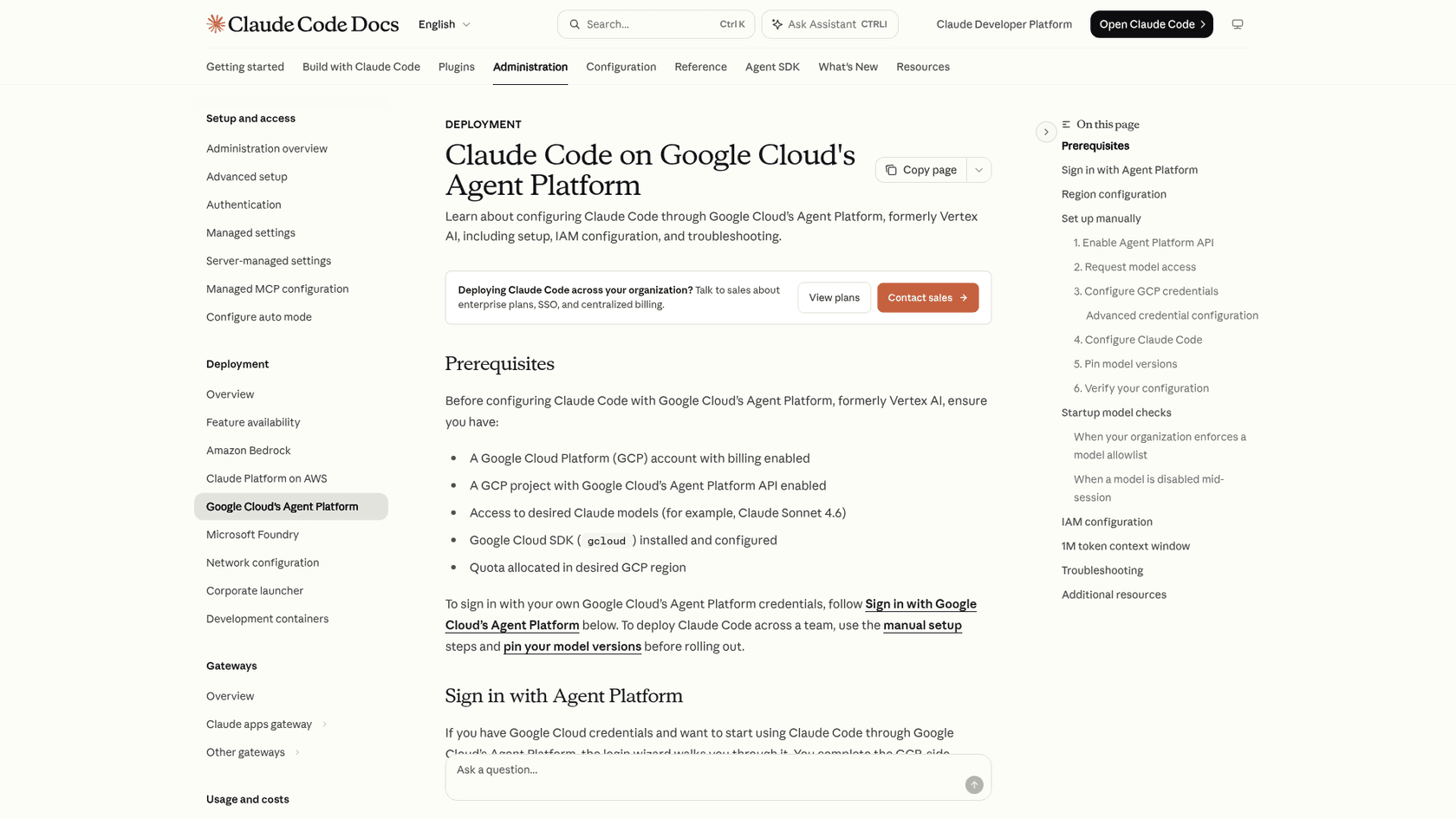
You'll also need to sort out the right IAM permissions, like "roles/aiplatform.user", so your local machine can talk to your cloud project.
This kind of technical, multi-step process is great for engineering teams building custom apps from the ground up. But for business teams in support or IT who just need a solution that works out of the box, this can be a total non-starter. This is exactly why tools like eesel AI exist. eesel is designed to be completely self-serve, letting anyone connect their help desk and knowledge sources with one-click integrations and get going in minutes, not days.
Key capabilities and business use cases
For companies that have the engineering muscle to get through the setup, combining Claude and Vertex AI opens the door to some seriously impressive applications.
Advanced agentic coding and cybersecurity
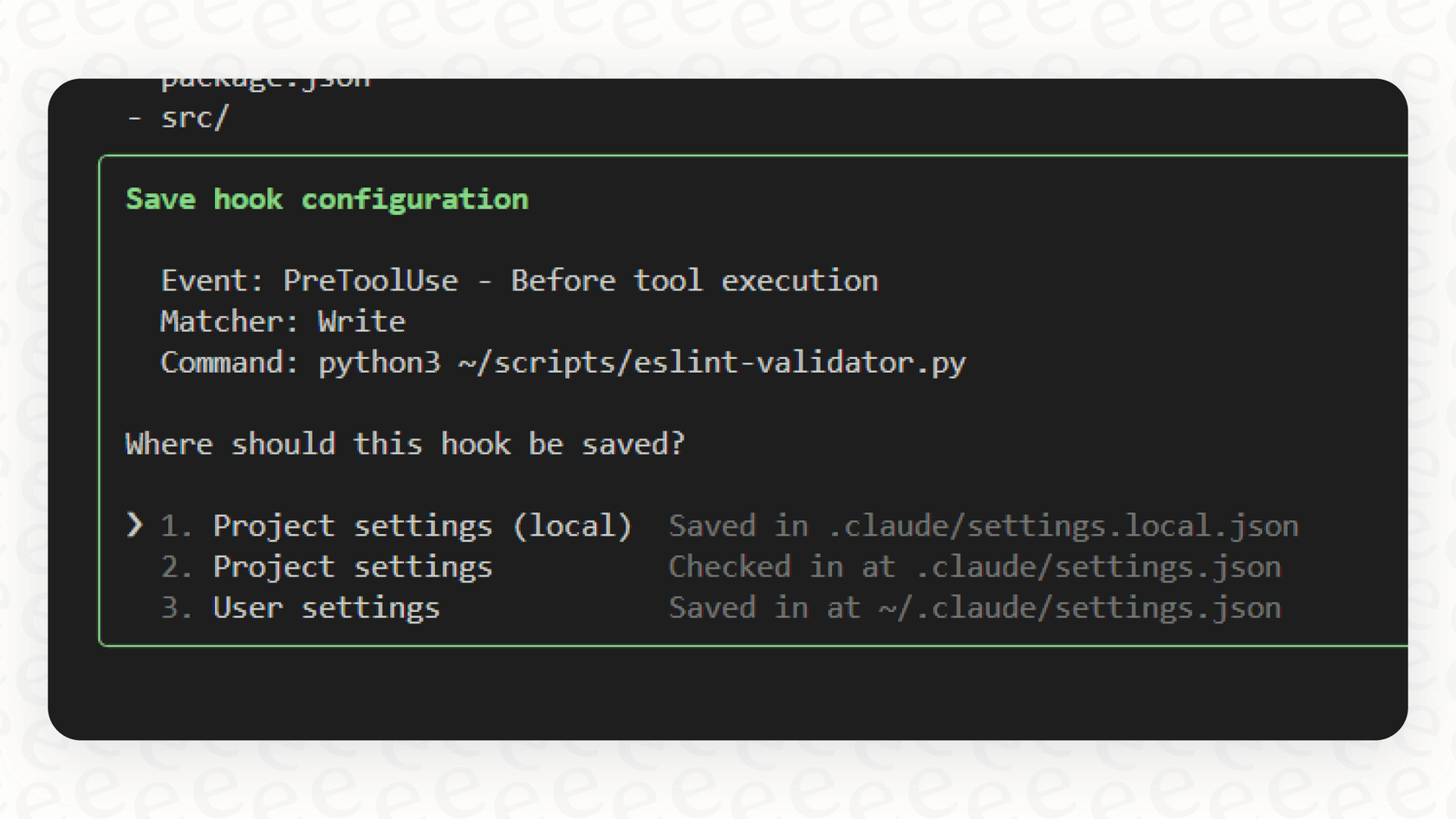
Developers can use Claude Sonnet 4.5 on Vertex AI to manage complex, long-term coding jobs. We're not just talking about writing a single function here. This is about planning and executing entire software projects or even having the AI autonomously find and patch security holes before they become a problem.
Building complex AI agents and workflows
This setup is perfect for building custom AI agents that can handle tasks with multiple steps, pull from different data sources, and manage various tools. Google’s Agent Development Kit (ADK) provides a framework to help build these sophisticated agents and bring complicated workflows to life.
Of course, building a custom agent from scratch takes a lot of development time and effort. For businesses that need AI agents for specific roles like customer support or ITSM, eesel AI's agent offers a fully customizable workflow engine ready to go. You can shape an AI's persona, limit its knowledge to certain documents, and create custom actions, like looking up order info in Shopify or sorting tickets in Zendesk, all without touching a line of code.
Research and financial analysis
The reasoning and data-crunching skills of the Claude models are also great for things like research and financial analysis. You can build apps that sift through tons of data, spot trends, and spit out detailed reports, helping your teams make better decisions.
Understanding the costs: Pricing
Alright, let's talk about money. Pricing is a huge deal for any business, and with a pay-as-you-go model like Vertex AI, things can get complicated fast. The final bill isn't just about the AI model you use; it’s a mix of model usage, computing power, and other platform services.
First, let's look at the cost of the Anthropic models. You're charged per million tokens for both the input (what you ask the AI) and the output (what it gives you back).
| Model | Price (Input) | Price (Output) |
|---|---|---|
| Claude Fable 5.1 | $10 per 1M tokens | $50 per 1M tokens |
| Claude Opus 5.5 | $4 per 1M tokens | $20 per 1M tokens |
| Claude Sonnet 5.5 | $2 per 1M tokens | $10 per 1M tokens |
| Claude Haiku 4.5 | $1 per 1M tokens | $5 per 1M tokens |
Source: Vertex AI Pricing Page, global endpoint, standard rates for up to 200K input tokens. Google lists a second rate card for other locations that runs 10% higher.
But that’s just one piece of the puzzle. If you also run your own apps or custom models on the platform, the total cost includes the computing resources they use, such as vCPU hours, RAM, and maybe even GPU hours. Trying to forecast these costs can be a real headache, especially as your usage grows. Things like prompt caching can help lower costs on repeated questions, but that just adds another layer of complexity to manage.
This variable pricing can make it tougher for business departments to budget, since the bill moves with token volume. It’s a big reason why many companies prefer platforms like eesel AI. Our pricing is a fixed monthly plan sized to volume, from $299 a month for 500 credits (one credit per ticket or chat), plus a free plan with 100 credits. It isn't billed per resolution; if a busy month uses up your credits, agents pause until they reset, or you can turn on overage with a monthly cap you set.
Is Google Vertex AI Claude Code the right fit for your team?
So, who is this powerful tech combo really for? The ideal user is an engineering team with serious cloud experience that needs total control to build highly customized AI apps and agents from the ground up.
For most other teams, the main hurdles are pretty obvious:
-
It's very technical: You need dedicated developers just for the setup, configuration, and ongoing upkeep.
-
The costs move with usage: Per-token pricing makes it harder to budget a fixed monthly amount.
-
It takes a long time to see results: Building a production-ready agent or workflow from scratch can easily take months of development.
The simpler, smarter alternative for business teams
For business teams that need results now, not next quarter, eesel AI offers a much more direct route. It’s built to solve the exact problems that foundational platforms like Vertex AI create for non-technical users.
With eesel AI, you can go live in minutes, not months. Our platform is genuinely self-serve, with one-click integrations for the tools you’re already using, like Zendesk, Slack, and Confluence. You can get started and see real value right away, without having to schedule a sales call or pull in your dev team.
You can also unify your knowledge instantly. eesel AI automatically learns from your past support tickets and connects to all your existing knowledge bases, so it gives accurate, helpful answers from the very first day.
Finally, you can test with confidence. Our simulation skill tests your AI setup against hundreds of your own past tickets, scores each answer, and suggests fixes before you ever turn it on for customers.
Final thoughts on Google Vertex AI Claude Code
There’s no question that the Google Vertex AI and Claude Code combo offers incredible power and flexibility for developers. It makes it possible to create custom, top-of-the-line AI solutions that can handle some of the most complex challenges out there.
However, for business teams in customer service, IT, and internal support who just need to automate tasks and get things done now, a specialized platform is usually the faster and more cost-effective choice. The right tool really depends on your team's goals, resources, and timeline. If you're after raw power and have the engineering team to manage it, Vertex AI is a fantastic option. If you need speed, simplicity, and predictable costs, a solution built for business teams might be a much better fit.
Ready to see how quickly you can get a powerful AI agent working for your team? Set up your first eesel AI agent in minutes.
Frequently asked questions
Could you explain what exactly Google Vertex AI Claude Code is and how its components work together?
This combination brings Anthropic's Claude AI models, specifically the developer-focused Claude Code, onto Google's Vertex AI platform (now the Gemini Enterprise Agent Platform). Vertex AI provides the enterprise infrastructure, Claude offers powerful reasoning capabilities, and Claude Code specializes in assisting with software development tasks.
What kind of technical expertise is required to set up and manage Google Vertex AI Claude Code?
Setting up Google Vertex AI Claude Code requires significant technical expertise, including familiarity with Google Cloud Platform, the "gcloud" CLI, Vertex AI API, and IAM permissions. It's designed for developer teams comfortable with complex cloud environments.
What are some of the key business applications or use cases for Google Vertex AI Claude Code?
Key applications include advanced agentic coding, cybersecurity for finding and patching vulnerabilities, building complex multi-step AI agents and workflows, and sophisticated research and financial analysis due to Claude's strong reasoning abilities.
How does the pricing model for Google Vertex AI Claude Code typically work, and what factors contribute to the overall cost?
Pricing is pay-as-you-go, based on the number of input and output tokens used by the Claude models, listed per million tokens. If you also run your own applications or models on the platform, total costs include the computing resources they consume.
Which types of organizations or projects would benefit most from implementing Google Vertex AI Claude Code?
This powerful combination is best suited for engineering teams with deep cloud experience who need maximum control to build highly customized, ground-up AI applications and agents. It's ideal for complex, unique development challenges.
What are the main challenges or drawbacks when considering Google Vertex AI Claude Code for a business team?
The primary challenges include its highly technical nature requiring dedicated developers, usage-based costs that move with token volume and complicate budgeting, and the significant time commitment needed to build production-ready solutions from scratch.