

It feels like "AI experience" is popping up in every tech job description these days, right? Professionals are scrambling to show they know their way around AI, and certifications like the Salesforce AI Specialist have become a go-to way to prove it. But with all the different ways to learn and use AI, you have to ask the big question: Is getting certified the best use of your time? And more importantly, is it the fastest way for your company to actually get results from AI?
This post is all about giving you a straight answer. We'll look at how the certification can boost your career if you're deep in the Salesforce world, but we'll also talk honestly about its limits. We’ll break down what the certification covers, what it misses, and how it stacks up against a more flexible, tool-based approach to bringing AI to your business.
What is the Salesforce AI Specialist certification?
The Salesforce AI Specialist certification (now the Salesforce Certified Agentforce Specialist) is for people who want to officially prove they can handle Salesforce's native AI tools. You can think of it as the next level up from the basic AI Associate certification, which Salesforce retired in February 2026 to clear the way for newer learning paths such as Agentblazer status. This one is for the seasoned pros.
It's built for experienced Salesforce users, admins, developers, and consultants who pretty much live inside the Salesforce ecosystem. To pass, you really need to know the platform like the back of your hand.
The exam itself is made up of 60 multiple-choice questions with a 105-minute time limit and a 72% passing score. It gets into the nitty-gritty of specific Salesforce products, focusing heavily on:
-
Prompt Engineering (20%): How to write effective prompts using Prompt Builder.
-
Data 360 Fundamentals (20%): How to connect the AI to data you have stored in Salesforce (Data 360 is the new name for Data Cloud).
-
AI Agents (35%): Understanding and managing Salesforce's conversational AI agents.
-
Testing, Deployment, and Maintenance (10%): Using Testing Center and moving agents from sandbox to production.
-
Governance and Observability (10%): Managing and monitoring agents.
-
Multi-Agent Orchestration (5%): When several agents make sense, plus open protocols like MCP and A2A.
A quick scroll through Reddit tells you one thing: this exam isn't a walk in the park. It seems to be less about broad AI concepts and more about memorizing the specific names and functions of Salesforce products, which some people find feels a bit like a trivia night.

Why get the Salesforce AI Specialist certification?
Okay, let's give credit where it's due. There are some very good reasons to chase this certification, especially if your career is built around Salesforce.
First off, it gives you a clear learning path. The Salesforce AI suite is a huge collection of tools like Einstein, Prompt Builder, and Agentforce. The certification curriculum acts like a map, guiding you through each part and showing you how they fit together. It’s a structured tour through a pretty complex world.
For any Salesforce Consultant or Architect, this credential can be a genuine advantage. It tells employers and clients that you're up to date with the platform's newest and most talked-about features. In a crowded job market, having "AI Specialist" on your resume can certainly make you stand out.
The knowledge you pick up can also bring real value to a business. You'll be better equipped to use Salesforce AI to personalize customer conversations, find new sales insights, and make internal processes run smoother.
And here’s what used to be the biggest draw: Salesforce offered the certification for free through the end of 2025. That took the cost out of the equation, but the window has closed and the exam guide now lists a $200 registration fee.
Practical limitations of the certification
While the certification is a great resume-builder, it has some serious practical downsides when you actually try to solve day-to-day business problems. These aren't really flaws with the exam itself, but more about the natural limits of sticking to one platform.
Limitation 1: The "walled garden" problem
Salesforce AI is built to do one thing really well: work with Salesforce data. But let's be realistic, a company’s knowledge is never stored in one tidy place. It’s spread out across a dozen different tools: internal wikis in Confluence, project roadmaps in Notion, legal contracts in Google Docs, and HR policies in SharePoint. Salesforce AI reaches that external knowledge through Data 360 (formerly Data Cloud): Agentforce Data Libraries require Data 360 to be set up and consume Data 360 credits, and the Confluence connector is in Beta.
This is where a more flexible AI platform provides a much easier route. For instance, tools like eesel AI are designed to connect to all your knowledge sources from the start. With one-click integrations, you can bring everything together in minutes, without needing a massive data migration project that drags on for months.

Limitation 2: A long and complicated path to getting value
Let’s map out the typical timeline. First, you have to spend weeks or even months studying for and passing the exam. Then the real work begins: implementing Agentforce and the other AI tools. This is rarely a simple flip of a switch; it usually involves developers, project managers, and a formal plan. The time between starting your studies and seeing any real business impact can easily be a few quarters.
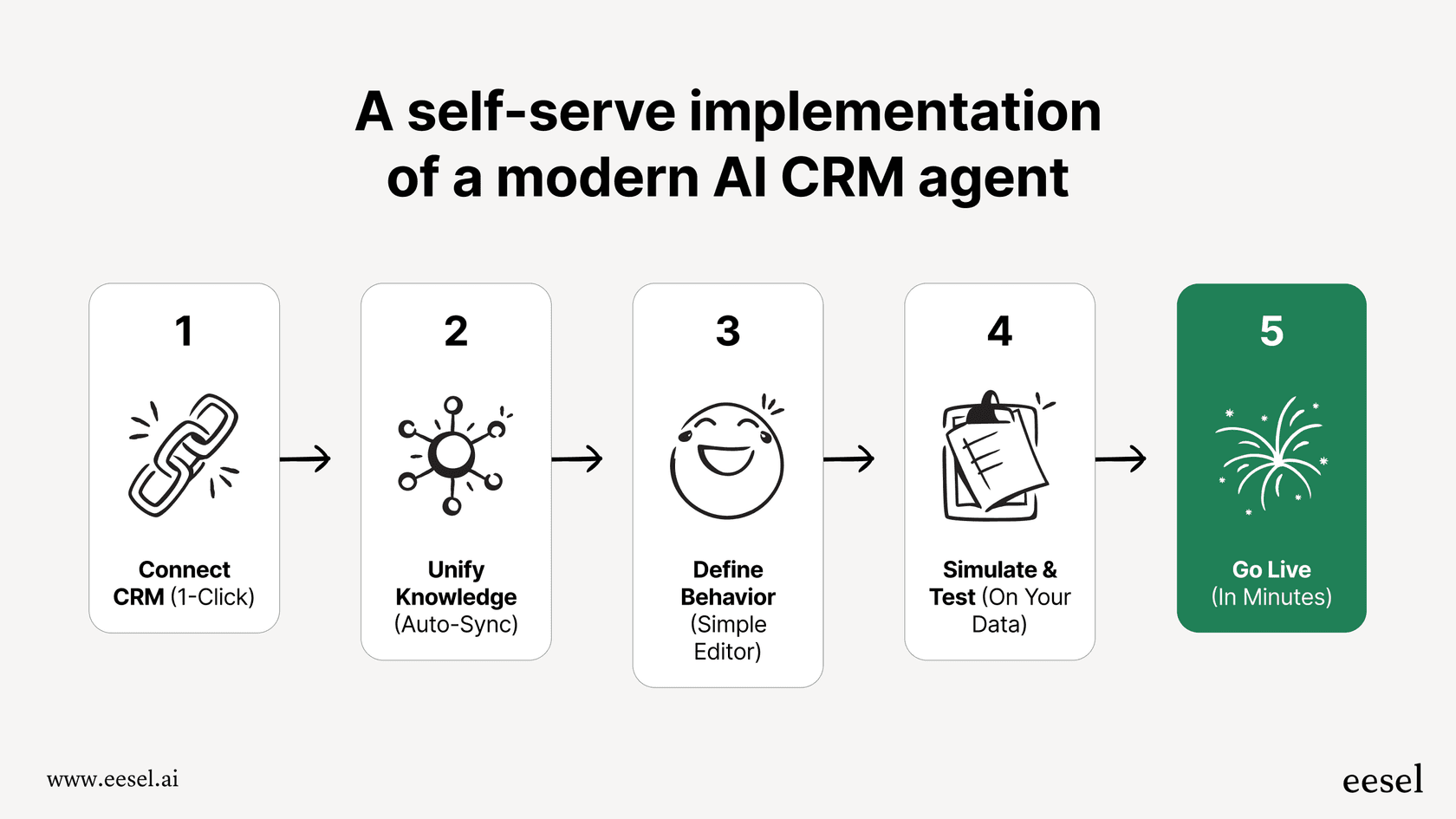
That’s a completely different world from modern, self-serve tools. With eesel AI, you can sign up, connect your helpdesk, point it to where your knowledge lives, and have a functional AI agent ready to go in minutes. The whole idea is to get you immediate, tangible results, not to start a long, drawn-out implementation project.
Limitation 3: Theory vs. real-world results
As many people in online forums have noted, the certification exam can get hung up on picky details and product names. Passing the test proves you know Salesforce's lingo, but does it prove your AI setup can actually solve a customer's problem?
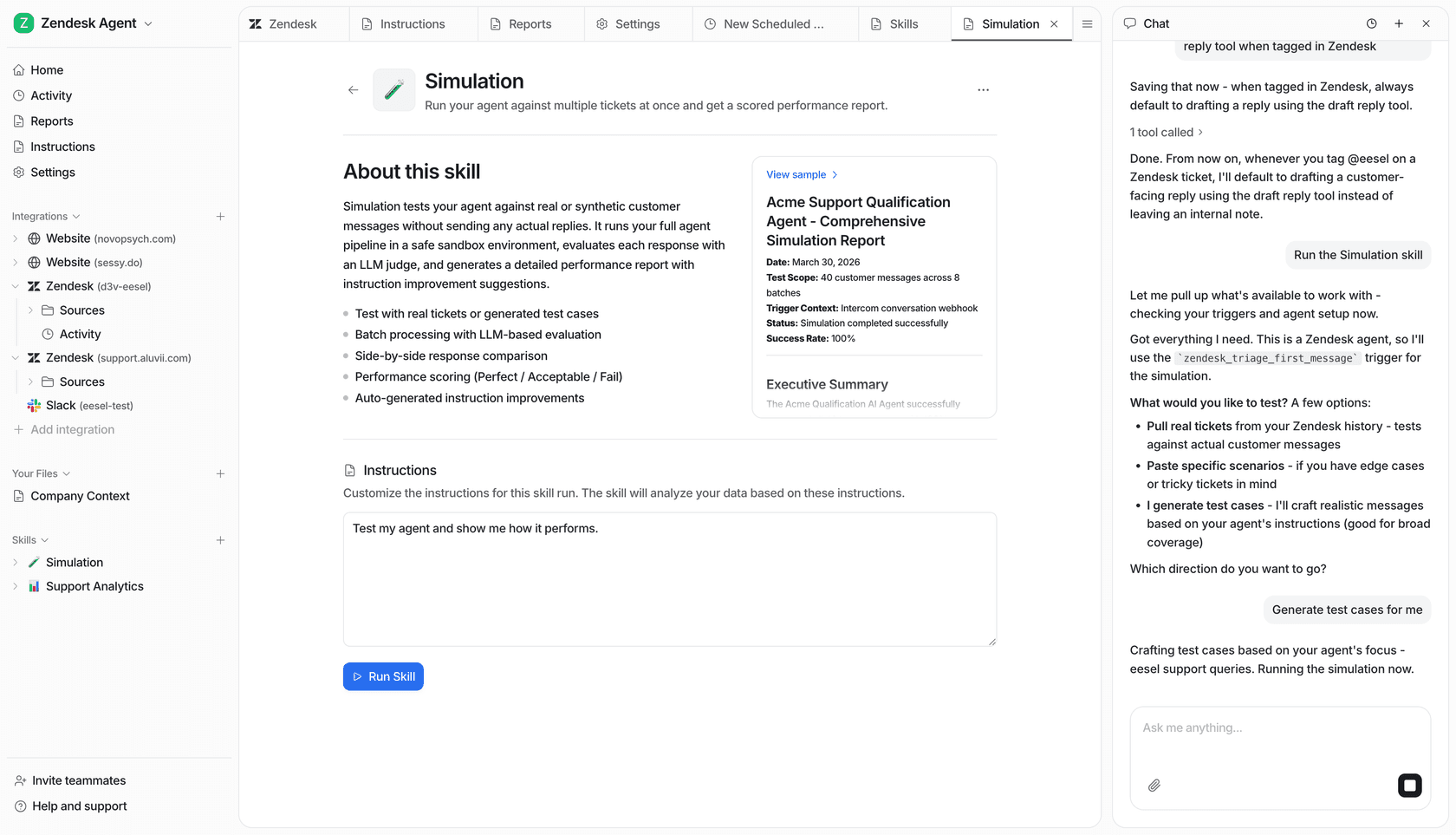
The real test of any AI isn't a multiple-choice question; it's how well it performs with your actual customer questions. This is why eesel AI has a powerful simulation mode. You can test the AI against hundreds of your past support tickets and get a scored performance report with suggested instruction fixes before it ever talks to a real customer. It swaps out theory for hard, actionable data.
An alternative to the certification: A flexible AI platform
In the end, it really boils down to your strategy. Do you go all-in on a single vendor's ecosystem, or do you add a flexible AI "layer" that can work with all the tools you already use?
A platform-specific certification trains you to solve problems using only the tools that platform gives you. A flexible AI platform gives you the freedom to solve problems using the best information you have, no matter where it is.
Here’s a quick look at how the two approaches compare:
| Feature | Salesforce AI (via Certification Path) | A Flexible AI Platform (like eesel AI) |
|---|---|---|
| Setup Time | Months (studying + a complex implementation) | Minutes (completely self-serve) |
| Knowledge Sources | Agentforce Data Libraries on Data 360; outside sources such as Confluence connect through Data 360 (Confluence connector in Beta). | Dozens of one-click integrations (How to build an AI knowledge base in 2025, Google Docs, past tickets). |
| Helpdesk Compatibility | Built for Salesforce Service Cloud. | Works with your current helpdesk (Zendesk, Freshdesk, Intercom, etc.). |
| Testing & Rollout | Testing Center runs in a sandbox and consumes credits; often needs a big, formal rollout. | Powerful simulation on your own data for a gradual, confident launch. |
| Customization | Agent Builder and Prompt Builder for setup; Flows, Apex, or MuleSoft APIs for custom actions. | No-code prompt editor and customizable actions anyone can use. |
| Pricing Model | Flex Credits ($500 per 100k credits), $2 per conversation, or per-user add-ons ($125/user/month). | Simple, predictable pricing with no fees per resolution. |
Helpdesk compatibility is a great example of this difference. If your support team uses Zendesk or Freshdesk, the knowledge you gain from the Salesforce AI Specialist cert isn't going to be very useful in your day-to-day work. A platform-agnostic tool like eesel AI fits right into your existing setup without making you switch your entire support operation.
The verdict: Is the Salesforce AI Specialist certification worth it?
After looking at it from all sides, we can land on a pretty clear answer.
Yes, the certification is worth it if:
-
You're a dedicated Salesforce professional (an admin, developer, or consultant) and your main goal is to become an expert within that specific ecosystem.
-
Your company is completely committed to the Salesforce platform for sales, service, and all its data.
-
You're focused on climbing the Salesforce career ladder and want a strong credential for your resume.
It's probably not the best path if:
-
Your main goal is to solve a business problem with AI automation right now.
-
Your company's knowledge is spread across a bunch of non-Salesforce apps like Confluence, Notion, or Google Drive.
-
Your team uses a helpdesk that isn't Salesforce Service Cloud.
-
You want a low-risk, self-serve solution you can test and launch yourself without needing a huge project and months of planning.
From certified pro to AI-powered company
The Salesforce AI Specialist certification is a solid credential for building an individual's skills inside a specific, powerful platform. It shows you're committed and have deep knowledge of how Salesforce works.
But turning an entire company into an AI-powered one calls for a different way of thinking. It requires a strategy built around flexibility, speed, and easy integration with the tools your teams already use every day. Real value from AI doesn't come from memorizing theory; it comes from deploying a practical solution that starts solving real problems from day one.
While you're thinking about upskilling with certifications, why not see what a practical AI solution can do for your team today? With eesel AI, you can be up and running in minutes, not months. Start a free trial to connect your knowledge sources and see just how easy it is to automate support and empower your team.
Frequently asked questions
Who benefits most from the Salesforce AI Specialist certification?
This certification is most beneficial for dedicated Salesforce professionals, admins, developers, and consultants, who aim to deepen their expertise within the Salesforce platform. It serves as a strong credential for career advancement within the Salesforce ecosystem.
How much platform-specific knowledge does the Salesforce AI Specialist certification require?
The certification requires in-depth knowledge of specific Salesforce products and their functions, including Prompt Builder, Agentforce, Data 360 (formerly Data Cloud), and Testing Center. It tests a user's ability to navigate and utilize Salesforce's native AI tools extensively.
Is the Salesforce AI Specialist certification worth it if our company's knowledge isn't solely within Salesforce?
While valuable within Salesforce, if your company's knowledge is spread across various non-Salesforce apps (like Confluence, Notion, Google Drive), integrating this information with Salesforce AI can be complex and expensive. A more flexible AI solution might be better suited for diverse data sources.
How quickly can a company see value after someone earns the Salesforce AI Specialist certification?
Achieving business value after certification can take several quarters, as it involves studying for the exam and then undertaking a potentially complex implementation of Agentforce and other AI tools. Modern, self-serve AI platforms often provide much faster tangible results.
How does the knowledge from the Salesforce AI Specialist certification apply to real-world problems?
The certification primarily validates knowledge of Salesforce AI product names and functions. While this theoretical understanding is foundational, solving real-world customer problems effectively often requires broader data integration and practical testing beyond platform-specific trivia.
Is the Salesforce AI Specialist certification only worth it because it's currently free?
Salesforce's free first-attempt offer ended on December 31, 2025, and the exam now carries a $200 registration fee. Its worth should be weighed against your company's specific AI needs and integration challenges, not just the cost of the exam.
What are some alternatives to the Salesforce AI Specialist certification for immediate business needs?
If immediate problem-solving and integration with diverse data sources are priorities, consider a flexible AI platform like eesel AI. These tools are designed for quick setup, broad compatibility with existing helpdesks and knowledge bases, and rapid deployment for tangible results.