


Let's be real: the pressure on customer service teams is through the roof. Customers expect answers instantly, and the old way of managing support queues just isn't cutting it anymore. Conversational AI has quickly gone from a "nice-to-have" to a must-have for any modern support team. In this space, you’ll hear a lot about two major players: Parloa and Cresta. Both have plenty of funding and are tackling the problem, but they do it in very different ways.
Picking the right AI partner is a big deal, so we wanted to break it all down for you. This guide is a straightforward, balanced look at Parloa vs Cresta, covering their core features, how you get them set up, and what to expect from their pricing. We'll also touch on a more nimble, self-serve alternative for teams who need to get things done today, not next quarter.
What is Parloa?
Parloa is a German-founded, now New York-headquartered conversational AI platform built for large companies. Its whole purpose is to build and deploy AI agents that can handle customer service chats and calls all on their own. The company puts a lot of focus on voice channels, trying to automate the kind of complex questions that usually tie up a call center.
With a $350M Series D at a $3B valuation in January 2026, Parloa is pushing a big mission to "reinvent customer service with Agentic AI." That pretty much tells you it's designed for massive, company-wide projects. Their main product is a platform for managing the entire life of an AI agent, from design and testing to launch and optimization. Think of it like a factory for building highly specialized digital employees for your support lines.
What is Cresta?
Cresta, a US-based platform, started from a different idea. Instead of replacing human agents, it wants to make them better. At its core, Cresta is an agent-assist tool, and it now also sells an AI Agent for voice and chat in 30+ languages.

Its AI listens in on conversations and then nudges agents with suggestions for the best responses, pulls up relevant help articles, or gives them compliance reminders. Cresta's strength is in boosting metrics like sales conversion rates, CSAT scores, and agent productivity. It's less about total automation and more about creating a team of super-powered human agents.
Parloa vs Cresta: Key differences at a glance
Before we get into the nitty-gritty, here's a quick side-by-side look at the two platforms. This should give you a good feel for where they stand.
| Feature | Parloa | Cresta |
|---|---|---|
| Primary Goal | Automate entire customer conversations | Help human agents perform better, plus AI Agent automation |
| Core Technology | Autonomous AI agents (Agentic AI) | Real-time agent coaching & assistance |
| Main Use Case | Handling inbound support queries | Improving sales & service quality |
| Target Audience | Large enterprise contact centers | Sales and customer service teams |
Core features and capabilities
Alright, let's get into what each platform actually does, where they excel, and what limitations you might run into.
Conversation automation and AI agents
Parloa is all-in on creating AI agents that can navigate complex, back-and-forth conversations, especially over the phone. Their end goal is complete automation, where the AI understands what a customer wants, asks the right questions, and solves the problem without ever needing to pass it to a person. This can be a huge help for high-volume call centers trying to deflect common questions.
But a platform this powerful has a catch. Enterprise-level AI like this usually demands a long, specialized setup and dedicated internal teams to keep it running smoothly. It’s a serious investment of both time and money.
If that sounds like a lot of heavy lifting for your team, a self-serve platform like eesel AI lets you build and launch a fully functional AI agent in just a few minutes. It connects to the tools you already use, learns your brand voice by reading your past tickets, and lets you configure everything from a simple, no-code dashboard.
Real-time agent assistance and coaching
This is where Cresta shines. Its AI acts like a co-pilot for your human agents, listening to what's being said and offering live suggestions. This could be a reminder for an agent to show empathy, a prompt to suggest a specific upsell, or a check to make sure they're following a compliance script.
The platform also gives managers deep analytics to track agent performance, spot trends in conversations, and find coaching opportunities. It’s a great tool for raising the quality and consistency of your team. Parloa, by contrast, is more interested in replacing that first interaction, not guiding a human through it.
If you want that kind of agent boost without signing up for a whole new system, eesel AI's Copilot is a great alternative. It works right inside your helpdesk (like Zendesk or Freshdesk) and drafts accurate, on-brand replies for your agents with a single click. It's a simple way to speed up response times and help new hires feel confident almost immediately.
Ease of implementation and customization
A platform's features don't mean much if you can't get it up and running. Here’s a look at what it takes to get started and tweak these tools for your team.
The onboarding and setup process
Given their focus on big companies, both Parloa and Cresta follow a pretty traditional, and often slow, sales and implementation process. It usually kicks off with several demos, followed by custom quotes and a hands-on onboarding project led by their teams.
This model works for huge organizations that have the budget and people to manage a major software rollout. But for teams that need to move fast and see results quickly, it can be a real roadblock.
This approach is a world away from modern tools built for agility. With eesel AI, for instance, you can do everything yourself. You can sign up, connect your helpdesk in one click, and watch your AI simulate responses to thousands of your past tickets in minutes, all without ever having to talk to a salesperson.
Customization and workflow control
Parloa lets you design custom conversation flows for its AI agents, and Cresta lets you set up specific coaching rules and playbooks. Both give you a decent amount of control to match your business rules.
Parloa says its engineers, success teams, and partners guide use-case definition, integrations, testing, and rollout, so larger changes may involve the vendor's team. That can slow a non-technical support manager who wants to adjust or test new AI strategies alone.
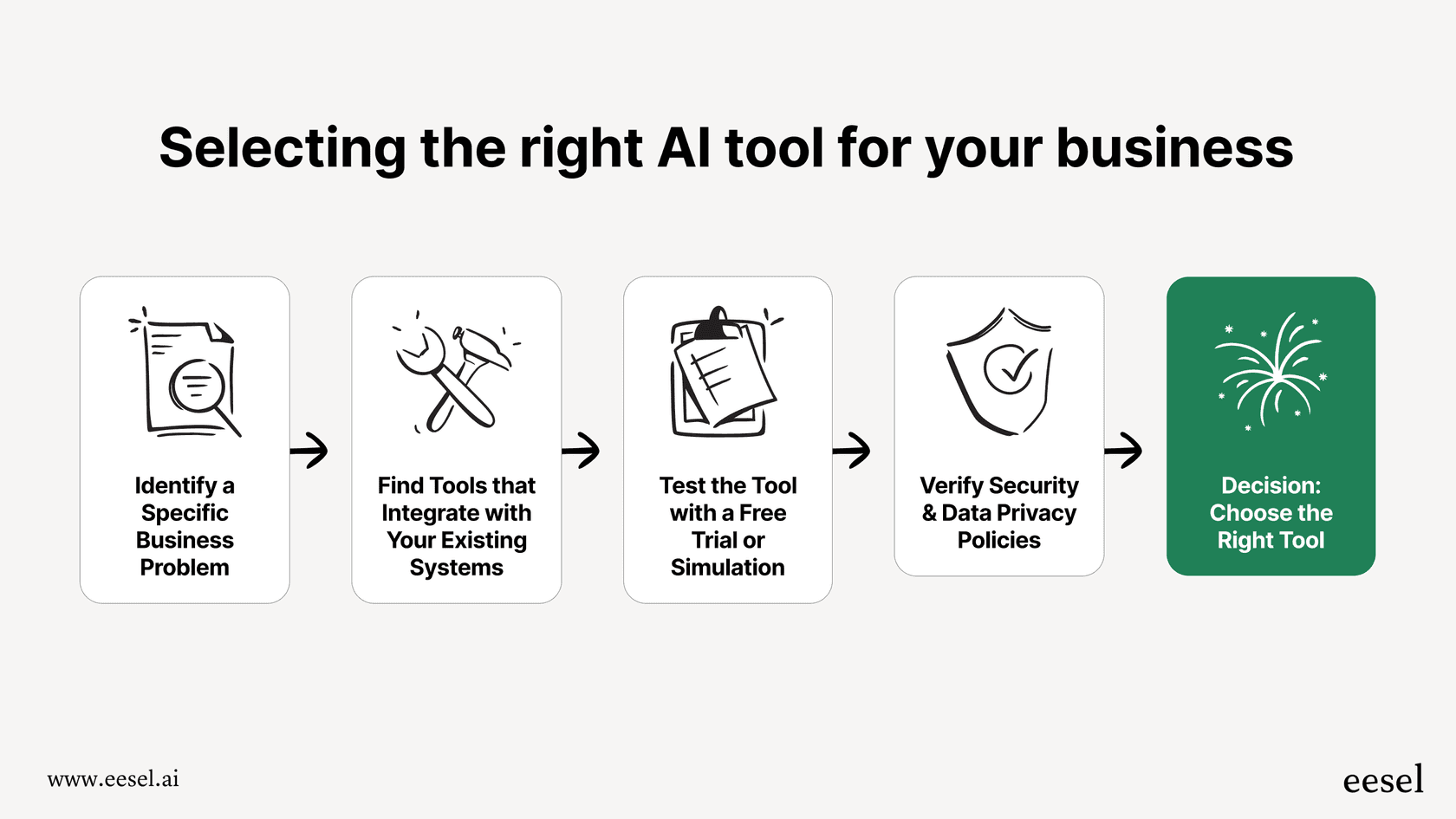
For teams that want full control without touching a line of code, eesel AI has a powerful but intuitive workflow engine. From one dashboard, you can easily define your AI’s personality, decide exactly which types of tickets to automate, and set up custom actions like pulling order data from Shopify or escalating a ticket to the right team.
Pricing and value
Okay, let's talk money. Cost is obviously a huge factor in any software decision. Here’s what we know about how Parloa and Cresta price their products.
Parloa pricing
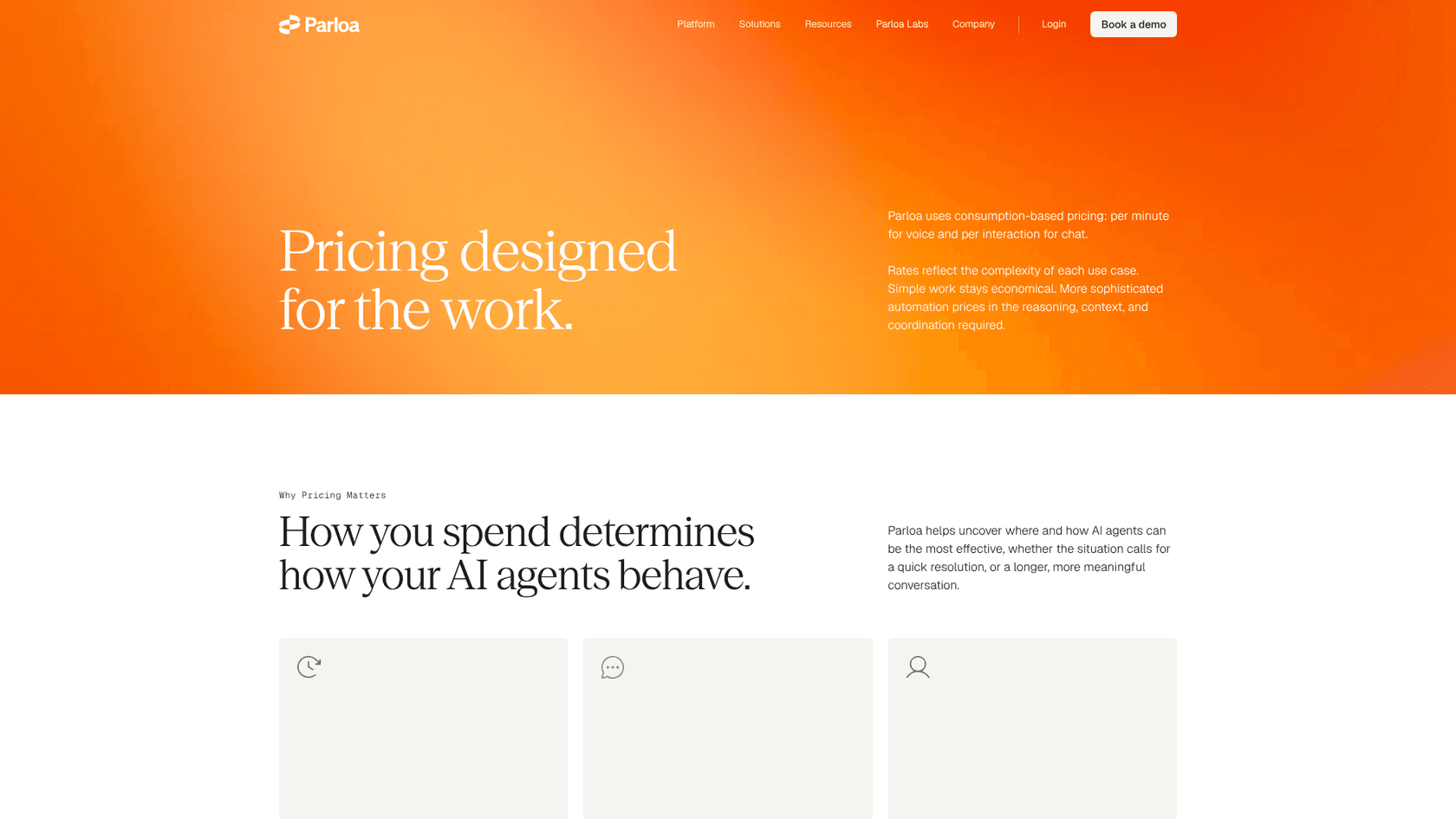
Parloa has a pricing page, but it describes a model, not rates: consumption-based, per minute for voice and per interaction for chat, with a volume package and a custom plan. Rates reflect the complexity of each use case, and outcome-based pricing is supported when it makes sense. No dollar figures are published, so budgeting still means a formal sales process.
Cresta pricing
Cresta is quote-based too: its pricing page returns a 404 and every call to action says "Book a demo." The one public signal is its AWS Marketplace listing, which prices Agent Assist at $150,000 per 12 months for up to 125,000 chats (or up to 100,000 calls), with overage of $1.20 per chat and $1.50 per call. That covers Agent Assist only, not Cresta's other products.
The transparent alternative: eesel AI
For businesses that prefer knowing what they’re getting into, eesel AI is a different story. It offers clear, public pricing with one fixed monthly price sized to volume. One credit covers one ticket or chat, however long, with a free plan of 100 credits and no per-seat fee. This transparency lets you calculate your potential ROI from day one.
| Plan (monthly credits) | Price per month | Notes |
|---|---|---|
| Free | $0 | 100 credits, no card |
| 500 credits | $299 | 1 credit per ticket or chat, all integrations included |
| 1,000 credits | $499 | Unlimited agents and seats |
| 2,500 credits | $999 | Pay a year upfront for two months free |
| 5,000 credits | $1,899 | More than 5,000: talk to eesel |
The alternative: A self-serve, unified AI platform
So, you might be thinking that platforms like Parloa and Cresta are powerful, but they feel like a huge commitment. They often come with high complexity, guided setup, quote-only pricing, and a different starting point: full automation for Parloa and agent help for Cresta.
eesel AI was built to solve these problems. It brings the best of both worlds together in a single, easy-to-use platform:
-
Go live in minutes, not months: It's completely self-serve. You can get set up and start seeing results right away, without the long sales calls.
-
Unify your tools: eesel AI combines automation (AI Agent), assistance (Copilot), and smart triage without asking you to ditch your helpdesk. It plugs right into the tools you already know and love.
-
Test with confidence: A unique simulation mode lets you test your AI on thousands of your actual past tickets. This gives you an accurate forecast of its performance and ROI before you ever turn it on for customers.
-
Total control: You’re in charge. You can customize everything from the AI’s tone and knowledge sources to the specific actions it can take in your other systems.
Choosing the right AI partner for 2025
So, when you look at Parloa vs Cresta, which one is the right fit?
-
Choose Parloa if: You're a large enterprise with a big budget, your main goal is to automate high-volume phone support, and you're ready for a major, long-term project.
-
Choose Cresta if: You want to improve the performance, consistency, and sales numbers of your current human agents with real-time coaching in a busy contact center.
But if neither of those sounds quite right for your team, there's another option. For most modern support teams who need a solution that's powerful, flexible, and delivers value from day one, eesel AI is built for you. It combines the best of automation and agent assistance, offers transparent pricing, and puts you in complete control.
Ready to see AI work for you?
Stop wrestling with complex tools and long sales cycles. Connect your helpdesk and see how much you could automate in just a few minutes.
Start your free trial with eesel AI or book a demo to see it in action.
Frequently asked questions
What is the primary difference between Parloa vs Cresta in terms of their core offering?
Parloa focuses on fully automating customer interactions with autonomous AI agents, particularly for voice channels in large enterprises. Cresta started in real-time coaching and assistance for human agents and now also sells an AI Agent for voice and chat automation.
For a business looking for quick deployment, how does the implementation process differ between Parloa vs Cresta?
Both Parloa and Cresta typically involve a lengthy, sales-led implementation process with dedicated teams, tailored for large enterprises. This contrasts with self-serve platforms like eesel AI, which allow for much faster, independent setup and deployment.
Which types of organizations are best suited for either Parloa vs Cresta?
Parloa is designed for large enterprises and contact centers aiming for significant automation of complex, high-volume customer inquiries, especially via voice. Cresta is better suited for sales and customer service teams looking to improve human agent productivity, sales conversion, and service quality through real-time guidance.
Can you provide insight into the pricing structure for Parloa vs Cresta?
Neither Parloa nor Cresta publishes a price list; both operate on a custom quote model. Parloa bills per minute for voice and per interaction for chat, and Cresta's AWS Marketplace listing prices Agent Assist by conversation volume, so you need their sales teams for specific figures.
If my goal is to improve agent productivity, how would I decide between Parloa vs Cresta?
If improving agent productivity through real-time guidance, suggested responses, and performance analytics is your main goal, Cresta is the more direct solution. Parloa, by contrast, focuses on automating interactions entirely, thus reducing the number of interactions an agent needs to handle.
What if a business needs both full automation and agent assistance, is there a unified solution beyond just Parloa vs Cresta?
While Parloa started from automation and Cresta from agent assistance, they come at the problem from different sides. For a unified platform offering both AI agent automation and real-time agent copilot features in a self-serve model, eesel AI is presented as an alternative.