QA feedback examples for customer service teams

Riellvriany Indriawan

Katelin Teen
Last edited July 6, 2026

What QA feedback is actually for
Quality assurance in support has a bad reputation, and usually it's deserved. Too many QA programs are a manager skimming a handful of tickets, ticking boxes on a spreadsheet, and dropping a one-word verdict into a review. The agent reads "tone: 3/5", feels judged, changes nothing, and the whole exercise becomes a ritual nobody learns from.
QA feedback is coaching, not scoring. The number on the scorecard is just the entry point; the comment is where the value is. A score tells an agent where they landed. A good comment tells them what to do differently on the next ticket, which is the only thing that actually improves your customer service. If you take one idea from this post, take that: the goal is a specific, repeatable behaviour change, not a grade.
Working the support queue every day, I've been on both ends of this. The feedback that ever helped me wasn't "be clearer." It was someone quoting the exact sentence I wrote, showing me the two-line version that would have resolved the ticket faster, and explaining why. That's the bar every example below is trying to hit.
The anatomy of a QA scorecard
Before the feedback comes the scorecard. Most support QA programs grade each ticket against a handful of defined criteria, ideally mapped to your service standards, and the trick is keeping the list short enough that two reviewers grade the same ticket the same way. When your scorecard criteria are fuzzy, your feedback is fuzzy, and agents can tell.
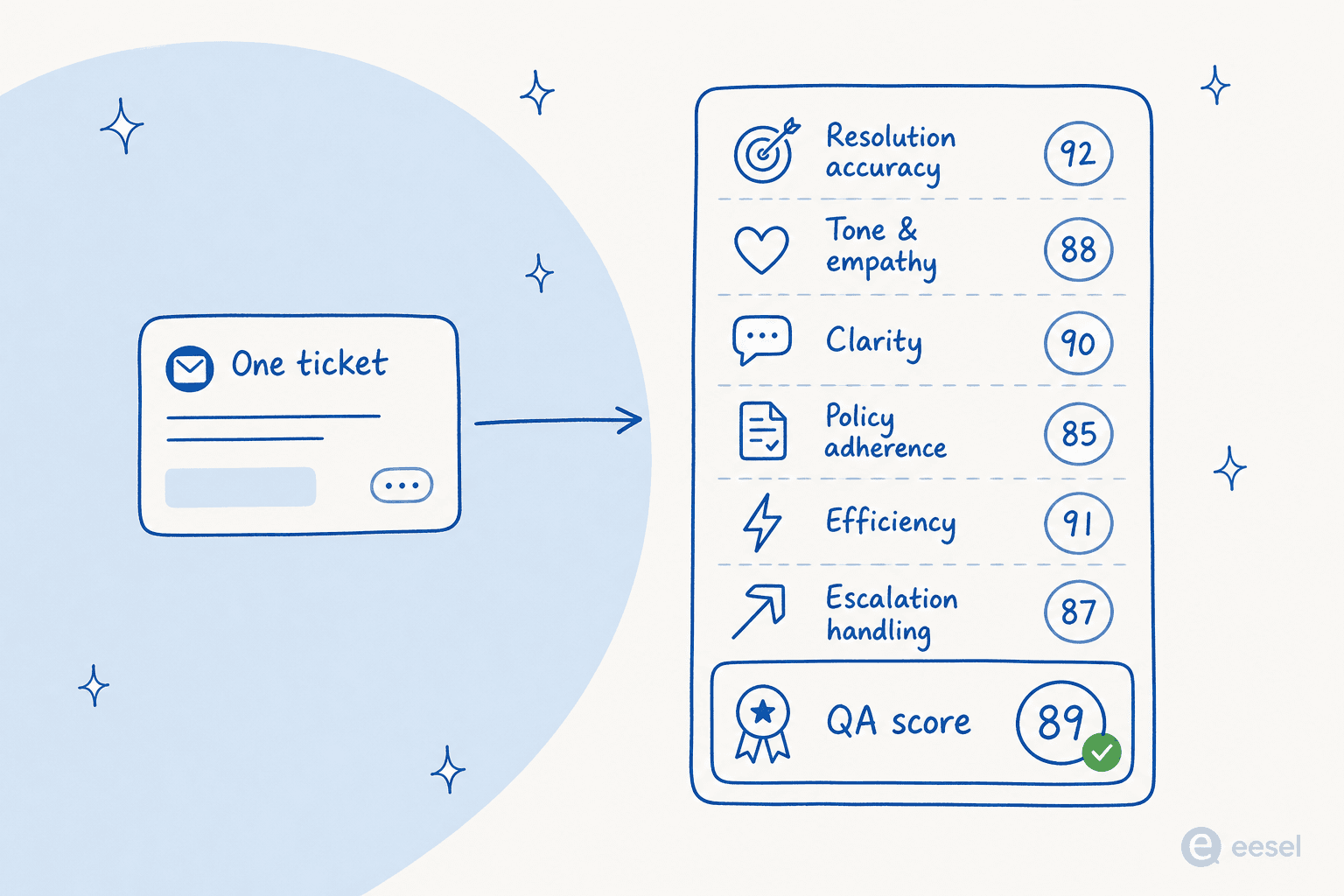
Here's the six-criterion setup most teams land on. You don't need all six, but this is a sensible default:
| Criterion | What it measures | Common failure it catches |
|---|---|---|
| Resolution accuracy | Did the answer actually solve the problem, and was it correct? | Confidently wrong answers, half-solutions |
| Tone and empathy | Did the reply match the customer's emotional state? | Robotic replies to a frustrated customer |
| Communication clarity | Was the reply easy to read and act on? | Wall-of-text, jargon, no clear next step |
| Policy adherence | Did the agent follow refund / security / escalation rules? | Skipped identity checks, off-policy refunds |
| Efficiency | Was it resolved without needless back-and-forth? | Three replies for a one-reply issue |
| Escalation handling | Was it escalated at the right moment, to the right place? | Sat on a ticket that should have moved up |
If you want the full build-out, we've written a step-by-step on scorecard creation and the broader quality assurance workflow around it. The rest of this post assumes you've got something like these six.
The one formula behind every good example
Every strong piece of QA feedback, positive or constructive, follows the same three-part shape. Managers who write good feedback are usually doing this without naming it: situation, behaviour, impact (SBI).

- Situation anchors the feedback to a real moment: "On ticket #4821, when the customer asked about their delayed order..." Never "in general" or "lately."
- Behaviour describes exactly what the agent did, ideally quoting their own words: "...you opened with 'I completely understand how frustrating a late order is' and then gave the tracking link."
- Impact connects it to an outcome: "...which is why the customer thanked you and closed the ticket in one reply."
The reason this matters: feedback without a situation is unfalsifiable ("be more empathetic" - when? where?), and feedback without an impact is just an opinion. SBI makes every comment concrete enough that the agent can picture the next ticket and do it again, or do it differently.
Keep that shape in your head as you read the examples below. Notice how the weak versions drop the situation or the impact, and the strong versions keep all three.
QA feedback examples by criterion
This is the part you came for. Below is a filterable library of sample comments, one card per scorecard criterion, each with a positive example (reinforce what worked) and a constructive example (name what to change). Steal them, adapt the specifics to your tickets, and keep the SBI shape.
A few things to notice across all of them. Every constructive comment quotes what the agent actually did, then hands them the exact replacement wording or rule. None of them stop at "do better." And the positive comments are just as specific as the fixes, because "great job!" teaches nobody what to repeat. If you want more of these written out in prose, our customer service feedback examples post has a longer set, and the performance review examples cover the once-a-quarter version.
Positive vs constructive: get the ratio right
A QA program that only ever flags problems trains agents to dread the review. The teams whose agents actually improve tend to lead with what worked and keep a rough balance, something like three reinforcing comments for every one correction over a review cycle. This isn't about being soft; a genuinely good behaviour that goes unnamed quietly stops happening.
The positive examples in the library above do real work. "You acknowledged the specific frustration before the fix" tells an agent precisely which move to keep. That's a repeatable, teachable behaviour, which is the whole point of writing it down instead of just thinking "nice reply" and moving on. Tying those behaviours to your customer service goals makes the connection between daily tickets and the review cycle obvious, and the same threads carry into customer-focus reviews.
The mistakes that make QA feedback backfire
Even with a good scorecard, feedback goes wrong in predictable ways. These are the ones I see most:
- Grading the customer, not the agent. "Difficult customer, handled okay" isn't feedback. QA scores the agent's controllable behaviour, not how the customer showed up.
- Feedback with no example. "Improve your tone" gives an agent nothing to act on. Always quote the line.
- Fixing without a replacement. Telling someone what they did wrong and not what to do instead just leaves them anxious. Every fix needs the alternative.
- Death by a thousand nitpicks. If a comment lists eight small issues, the agent fixes none. Pick the one or two that matter most on this ticket.
- Reviewing a biased sample. If you only pull tickets that scored a bad CSAT, your feedback is skewed toward disasters and misses the quiet, fixable patterns in normal tickets. This is exactly where sampling hurts you, and where reviewing more tickets changes the picture.
- Ignoring escalation timing. A ticket that resolved fine but sat too long before moving up is still a coaching moment. Grade when it was escalated, not just whether it was.
- Inconsistent graders. If two reviewers score the same ticket differently, agents stop trusting the whole program. Defined scorecard criteria and calibration sessions are the fix.
The biased-sample point is the big one, and it's where the way QA works is changing fastest.
Scaling QA feedback beyond a 2% sample
Here's the uncomfortable truth about traditional QA: a human reviewer can only read so many tickets, so most programs sample around 1-2% of their volume. You're coaching your whole team off a random handful of conversations and hoping it's representative. It usually isn't.
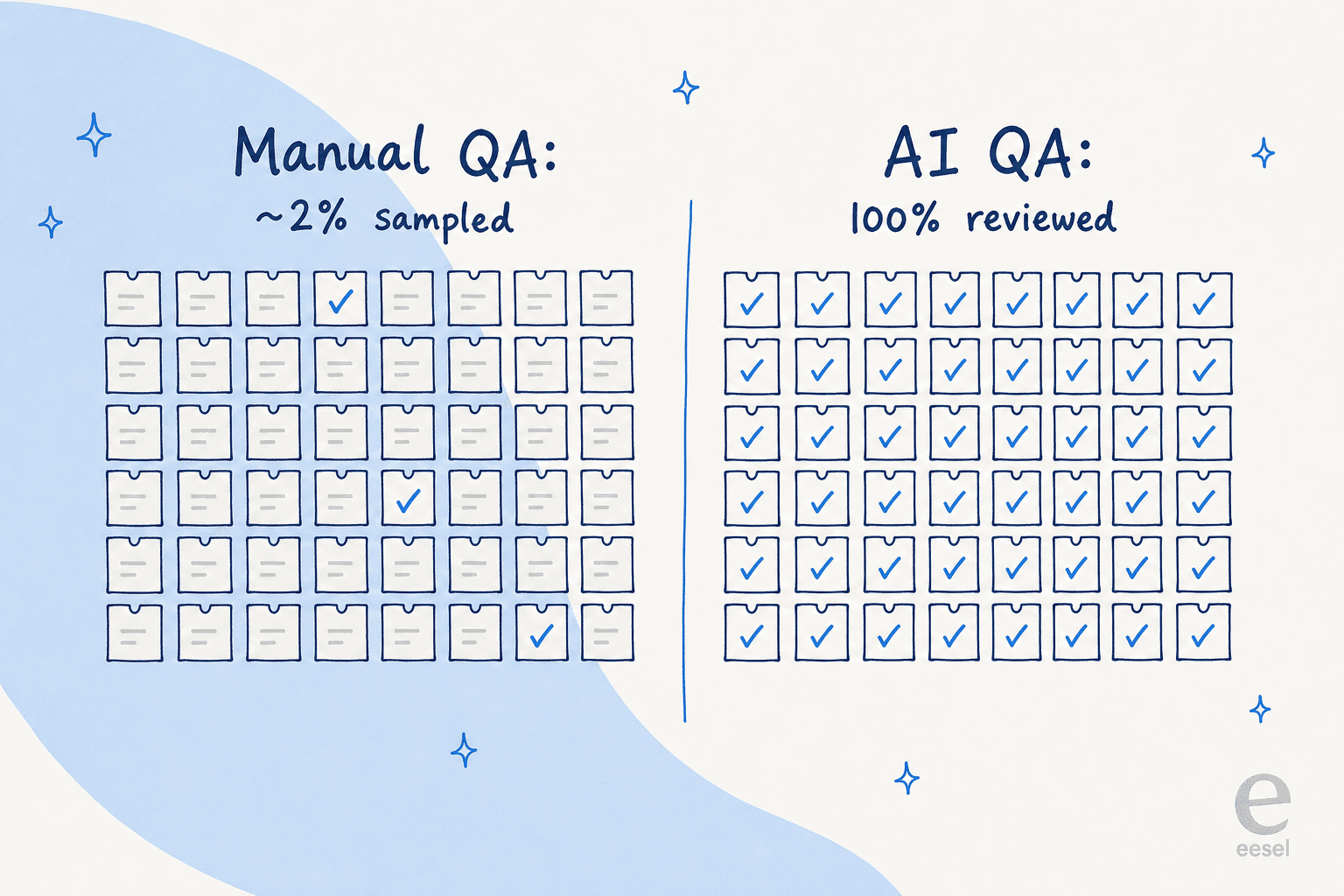
AI changes the math. An AI QA assistant can grade 100% of your tickets against the same scorecard, surface the patterns a 2% sample would miss, and flag the specific tickets a manager should actually read. Instead of a reviewer spending their day finding tickets worth coaching on, they spend it coaching, on the ones the system already surfaced. We've written more on evaluating agent performance with QA data and how agent-facing QA feedback fits into the daily workflow.
This is also the moment to widen the frame. QA isn't only about your human agents anymore. If an AI agent is answering tickets alongside your team, it needs the exact same scrutiny, and honestly a harsher one, because it never gets tired but it also never gets embarrassed by a confident wrong answer. The same containment and escalation quality you'd track for the bot belongs on the same scorecard.
I learned this the hard way. On one rollout with a B2B vehicle-telematics team running a couple hundred tickets a month on Zendesk, the AI cheerfully told customers "yes, we support your vehicle model" for models that weren't in the database, because the help centre said "we support all models" and the bot took it literally. No human would have made that mistake twice. The AI needed QA feedback just like a new hire, which is why we now simulate every rollout against a team's historical tickets before it answers anyone live. The same sentiment and quality signals you'd use to grade a person are what keep an AI agent honest.
Try eesel for QA at 100% coverage
If you're writing QA feedback by hand off a tiny sample, eesel AI closes two gaps at once. It reports on how every answer performs, so you're grading from the whole queue instead of a lucky dozen, and it lets you QA the AI agent itself: run it in simulation against thousands of your past tickets, see exactly how it would have answered each one, and fix the gaps before a single customer is affected.
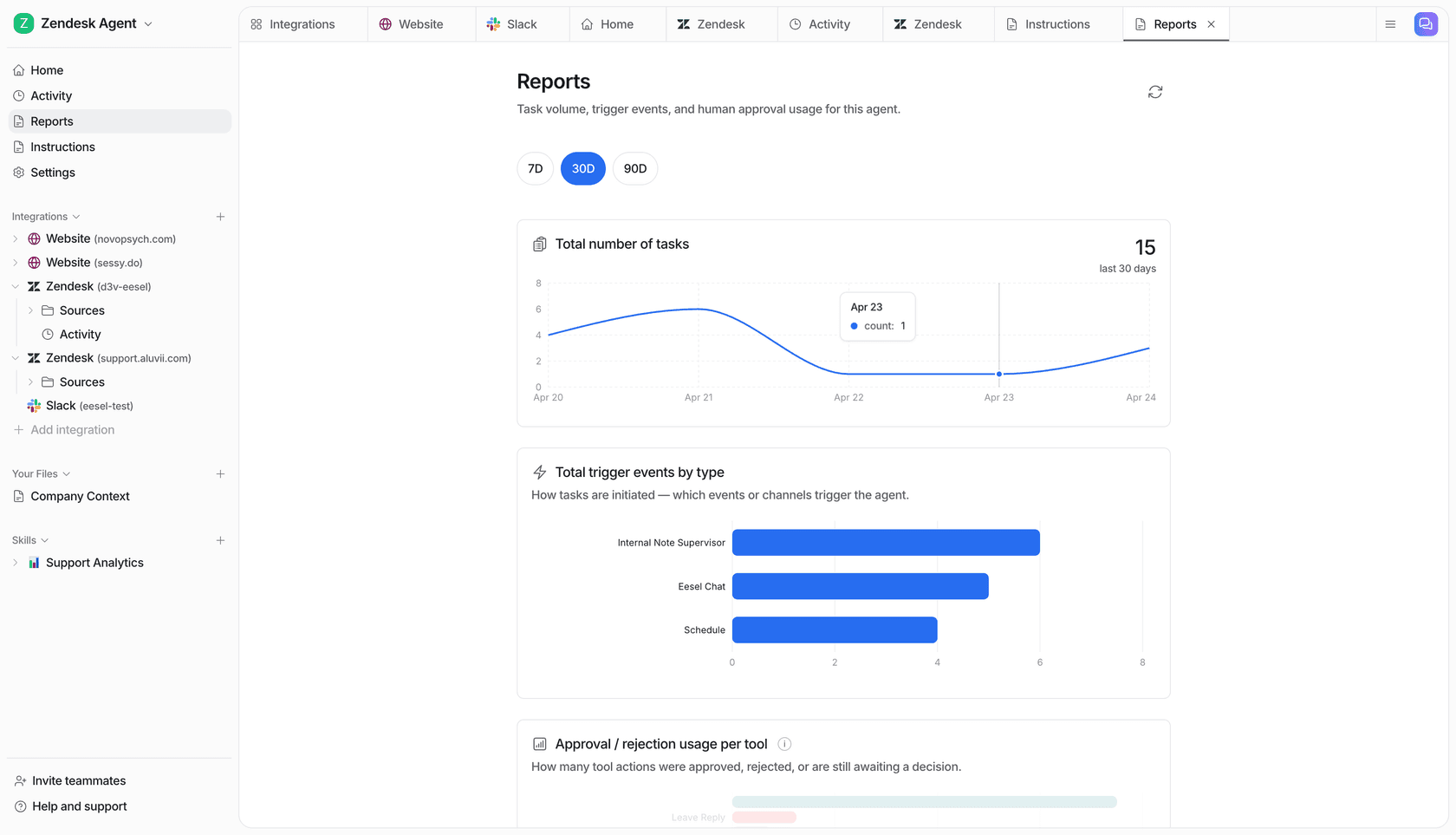
It plugs into Zendesk, Freshdesk, and the rest of your helpdesk stack in minutes, learns from your existing help centre and past tickets, and is free to try. Think of it less as a QA dashboard and more as a teammate that's already read every ticket you'll never have time to.