


The short version: there is no public AI price
Let me set expectations before we go deep. Searching "Sendbird AI pricing" and expecting a tidy tier card is going to disappoint you. Sendbird's AI Agent is sales-quoted, full stop. One update: delight.ai/pricing now redirects to a pricing-models guide dated March 16, 2026, which compares model types but lists no rate. The product itself is genuinely capable, and the dashboard below is real: it tracks conversations, resolution rate, CSAT, and human handoff, which tells you a lot about how the company thinks about value.
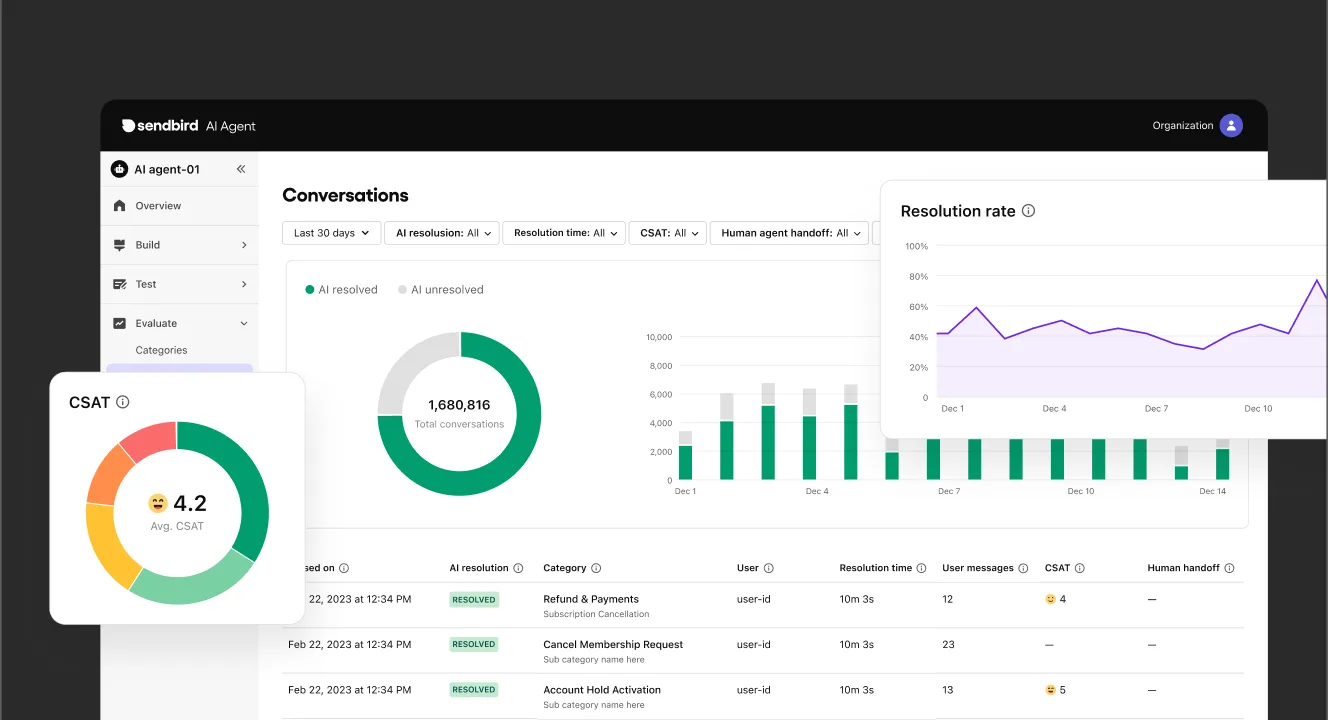
Notice what's front and center in that dashboard: "1,680,816 Total conversations." Conversations are the hero metric, and they're also the billing unit. Hold that thought, because it's the key to the whole pricing story.
What you're actually buying (and the delight.ai rebrand)
The first thing to untangle is the branding. In 2026, Sendbird's AI Agent moved under a new brand, delight.ai, and visiting sendbird.com/ai-agent now redirects you straight there. It's the same company and the same product line, marketed as "your branded AI concierge."

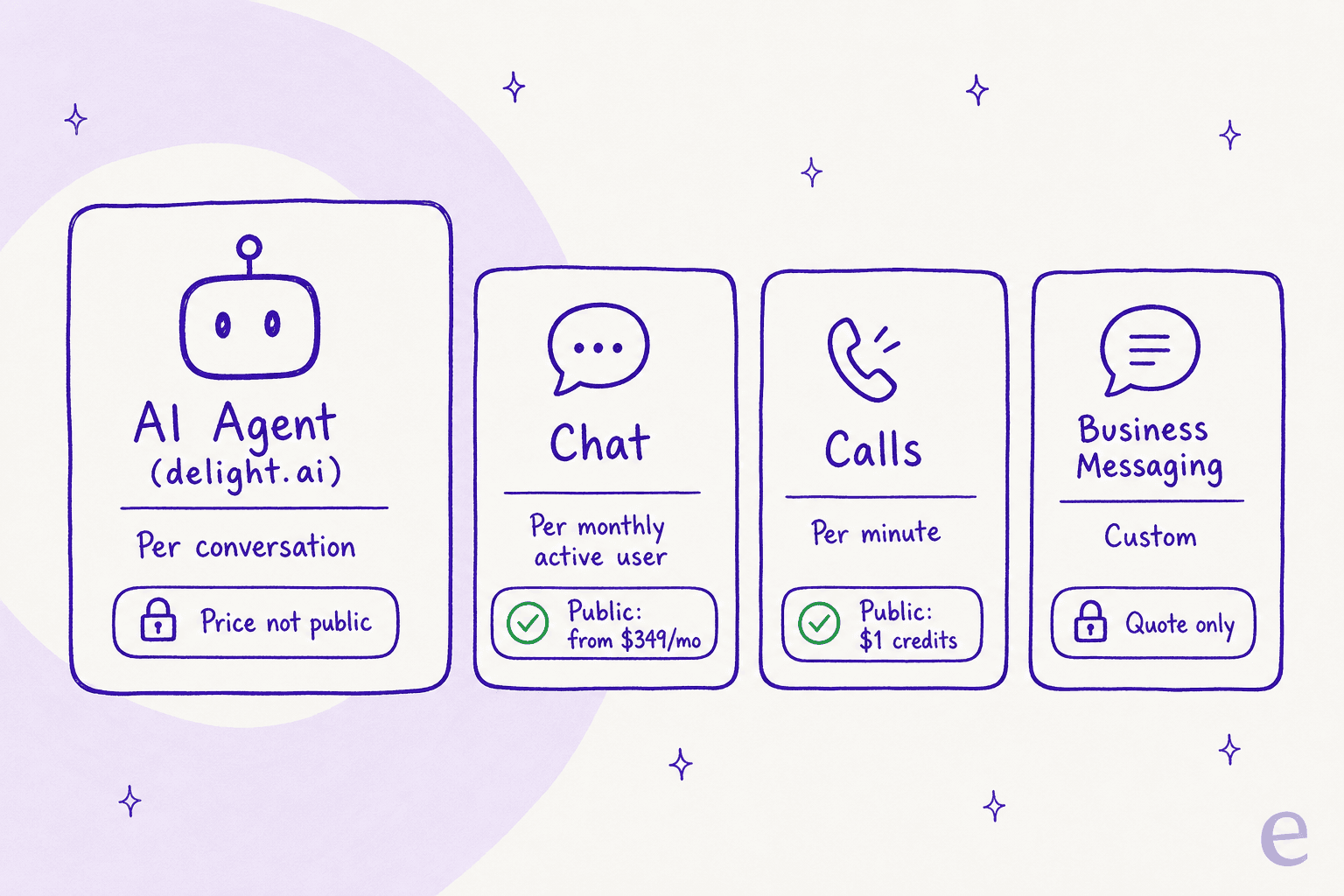
Underneath the AI story sits Sendbird's original business: communications infrastructure. The platform reaches 7 billion+ end users and 300M+ monthly active users, per Sendbird's platform page, and it splits into a handful of products, the AI Agent, Chat, Calls, and Business Messaging.
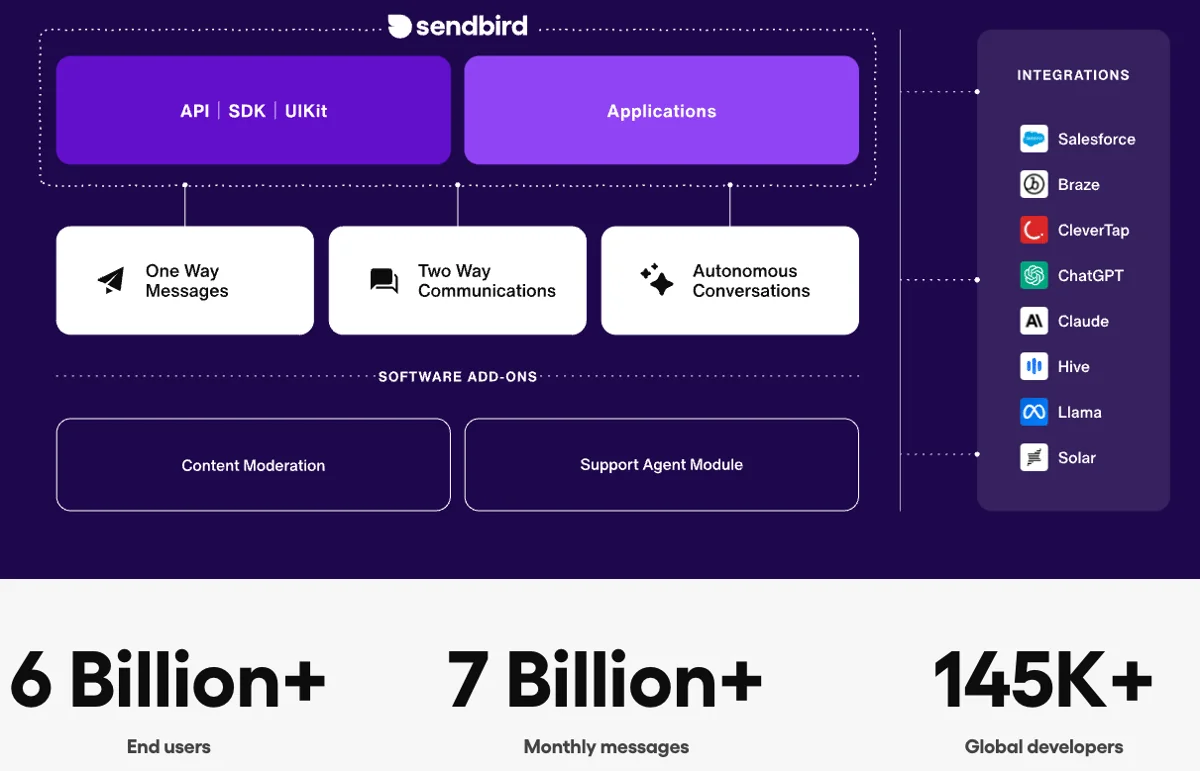
The AI Agent itself is pitched at enterprise buyers. It's omnichannel (chat, web, email, SMS, WhatsApp, social), it reasons over intent rather than running fixed scripts, much like the newer Zendesk AI agent, it has a build/test/evaluate workflow with a simulation environment, and it hands off to humans in Zendesk, Salesforce, and Freshworks. On compliance it covers SOC 2 Type II, HIPAA/HITECH, ISO 27001, and GDPR. It's a serious enterprise product. It just won't tell you what it costs until you're on a call.
How Sendbird prices its AI Agent: per conversation
Here's where Sendbird is refreshingly clear, even if the numbers stay hidden. The company states plainly that "we price our AI Agent per conversation", and frames it as a usage-based model that "scales with engagement, not ambiguity."
Where does "per conversation" sit on the spectrum of AI pricing models? Roughly in the middle, between paying for raw access (seats, active users) and paying for results (resolutions, outcomes).
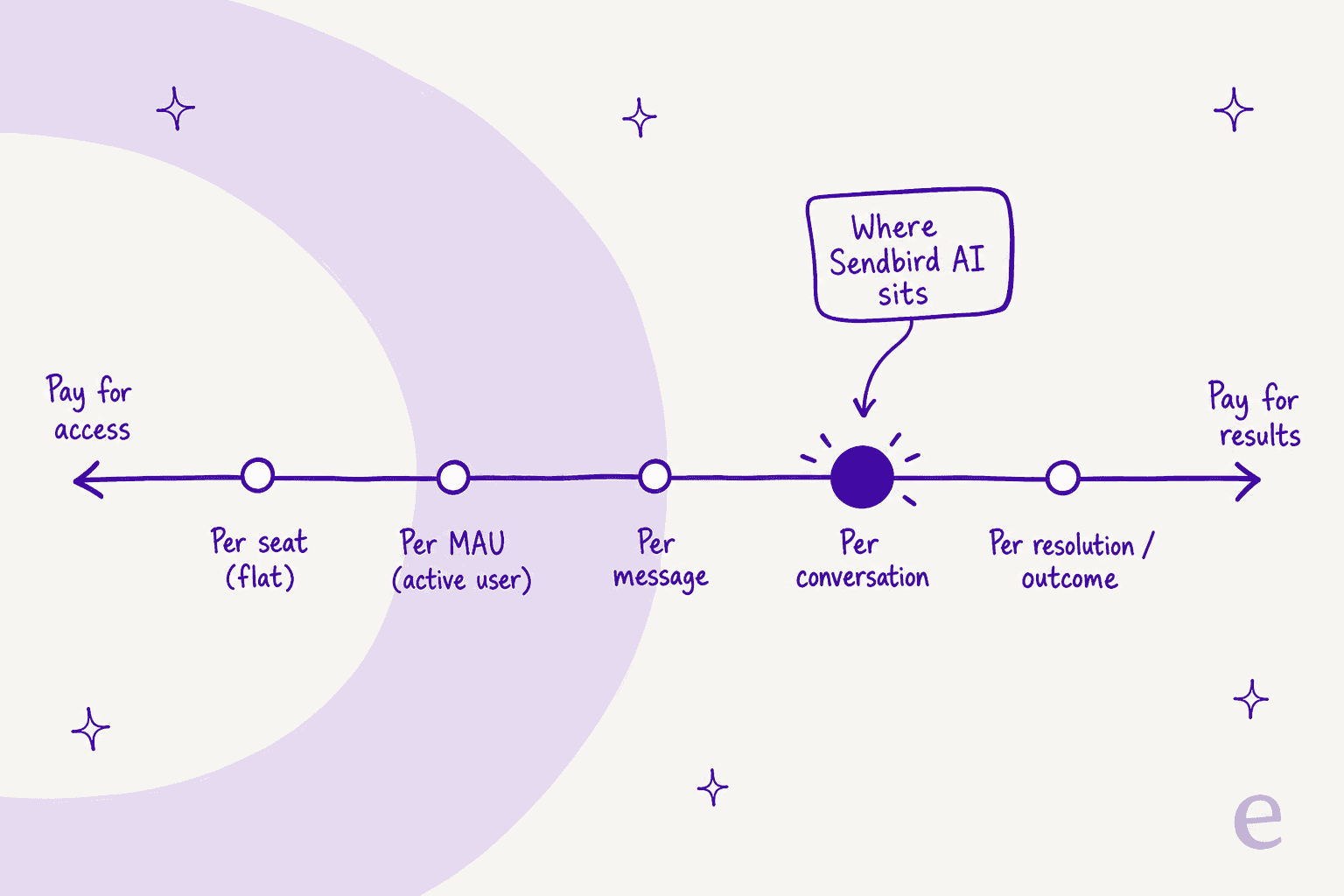
Sendbird is also explicit that it is not doing per-resolution, outcome-based pricing, and it makes a real argument for that choice. It points out that "outcome" means different things to different teams (a resolution for support, a conversion for sales, revenue for marketing), which "can create complexity, confusion, and even friction, where success starts to feel like a cost trigger." Sendbird even lays out the model landscape it's positioning against in its own pricing guide:
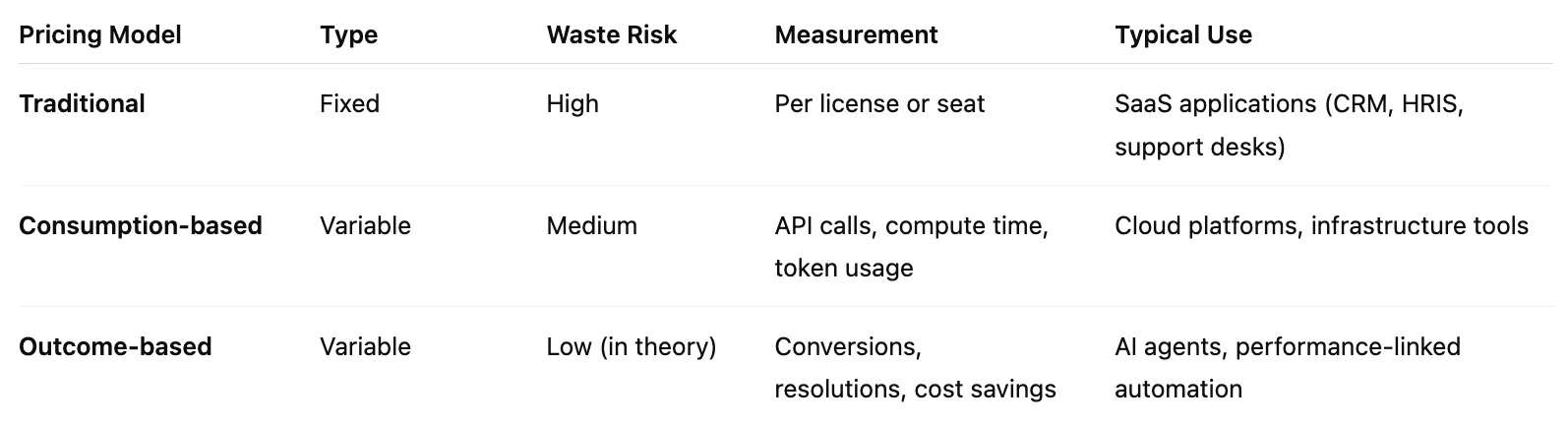
To its credit, Sendbird names the downside of its own model out loud: with per-conversation billing, "you pay even for unresolved or low-value conversations" and there's "no direct incentive for performance improvement." Compare that to a true outcome-based model, where you'd only be charged when a task actually completes.
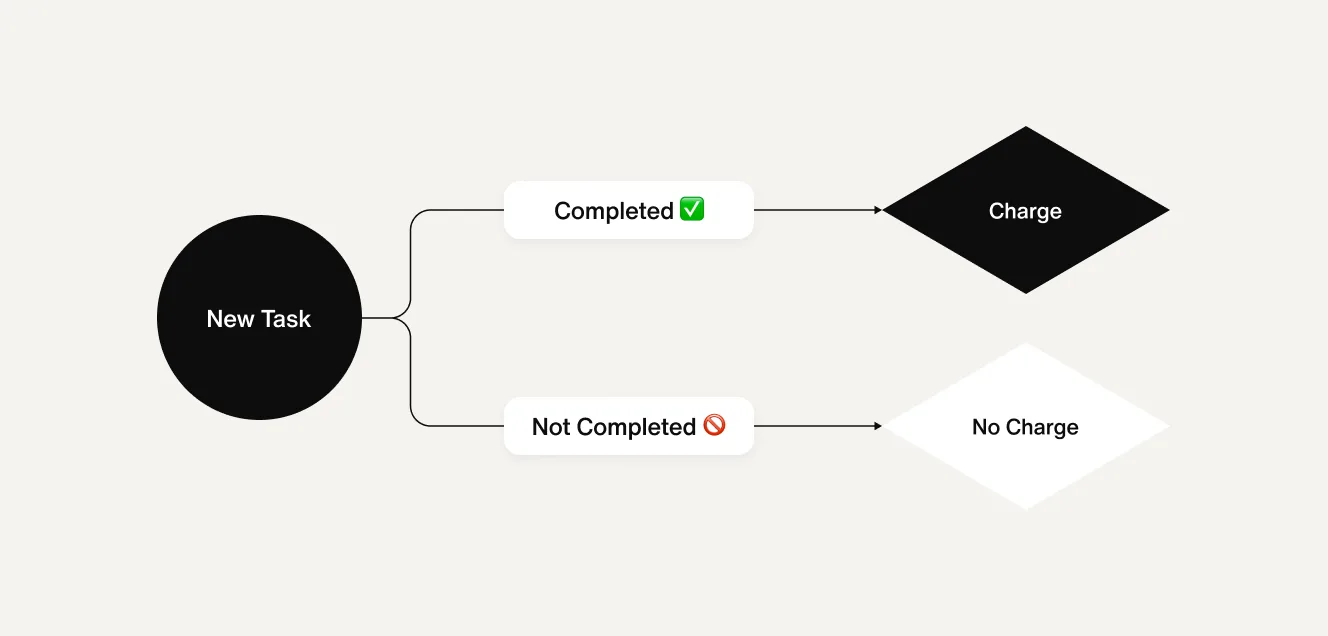
That's a fair, well-argued position. The problem isn't the model. The problem is that "per conversation" only tells you half the story, and the other half (the rate, and what counts as a conversation) is missing.
The billable unit is the thing that decides your bill
This is the part I'd want a friend evaluating Sendbird to internalize. The pricing unit matters more than the pricing number, because the same support interaction costs wildly different amounts depending on how it's sliced.
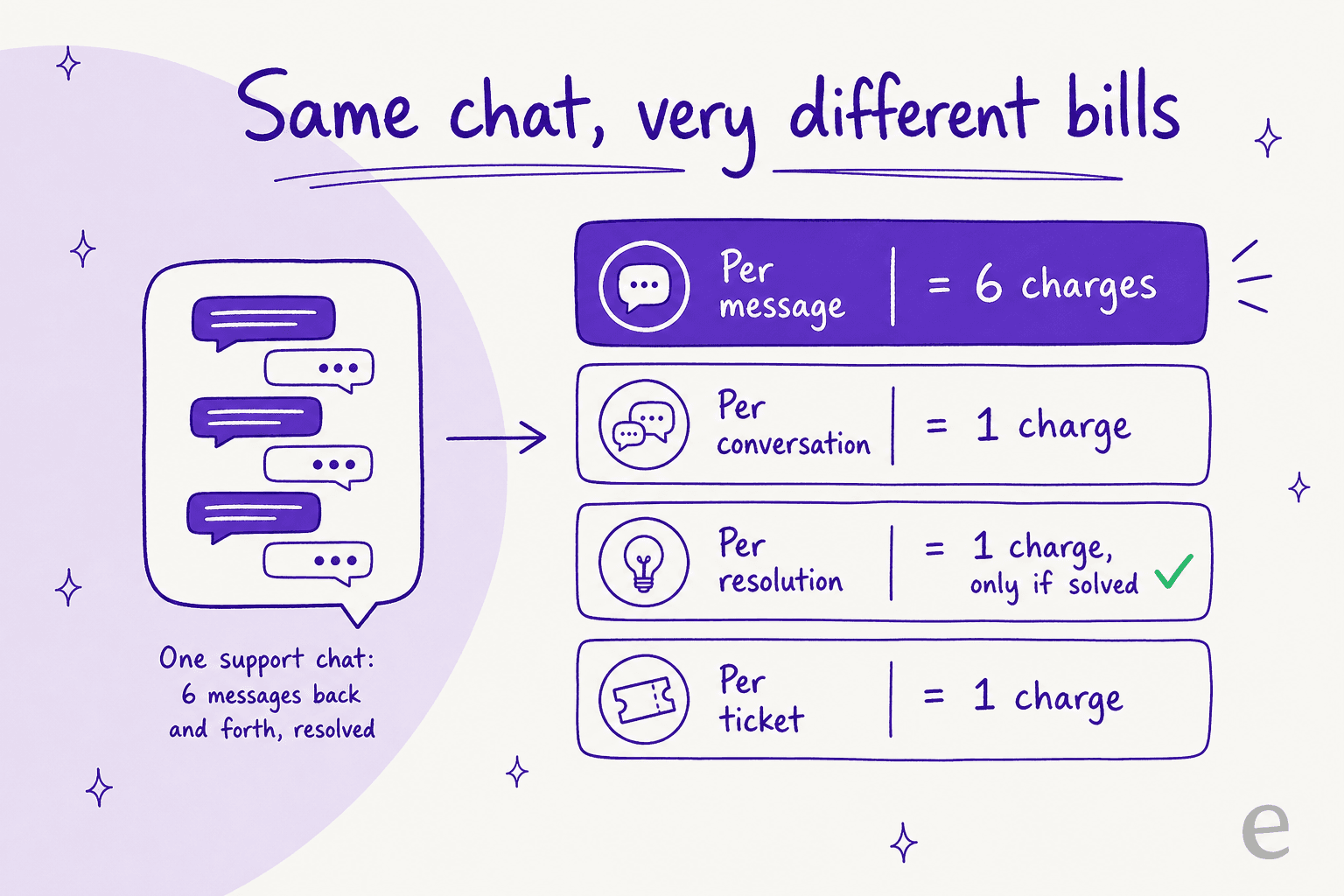
I've watched this bite real teams. One ops lead at a payouts and money-transfer fintech, running on Zendesk and handling roughly 7,000 to 8,000 escalated tickets a month, told us flatly that per-interaction pricing was a non-starter for them, because at a few exchanges per ticket they'd blow through a 3,000-interaction allowance in about a day and a half. They needed billing anchored to something stable, a session or a ticket, not every message. A different e-commerce operator scaling toward ~150,000 tickets a month spent half a sales call just trying to figure out whether he was being charged per interaction or per ticket, because at roughly 20 cents a ticket the two models projected to about $30,000 a month apart. Same product, same usage, the unit was the whole ballgame.
Now apply that to Sendbird. "Per conversation" sounds clean, but Sendbird's own pricing posts never define a conversation operationally. There's no session-length window, no message threshold, no rule for how a re-opened thread or a multi-day back-and-forth is counted. Does a customer who replies three days later start a new billable conversation? You can't tell from the public pages. When you can't define the unit and you can't see the rate, you genuinely cannot model your own bill, and that's the single biggest thing I'd push on in a sales call.
This is exactly the trap eesel was built to avoid. We sell fixed monthly credit plans where one credit is one ticket or chat, a unit teams already think in, and we don't charge extra for the iterations, follow-ups, or internal actions inside it. The reason is boring but it matters: predictability beats cleverness, and a pricing model you can forecast is one you'll actually adopt.
Sendbird's published prices: Chat, Calls, and Business Messaging
So if the AI Agent has no public price, what can you see? Three legacy communication products. Here's the map.
Sendbird Chat (the one with real list prices)
Chat is billed per Monthly Active User. A MAU is "counted as an active user when they connect to Sendbird servers... within the past 30 days," and messages are unlimited on every tier. You're paying for active people, not message volume.
| Chat plan | Price (at 5K MAU) | Billable unit | Key limits |
|---|---|---|---|
| Free trial / Developer | Free | Up to 1,000 MAU | All Pro features, 20 peak concurrent connections, no overages, community support |
| Starter | $349/mo annual, $399/mo monthly | Per MAU | Up to 100K MAU, messaging essentials, basic moderation, 6-month retention, 8x5 ticket support |
| Pro | $499/mo annual, $599/mo monthly | Per MAU | Adds translation, data export, image moderation, message search, webhooks, auto-moderation |
| Enterprise | Custom | Per MAU | Millions of MAU, dedicated servers, HIPAA/BAA, extended retention, 24x7 support |
A few details worth knowing before you sign: peak concurrent connections are capped at 5% of your MAU on Starter and Pro, a dedicated Customer Success Manager only kicks in above $50k in ARR, and HIPAA with a signed BAA is Enterprise-only. One quirk to ignore: the Chat FAQ still embeds a self-reported price table dated June 2021 that conflicts with the live cards, so trust the current tier prices, not that old grid.
Sendbird Calls
Calls is usage-based via prepaid credits. A credit is worth $1.00 (volume discounts apply), and you draw it down per minute, per user: voice from $0.0010/min (server-relayed $0.0015), video from $0.0014/min (relayed $0.0035), and cloud recording at $0.0014/min for voice and $0.0059/min for video.
Sendbird Business Messaging
Business Messaging (in-app messages, push, SMS, WhatsApp, KakaoTalk) publishes no prices at all. The only CTA is "fill out the form to get your custom quote."
What it'll actually cost you: the gotchas
Sticker prices never tell the full story, so here's what the community surfaces once you're a paying customer. Across 124 G2 reviews Sendbird scores a strong 4.6/5, but cost is the single largest complaint cluster: the tags "Expensive," "Cost," and "Cost Limitations" show up 34 times combined, more than any other negative theme. Capterra sits at 4.2/5 with Value for Money as its lowest sub-score, and Trustpilot at a thin 3.2/5.
The most useful complaint for a pricing post is about feature gating, because it's specific and verifiable:
"Sendbird is an enterprise solution and the pricing reflects this. Features are bundled into different packages, so you may need to upgrade your subscription to get a particular feature. Advanced analytics, for example, is only available in the Pro package and above. This means that cost depends not only on usage but also on desired feature set."

That's the recurring theme: your bill scales with the feature set you need, not just your volume, so unlocking one capability can mean upgrading the whole plan. Capterra reviewers separately note that Sendbird "provides different prices to different customers", which makes budgeting feel like a negotiation rather than a checkout. It's worth noting this isn't unique to Sendbird, sales-quoted AI pricing is common across the category, as our breakdowns of HubSpot AI agent pricing and Gorgias AI agent pricing both show.
To be fair, there's a real counter-theme, and it's worth respecting: long-tenure enterprise customers defend the value, with one G2 reviewer noting their "pricing stays the same for 8 years" and crediting the CS team with finding savings during a budget crunch. The pattern is clear enough: Sendbird earns its keep at large scale, and the friction concentrates at the startup and small-team end.
Sendbird AI pricing vs a transparent alternative
Here's my honest take after digging through all of this. Sendbird's per-conversation model is defensible and its argument against outcome-based pricing is genuinely thoughtful. The issue is everything that's missing: no public rate, no conversation definition, feature-gated tiers, and per-customer negotiation. For an enterprise with a procurement team and time for a sales cycle, that's annoying but survivable. For a small or fast-moving team, it's a wall.
That's the gap eesel was built for. If you want an AI agent for your helpdesk, eesel works like a new hire that plugs into your existing tools, Zendesk, Freshdesk, Gorgias, Help Scout, in a few minutes and already knows your help center.
| What you care about | Sendbird AI Agent | eesel |
|---|---|---|
| Public price for the AI agent | No (contact sales) | Yes, from $299/month for 500 credits, on the pricing page |
| Billable unit | Per conversation (undefined) | 1 credit = 1 ticket or chat, clearly defined |
| Charged for follow-ups in one unit | Unclear | No, one credit covers the whole ticket |
| Test before you commit | Simulation environment (sales-led) | Self-serve simulation on past tickets |
| Best fit | Large enterprise, procurement-led | Teams that want to start today |
The reason transparent, published pricing matters isn't ideology, it's adoption. The teams I've seen stall on AI support almost always stalled on the budget question, not the technology. When you can read the rate, model your spend, and try it against your own historical tickets before paying, the decision gets a lot easier.
Try eesel for transparent AI support
If you've read this far, you're probably weighing whether an enterprise, sales-quoted AI agent is worth the runway. eesel is the opposite bet: an AI support agent you can plug into your helpdesk, train on your own past tickets and help center, and put live in a simulation before it ever touches a customer, all on pricing you can read without a single sales call.
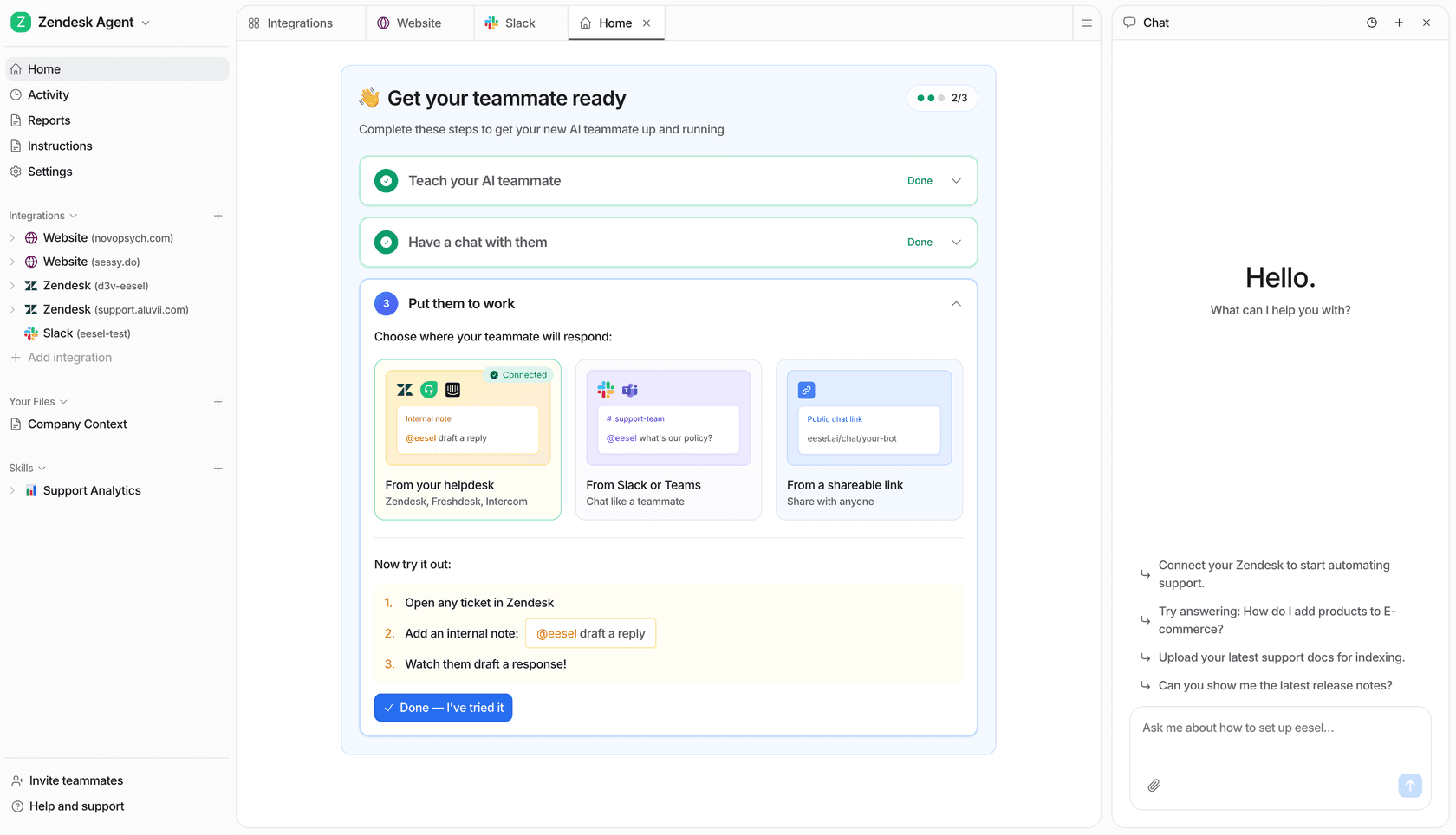
Plans are a fixed monthly price sized to volume (500 credits for $299/month), one credit covers a ticket or chat however long it runs, and there are no per-seat fees. Try eesel free with 100 credits, or see how it compares on AI agent cost before you decide.
Frequently Asked Questions
How much does Sendbird AI cost?
Is Sendbird's AI Agent the same as delight.ai?
sendbird.com/ai-agent now redirects there. It's the same vendor and the same product family, sitting on top of the Sendbird communications platform. If you're comparing it to other options, our roundup of AI agent tools is a good place to start.