

A complete guide to Shift4Shop pricing in 2026
So, you're looking into Shift4Shop pricing. Smart move. You're probably trying to figure out if it's the right home for your online store and, more to the point, what it’s actually going to cost. It’s easy to get drawn in by a "free" sticker price, but any seasoned store owner will tell you that the platform fee is just where the spending starts.
The real cost of running an e-commerce business is more than just a software subscription. You have to factor in payment processing fees, themes, apps, and a huge, often underestimated cost: customer support.
This guide will break down Shift4Shop’s plans without the jargon. We'll look at the official pricing, the transaction fees, and then get into the total cost of ownership so you can put together a realistic budget and make a choice you feel good about.
So, what is Shift4Shop? Understanding the platform behind the Shift4Shop pricing
First, a quick refresher. Shift4Shop used to be called 3dcart, so if that name rings a bell, you're in the right place. It’s one of those “all-in-one” e-commerce platforms that gives you the tools to build and run an online store from scratch. It comes with a ton of built-in features, like product management, SEO tools, and marketing bits and pieces.
Its big claim to fame is a pretty compelling offer: a completely free, feature-packed e-commerce plan. The catch? You have to use their own payment processor, Shift4 Payments. This has made it a go-to choice for small and medium-sized businesses in the US looking for a solid alternative to platforms that hit you with a monthly fee right away.
Breaking down the Shift4Shop pricing plans
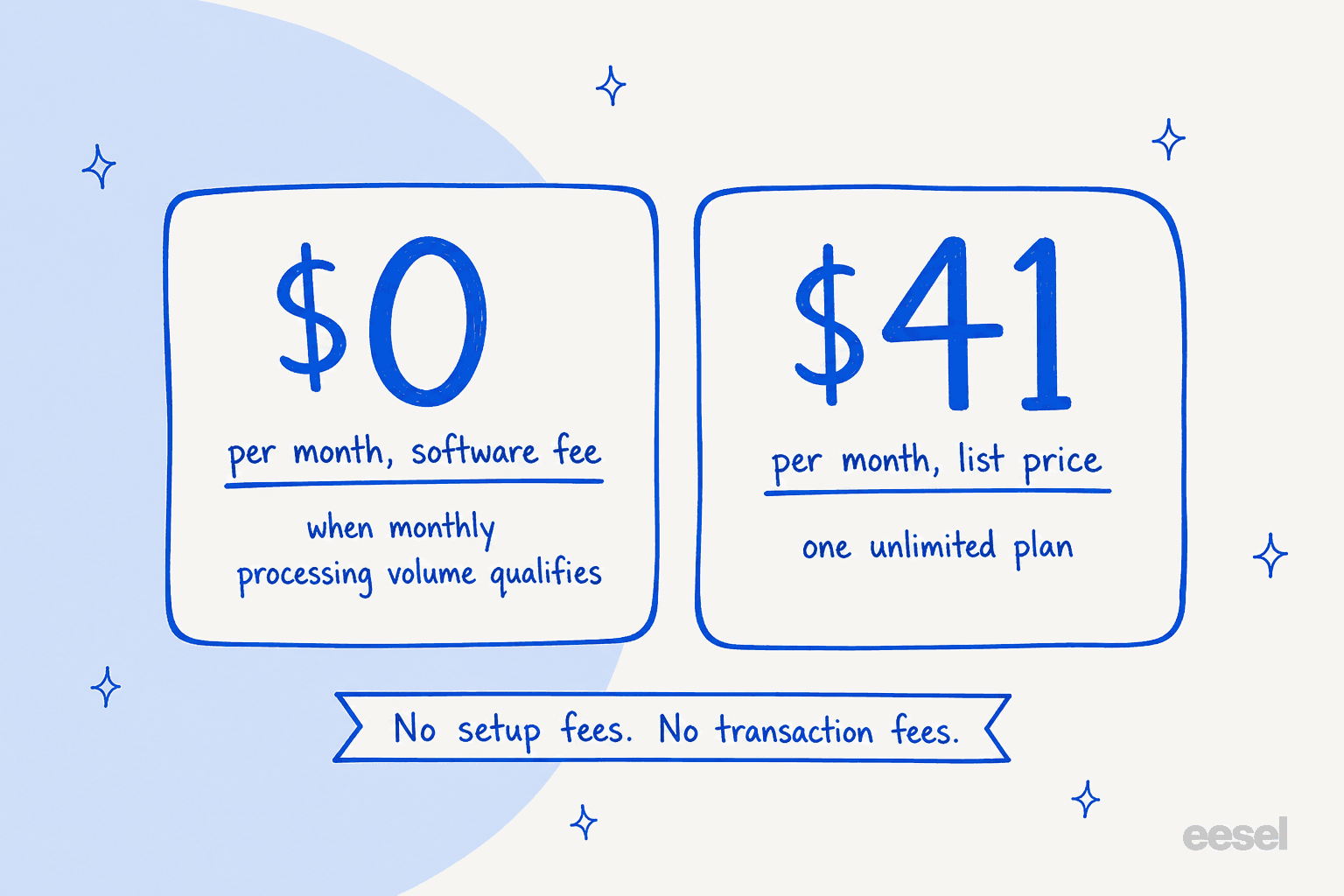
Shift4Shop has really simplified its pricing to push its main "End-to-End Ecommerce" plan. For most folks selling in the US, this is the one you'll be looking at. If you use their built-in payment system, Shift4 Payments, the platform software fee can be $0. The vendor's own pricing page now lists the plan at $41 a month and says a monthly fee may apply depending on your plan and monthly processing amount, so confirm where your volume lands.
Of course, "free" rarely means zero cost. You'll still pay standard credit card processing fees on every sale, which is how Shift4 makes its money. The pricing page also describes its integrated payment processing as a solution from PayPal. This setup is pretty common, but you need to understand what happens if you want to use a different payment gateway.
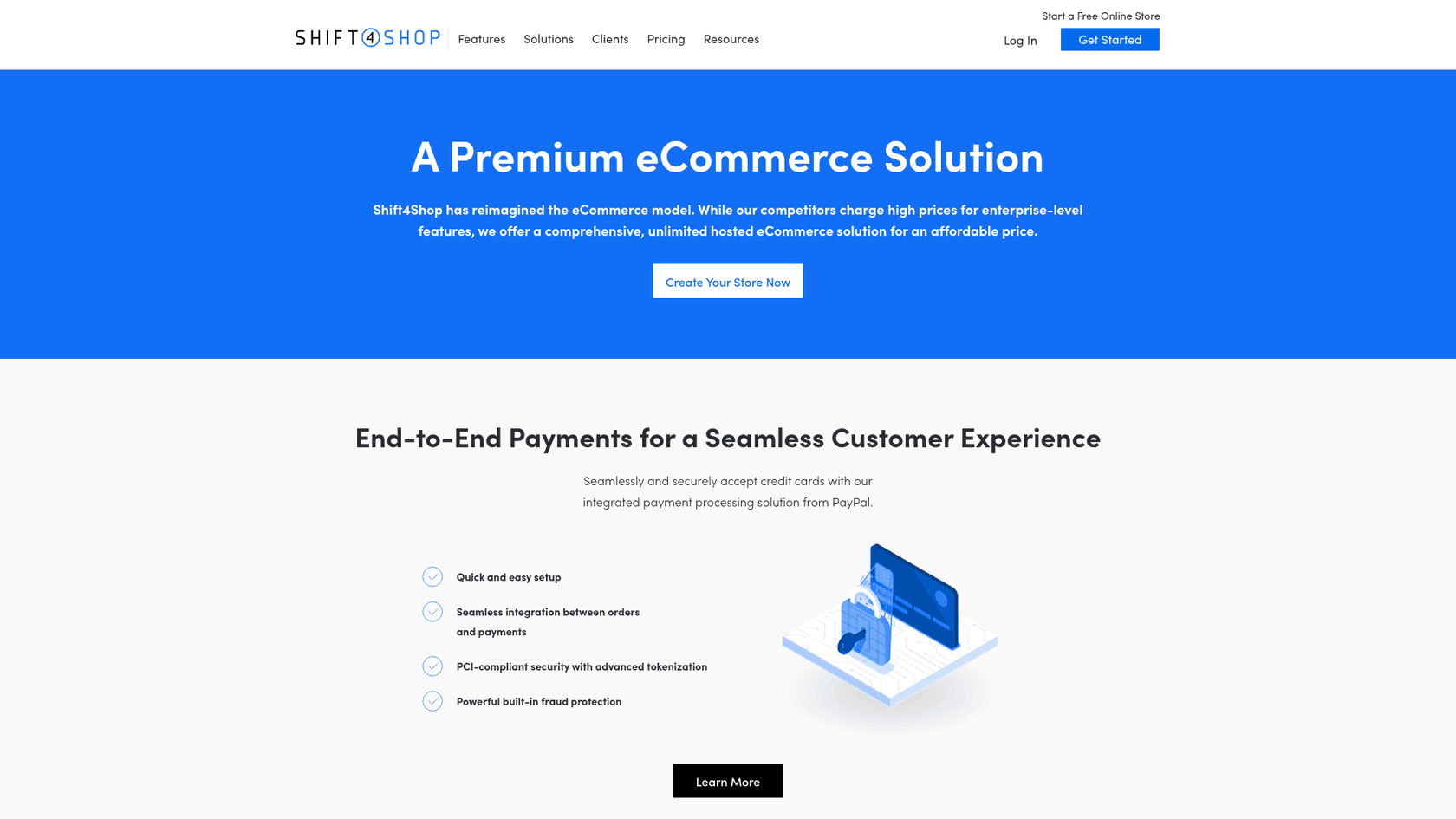
Here’s a simple table to show how it works:
| Feature | End-to-End Ecommerce Plan (with Shift4 Payments) | Using an External Payment Gateway |
|---|---|---|
| Monthly Fee | $0 when your processing volume qualifies (vendor lists the plan at $41/month) | Not listed on the current pricing page; older third-party sources cited $29/month (Basic) |
| Transaction Fees | None; vendor says only your processor's fees apply | Vendor says no transaction fees; older tier-based rates (2.0%, 1.0%, 0.5%) are no longer listed |
| Payment Processing | Standard Shift4 rates (e.g., 2.9% + 30¢ per transaction) | Your gateway's rates + Shift4's transaction fee |
| Included Staff Users | Unlimited | Not listed on the current pricing page |
| Key Features | Access to all core features, unlimited products, SEO tools | Not listed on the current pricing page |
| Best For | US-based merchants who are happy to use Shift4 Payments to avoid monthly fees. | Merchants who need a specific payment gateway like Stripe or PayPal. |
Pro Tip: Credit card processing rates can change depending on the card type (debit, credit, rewards cards, etc.). It's always a good idea to check the latest rates directly with Shift4 so you have the most accurate numbers for your budget.
Basically, if you're in the US and cool with using their payment system, you get a powerful e-commerce platform without a monthly charge. But if you need a different gateway such as Stripe, check with Shift4Shop first: its current pricing page lists a single plan and no longer shows the older tiered plans or their transaction fees.
What you’ll really spend with Shift4Shop pricing: looking beyond the monthly fee
Okay, so we've got the platform fee sorted. But that's just one piece of the puzzle. To figure out your real costs, you have to look at everything else that goes into running a store. These are the expenses that can sneak up on you if you're not ready for them.
Domain, theme, and app costs that add to your Shift4Shop pricing
Let's start with the basics for getting your store to look and feel like yours.
-
Domain Name: You’ll need a custom domain (like
yourcoolstore.com). Shift4Shop says it will register a domain for free and renew it free every year, so this line is often $0; a domain bought elsewhere usually runs about $15-$20 a year. -
Website Theme: Shift4Shop gives you a bunch of free themes to start with, and they're perfectly fine. But a lot of businesses end up buying a premium theme for a more professional design, better features, or a slicker mobile experience. These are usually a one-time purchase, running anywhere from $100 to $250.
-
App Marketplace: No single platform does everything perfectly. You'll probably find yourself wanting to add extra tools for things like fancy email marketing, a customer loyalty program, or complex shipping rules. These apps often have their own monthly fees, and they can add up faster than you'd think.
The ever-growing cost of customer support in your Shift4Shop pricing model
And here’s the one that catches almost every growing store by surprise. When you first launch, you can probably handle all the customer questions yourself. But as your traffic grows and the orders start rolling in, so does the tidal wave of support tickets.
Suddenly, your inbox is a constant loop of the same questions:
-
"Where is my order?" (The classic WISMO ticket)
-
"What's your return policy?"
-
"How do I make a return?"
-
"When will this be back in stock?"
-
Specific questions about how a product fits or works.
Trying to handle all of this manually becomes a black hole for your time and a serious operational cost. You have to hire support agents, get them up to speed, and pay for helpdesk software. This cost isn't fixed, either. It climbs right alongside your sales, slowly eating into your profits. Relying only on people to answer repetitive questions is not just expensive; it’s a bottleneck that can slow your growth to a crawl.
How an AI support agent can keep Shift4Shop pricing costs down
So, what’s the alternative to just throwing more money and people at the problem? This is where you can get clever with automation. Instead of hiring more agents to answer the same five questions all day, you can use an AI-powered support agent to handle the routine stuff, 24/7. This lets your human team focus on the tricky issues that actually need a personal touch.
The best part is that you don't have to change how you work. A tool like eesel AI plugs right into the helpdesk you're already using, whether that’s Zendesk or Gorgias, and learns directly from your business information.
A good AI agent can do a lot more than just spit out FAQ answers.
-
Take Action: An AI Agent from eesel AI can be set up to perform actions in real-time. It can connect to your store's backend to check an order’s status, giving instant and accurate answers to "Where is my order?" without a human having to do anything.
-
Learn Everything: eesel AI connects to all your company knowledge, not just a static help center. It can pull information from past support tickets, internal Google Docs, and even your Shopify product descriptions to give customers complete answers about your products and policies.
And don't picture some massive, complicated software that takes a team of engineers months to set up. You can get started with eesel AI on your own in a few minutes. There are no mandatory sales demos or drawn-out implementation projects. You can even use its simulation mode to test the AI on your past support tickets, which gives you a clear picture of how it will perform and how much you could save before you even show it to a single customer.
This all comes back to cost. The expense of hiring more support staff can be unpredictable, spiking during your busiest seasons. An AI solution, on the other hand, has clear, predictable pricing. eesel AI's plans are fixed monthly credit plans, from $299 a month for 500 credits with 1 credit per ticket or chat and no per-seat fee, so a great holiday sale doesn't produce a surprise bill.
Your Shift4Shop store's true cost: a final Shift4Shop pricing checklist
As you sketch out your budget, make sure you're thinking about the whole picture. Here’s a quick list of the main costs to keep in mind:
-
Shift4Shop Platform Fee (if you're not using their payment gateway) & Payment Processing Fees
-
Domain and Premium Theme Costs
-
Monthly App Subscriptions
-
Marketing and Advertising Budget
-
Customer Support Costs (your team and any automation tools)
Shift4Shop pricing: look past the price tag for long-term growth
Look, Shift4Shop’s free plan is a fantastic way to get started in e-commerce, no doubt about it. It gets rid of a huge hurdle for new businesses. But running a successful store for the long haul isn't just about snagging the cheapest platform. It's about understanding and managing all your costs as your business grows.
Putting money into tools that can scale with you, especially for customer support, is a smart play. It protects your profit margins, gives customers a better experience with instant answers, and frees up your team to focus on work that actually grows the business instead of getting stuck in a loop of repetitive tasks. Thinking about your support strategy from day one is one of the best things you can do for your store's future.
Ready to see how AI can keep your support costs from spiraling as your Shift4Shop store grows? Try eesel with 100 free credits and build your first AI agent in just a few minutes.
Frequently Asked Questions
What happens to the Shift4Shop pricing if our business absolutely has to use an external payment gateway like Stripe or PayPal?
Shift4Shop's current pricing page lists one unlimited plan at $41 a month and no longer shows the older Basic, Plus and Pro tiers. Ask Shift4Shop which monthly fee applies to your gateway before you commit.
Beyond the subscription, what other costs should I include when budgeting for the total Shift4Shop pricing?
You should budget for an annual domain name, a one-time premium theme if you want a custom design, and any monthly app subscriptions. Most importantly, factor in the operational cost of customer support, which grows as you sell more.
Could you clarify the difference between transaction fees and payment processing fees in the context of Shift4Shop pricing?
Payment processing fees are what the payment company (like Shift4 Payments or Stripe) charges to process a credit card transaction. Shift4Shop says it charges no setup or transaction fees of its own, so what you pay per sale is your processor's rate.
As our business grows, how does the Shift4Shop pricing model scale with a significant increase in sales volume?
The free plan scales well because there are no rising platform fees, but your payment processing costs will increase with sales. The biggest scaling cost to watch is customer support, as more orders mean more tickets, making automation a key strategy to protect your profits.