


Picking an ecommerce platform is one of the most important decisions you'll make for your business. It's not just a website builder; it's the engine for your sales, marketing, and the entire customer experience. Two of the biggest names you'll run into are Shopify and BigCommerce. On the surface, they seem similar, but they're built for very different types of businesses.
If you get this choice wrong, you could be looking at slow growth, a ton of operational headaches, or even a painful and expensive move to another platform later on.
This guide will walk you through the real differences in features, scalability, support, AI tools, and pricing to help you settle the Shopify vs BigCommerce debate for your own business.
What is Shopify vs BigCommerce?
Before we get into a side-by-side comparison, let's get a feel for what each platform is really about.
What is Shopify?
Shopify is an all-in-one platform known for being incredibly simple and easy to use. Its whole philosophy is to give you a solid, user-friendly starting point that you can then customize with a massive ecosystem of thousands of apps. This makes it a great fit for almost anyone, from a solo founder launching their first product to huge brands like Gymshark and Mattel. With millions of businesses using it, there's no question it's the market leader.

What is BigCommerce?
BigCommerce is what’s known as an "Open SaaS" platform, which is a fancy way of saying it packs more advanced features into its core product right from the start. The idea is to give you more power out of the box for things like B2B sales, managing multiple storefronts, or handling complex product catalogs, so you don't have to lean so heavily on third-party apps. This makes it a solid option for more established businesses or enterprise-level companies like Skullcandy and Sharp that have more complex needs.
Building and managing your store
This is where you'll be spending most of your time, so how it feels to set up products, design your site, and manage everything day-to-day really matters.
Ease of use: Getting started quickly
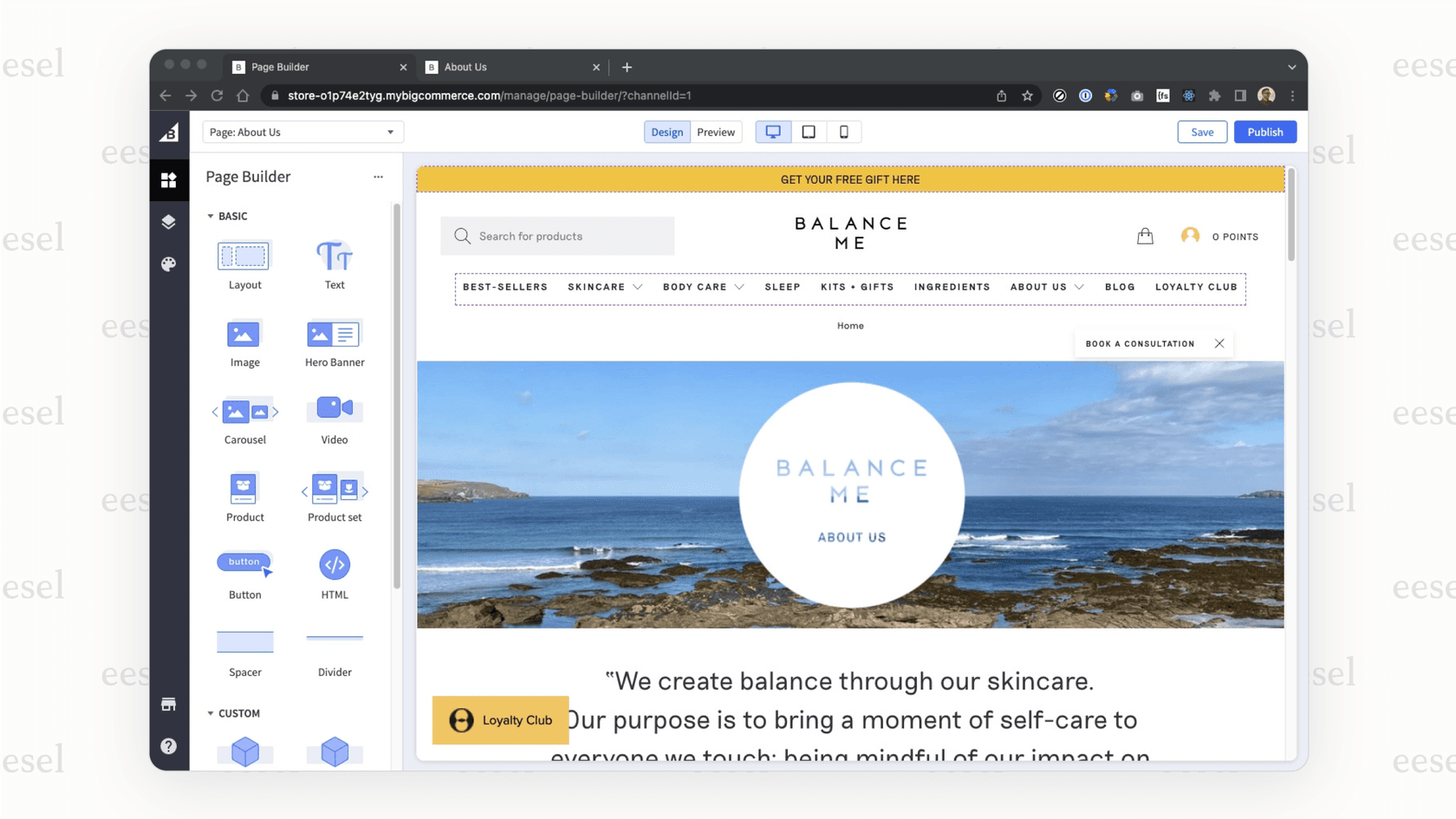
Shopify consistently gets top marks for its clean, intuitive dashboard. The setup process is streamlined and very friendly for beginners. Honestly, you can get a decent-looking, functional store up and running in a few hours without needing to know a single line of code.
BigCommerce, on the other hand, has a bit of a steeper learning curve. The interface uses more technical terms and throws more settings at you right away, which can feel a bit much if you're new to all this. It’s really built for merchants who already know they have complex needs from day one.
Themes and design: Creating your brand's look
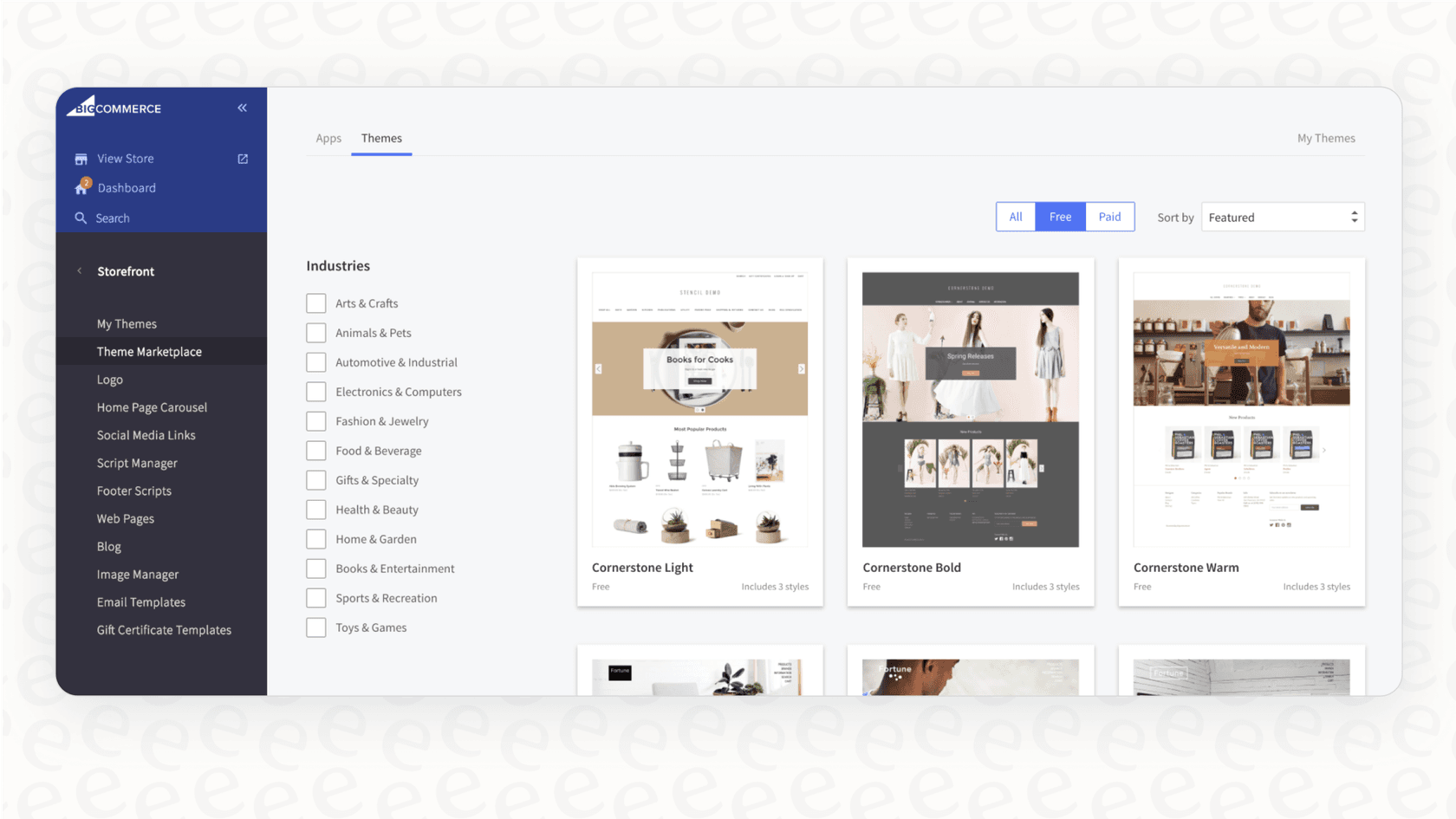
When it comes to looks, Shopify has a clear edge. It offers a much wider selection of modern, stylish, and mobile-friendly themes (over 800, with about 24 free ones). The theme editor is also generally easier for non-technical folks to use, so you can create a professional-looking site that actually matches your brand without pulling your hair out.
BigCommerce has fewer themes to choose from (around 200, with only 12 free), and a lot of them can feel a bit dated or look very similar to each other. If you want a really unique design, you’ll likely need someone with coding skills to help out.
Product management: Handling your catalog
This is where the two platforms trade blows. Shopify is great for most stores, and it used to have one infamous limitation: only 100 variants per product. Shopify now allows up to 2,048 variants per product, so a t-shirt in 10 sizes and 12 colors (120 variants) fits. The catch is that some third-party themes, apps, and sales channels still support only 100, and Shopify's own Stocky and legacy Order Printer apps don't support more than 100.
BigCommerce lets you have up to 600 variants per product, which is lower than Shopify's new ceiling, and it includes more powerful, built-in features for creating product rules and custom fields without needing to install anything extra. If your inventory is large or complicated, BigCommerce was made for you.
Selling and scaling your business
Once your store is up, you need the tools to actually make sales and grow. Here’s how the two platforms compare.
Core sales features: From POS to multichannel
Both platforms let you sell across different channels like Amazon, eBay, and social media. BigCommerce has a slightly more centralized "Channel Manager" to handle this, while Shopify's approach usually means installing a separate app for each new channel you want to connect.
For selling in person, Shopify has a huge advantage with its native Point of Sale system, Shopify POS. It’s deeply integrated and smoothly syncs your online and physical store inventory, sales, and customer info. BigCommerce uses third-party POS systems, which can work just fine, but they don't always give you that same seamless, all-in-one feeling.
Payments and fees: Understanding the real cost
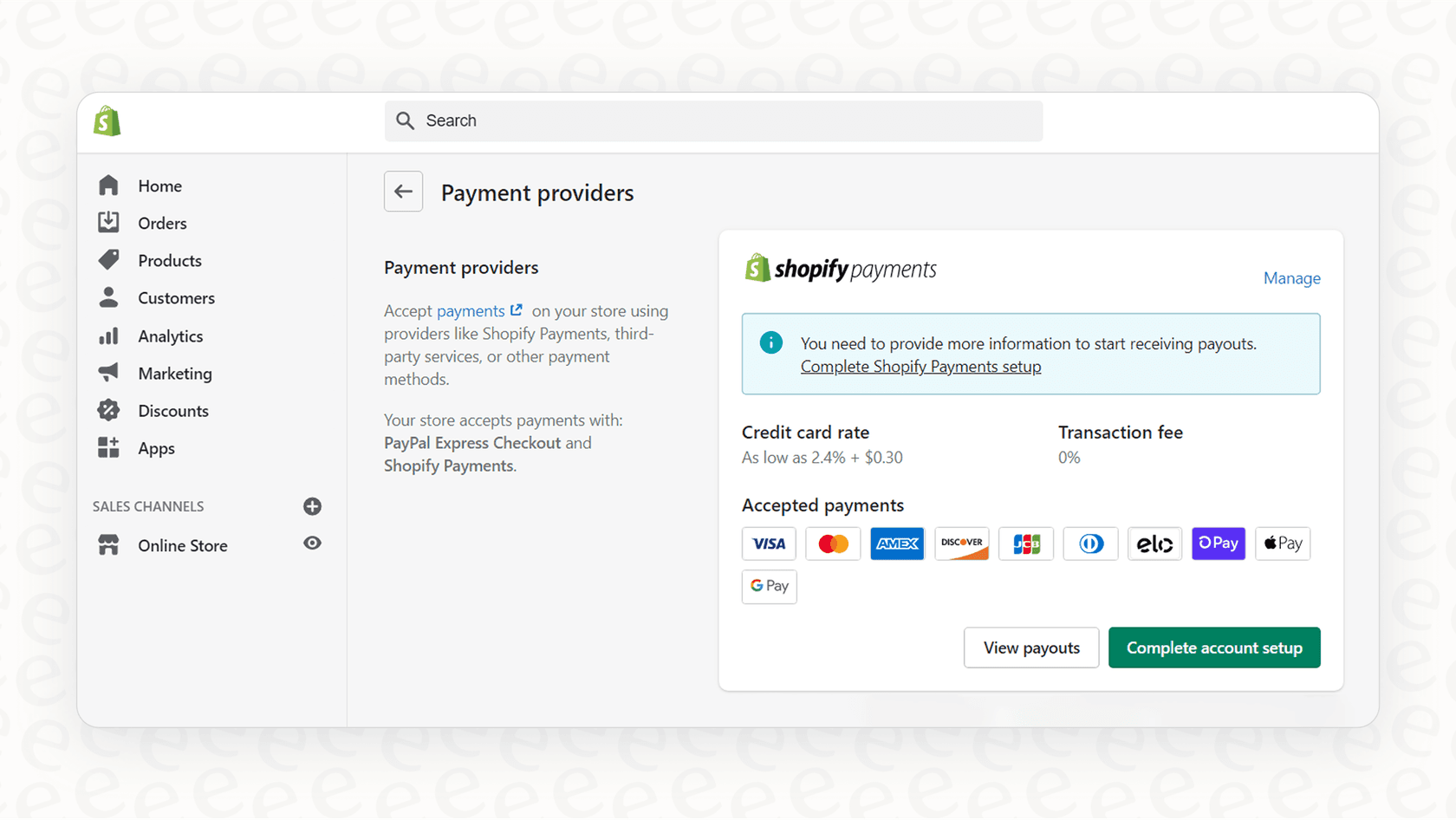
This is a big one. Shopify really wants you to use its own payment gateway, Shopify Payments. If you do, you get pretty good rates and, more importantly, you pay zero transaction fees to Shopify. But if you decide to use a different gateway like PayPal or Stripe, Shopify will charge you an extra fee (from 0.6% to 2.0%) on top of what your payment processor charges. That can add up.
BigCommerce does things differently. It charges no fee on orders processed through its Embedded Payment Providers, a list that includes BigCommerce Payments, Adyen, Stripe, and PayPal. For gateways outside that list, it adds an Open Payment Provider fee of 2.0% on Core, 1.0% on Growth, and 0.6% on Scale. For businesses whose payment provider is on the embedded list, this can mean saving a lot of money in the long run.
Scalability: Growing without limits
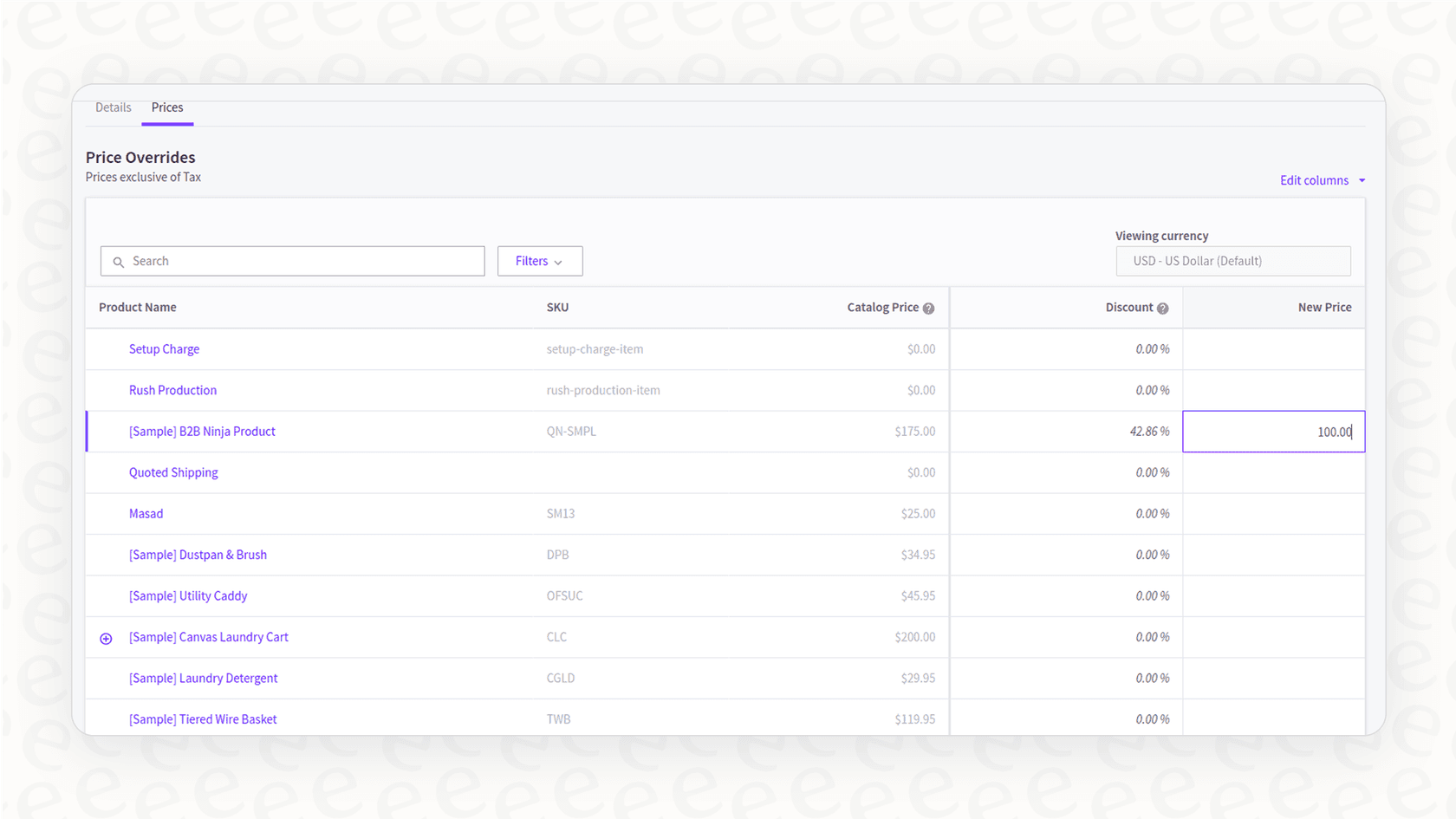
BigCommerce really stands out with its multi-storefront feature, which lets you manage several different brands or regional stores from a single login. Extra storefronts are an add-on on the self-service plans, at $30 a month (Core), $50 (Growth), or $100 (Scale) each, and that's a huge deal for some businesses. It also has stronger built-in B2B features, like setting up customer groups with special pricing. The catch? BigCommerce puts annual sales limits on its plans, measured as trailing 12-month GMV (gross order value minus 10%). Core covers up to $30K and Growth up to $100K, and both auto-upgrade as you cross the cap, while Scale charges a 0.9% overage above about $33,333 a month.
Shopify has no sales limits on any of its plans, so your costs are more predictable as you scale. The trade-off is that Shopify limits B2B to 3 catalogs on Basic, Grow, and Advanced, so if you need unlimited B2B catalogs or multi-store features, you have to jump up to their enterprise-level Shopify Plus plan, which starts at a steep $2,300 per month.
Customer support and native AI capabilities
When you're running an online store, good customer support isn't just a nice-to-have; it's essential. Here's how each platform helps you deliver it, and where they both come up short.
Built-in support tools
Both Shopify and BigCommerce offer their merchants 24/7 support, along with basic tools like contact forms and simple help center builders. But when it comes to actually managing conversations with your customers, their built-in tools just don't cut it for a growing business. To offer professional support that can scale, you'll need to connect a proper helpdesk like Zendesk, Gorgias, or Intercom.
The limitations of platform AI
With all the buzz around AI, you'd think these platforms would have some powerful automation tools ready to go, but the reality is a bit underwhelming.
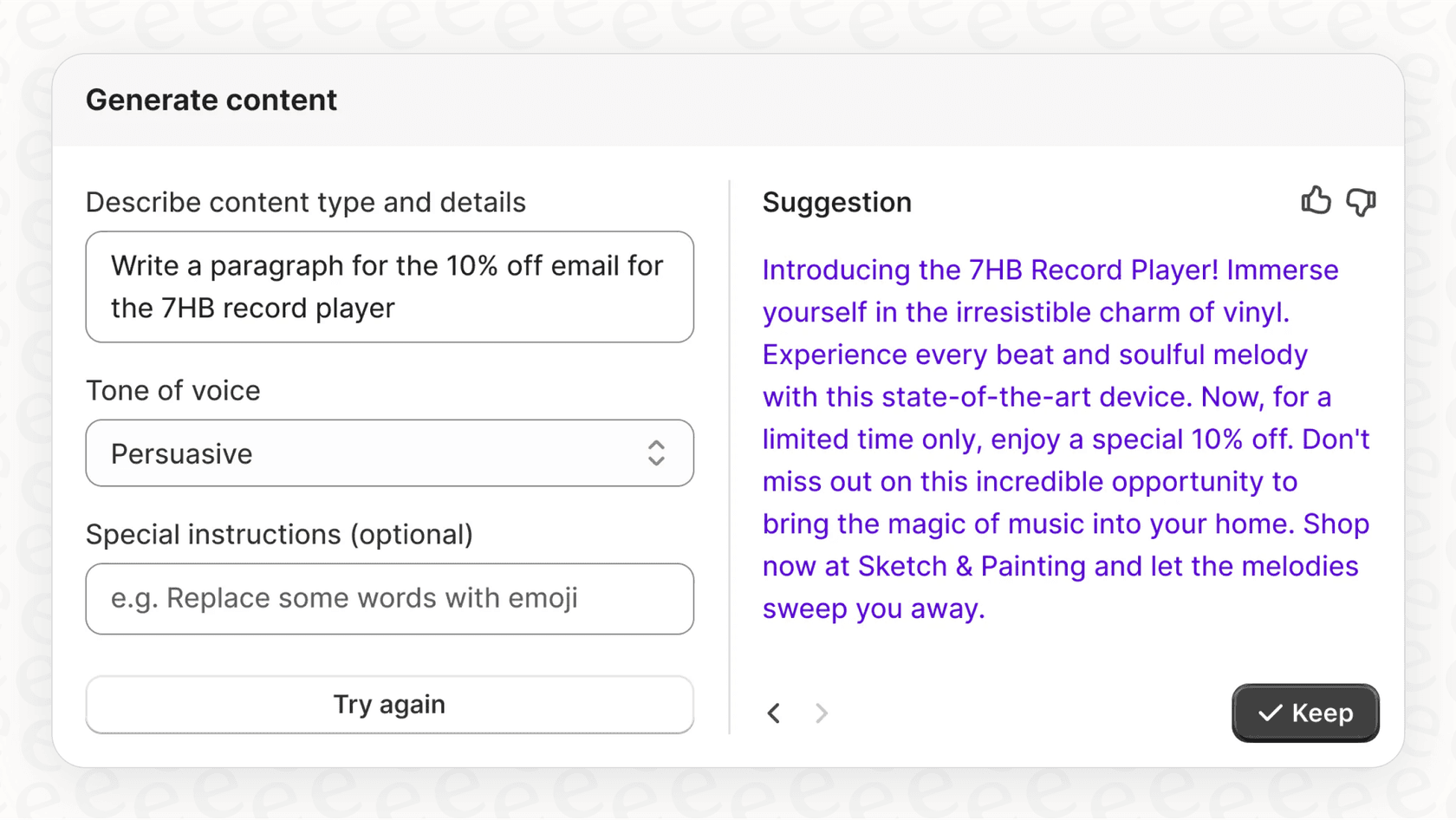
- Shopify: Has Sidekick, a built-in assistant for merchant tasks, plus Shopify Magic, a set of AI tools for writing things like product descriptions or emails. Its customer-facing option, Shopify Inbox, is a free app whose agent answers from your catalog, policies, and Knowledge Base. Shopify's docs list a limit of 50 conversations per day, and order lookup needs the shopper to sign in.
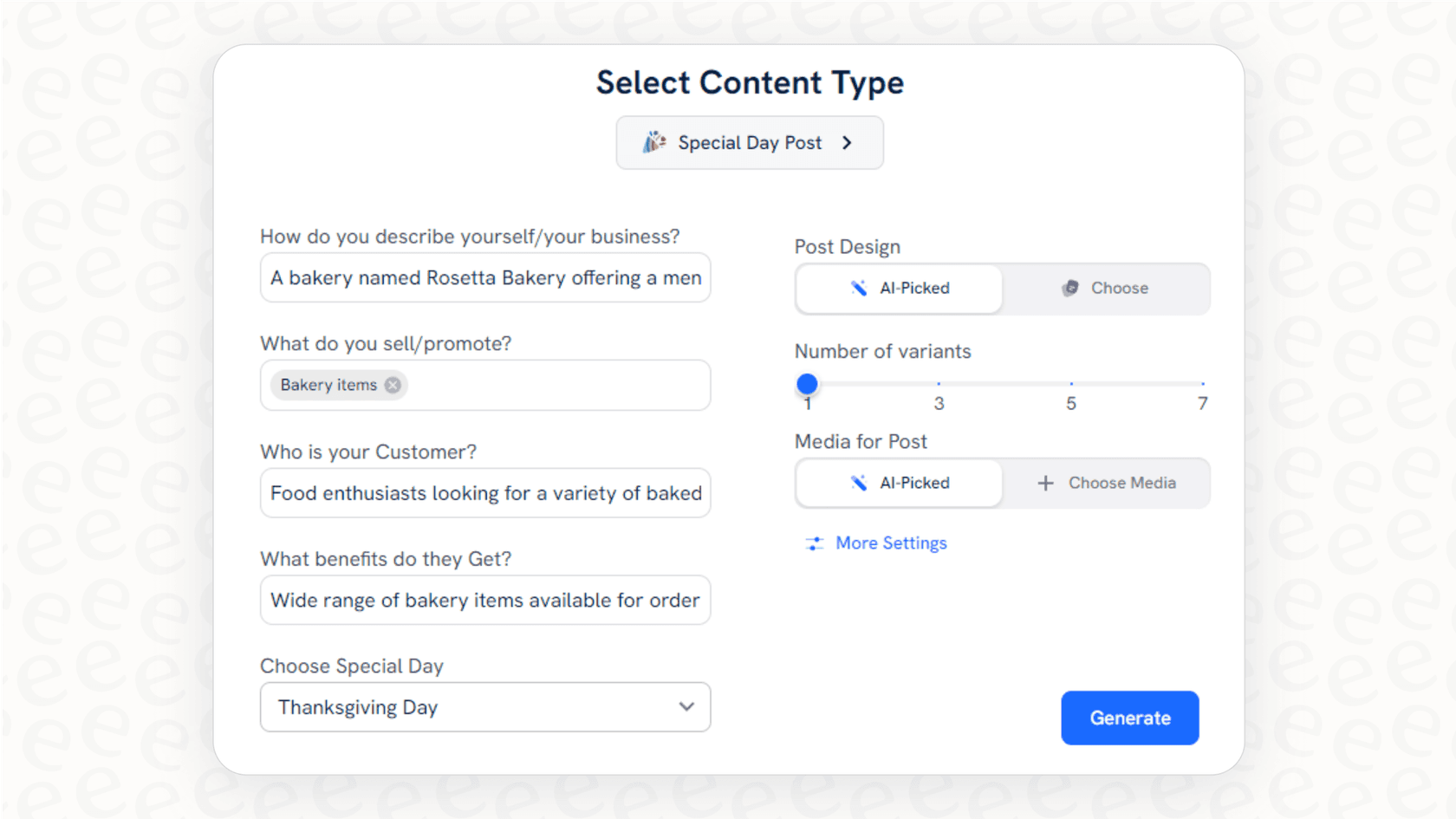
- BigCommerce: The built-in AI I found is the BigAI Copywriter for product descriptions. For support automation, merchants typically look to the app marketplace.
The issue is that both platforms lean on apps for most serious support automation. These apps often operate in their own little bubbles, can be tricky to set up, and don't learn from all your company's knowledge, like past support tickets or internal docs. Plus, many of them have unpredictable pricing based on how many tickets they resolve, which can get expensive quickly.
The modern solution: Integrating a dedicated AI support agent
Instead of juggling limited built-in tools or disconnected apps, many brands are now using specialized AI platforms that plug into the tools they already use.
For example, an AI agent like eesel AI connects directly with your Shopify or BigCommerce store, your helpdesk, and all your other knowledge sources, like old support tickets, internal docs in Confluence, or guides in Google Docs. This creates a single, unified "brain" for all your customer support knowledge.
Final thoughts
Both Shopify and BigCommerce are fantastic platforms, but they're designed for different kinds of users. Your choice should come down to your business model, how comfortable you are with technology, and your plans for growth. Whichever one you pick, just remember that amazing customer support doesn't come in the box; it's something you build by integrating the right tools.
Frequently asked questions
How does the ease of getting started compare between Shopify vs BigCommerce for new store owners?
Shopify is generally recognized for its intuitive dashboard and quick setup, making it very beginner-friendly. BigCommerce has a steeper learning curve with more advanced settings visible from the start, often better suited for users with existing e-commerce experience.
What are the main differences in product variant limitations when comparing Shopify vs BigCommerce?
Shopify supports up to 2,048 variants per product, though some themes, apps, and sales channels still support only 100. BigCommerce allows up to 600 variants per product and offers more built-in features for product rules without needing extra apps.
Could you clarify the transaction fees associated with Shopify vs BigCommerce?
Shopify charges transaction fees (0.6% to 2.0%) if you don't use Shopify Payments, on top of your payment processor's fees. BigCommerce charges no fee on orders processed through its Embedded Payment Providers, but adds an Open Payment Provider fee of 2.0%, 1.0%, or 0.6% on Core, Growth, and Scale for gateways outside that list, which can still lead to savings for some businesses.
Are there any annual sales limits to consider when evaluating Shopify vs BigCommerce for scaling a business?
Yes, BigCommerce plans are capped by trailing 12-month sales (GMV), with automatic upgrades to the next plan as your revenue grows. Shopify, on the other hand, has no sales limits on its standard plans, offering more predictable costs as you scale, though advanced features like multi-storefronts are typically reserved for Shopify Plus.
Which platform offers more modern themes and design flexibility, Shopify vs BigCommerce?
Shopify generally has an edge with a wider selection of modern, mobile-friendly themes and a more user-friendly theme editor. BigCommerce has fewer themes, some of which can appear a bit dated, and often requires coding skills for unique designs.
For which types of businesses is Shopify vs BigCommerce generally a better fit?
Shopify is ideal for direct-to-consumer brands, startups, or those prioritizing ease of use and a vast app ecosystem. BigCommerce often suits established businesses or enterprises with complex product catalogs, B2B needs, or a desire for more built-in advanced features and no platform transaction fees.