

Generative AI has definitely shaken things up for businesses, particularly in marketing. Suddenly, the problem isn't just about creating content anymore. It's about creating tons of great content, personalized for every single customer, without losing that unique brand voice you've worked so hard to build. If you're part of a large company, you know this struggle. How do you let hundreds of marketers run with new ideas while making sure everything still sounds and looks like it came from the same place?
This is where a tool like Typeface AI comes into the picture. It's a platform built to give big marketing teams the creative power of generative AI, but with built-in controls to keep everything consistent and on-brand. We're going to walk through what Typeface AI actually is, check out its main features and common uses, and talk about pricing. We’ll also get real about its limitations and point out situations where another type of AI tool might make more sense.
What is Typeface AI?
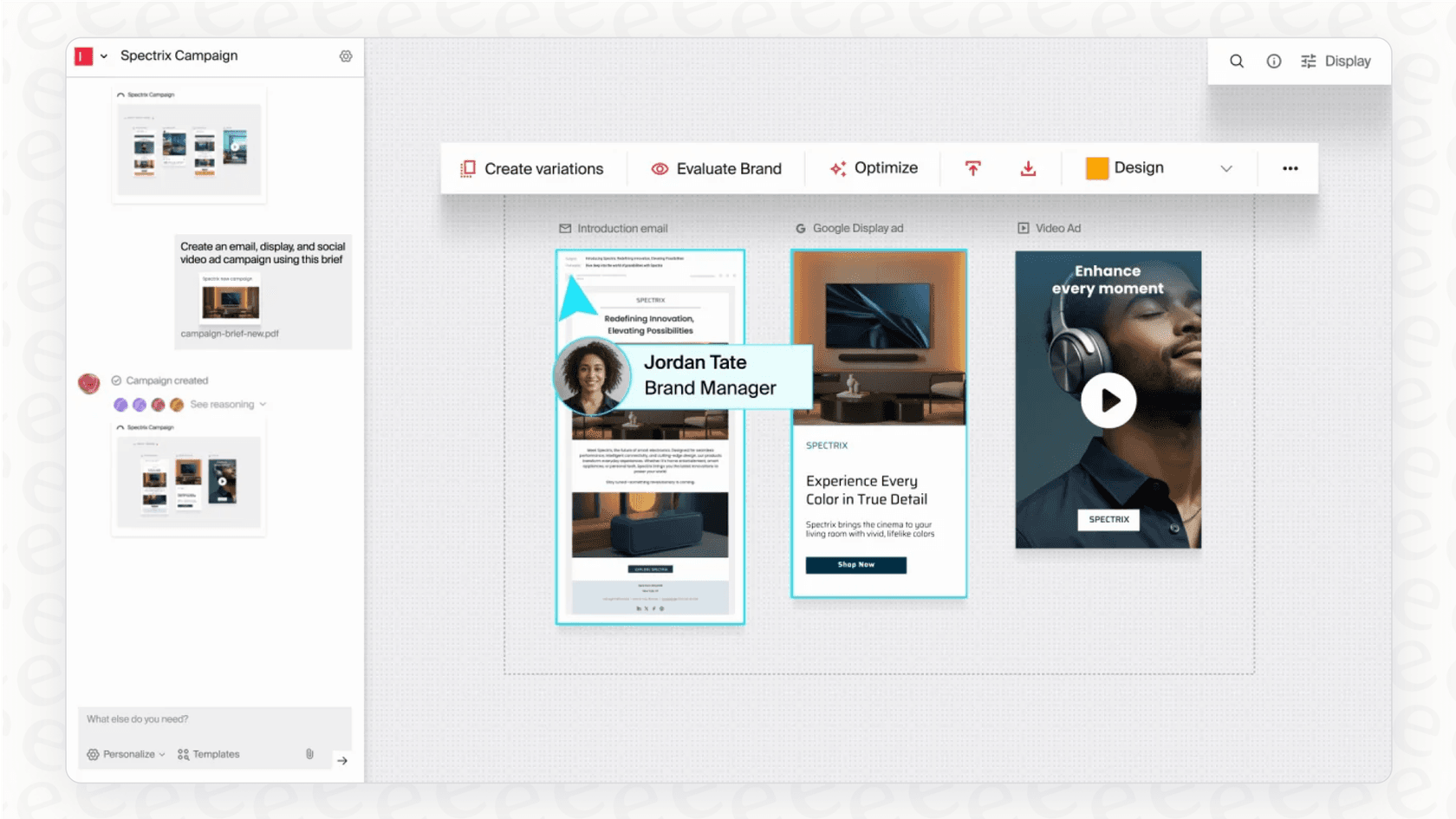
At its core, Typeface AI is a generative AI platform designed for large companies to handle their marketing content from start to finish. The whole point is to help businesses churn out a high volume of personalized, on-brand content, from text and images to video, all while keeping things secure and consistent with brand rules.
The platform was founded by Abhay Parasnis, who was the former CTO at Adobe, so he brings a deep understanding of what creative and marketing teams actually need. Typeface is designed to be the brain of a company's content operations, connecting with existing tools and data to power everything from big ad campaigns to the copy on your website.
Just a quick heads-up: Typeface AI is its own enterprise platform. It's easy to confuse it with Typeface, a font manager for macOS. They sound similar, but they do completely different things.
The core features of the Typeface AI platform
Typeface AI isn't just one tool, but a suite of three parts that work together: the Brand Hub, Arc Agents, and Spaces. Let's break down what each one does.
Typeface has since repackaged the platform as the Typeface Orchestration Engine, built from Arc Graph (the successor to the Brand Hub), Arc Fabric (agents plus the Arc Spaces workspace) and Arc Loop (performance feedback). Typeface announced it in September 2026 and says all three are available to enterprise customers. It also says Arc Graph's brand rules now reach beyond Typeface into Claude, ChatGPT and Gemini through MCP, with plugins for Word, PowerPoint and Chrome.
The Typeface AI Brand Hub: Your brand’s single source of truth
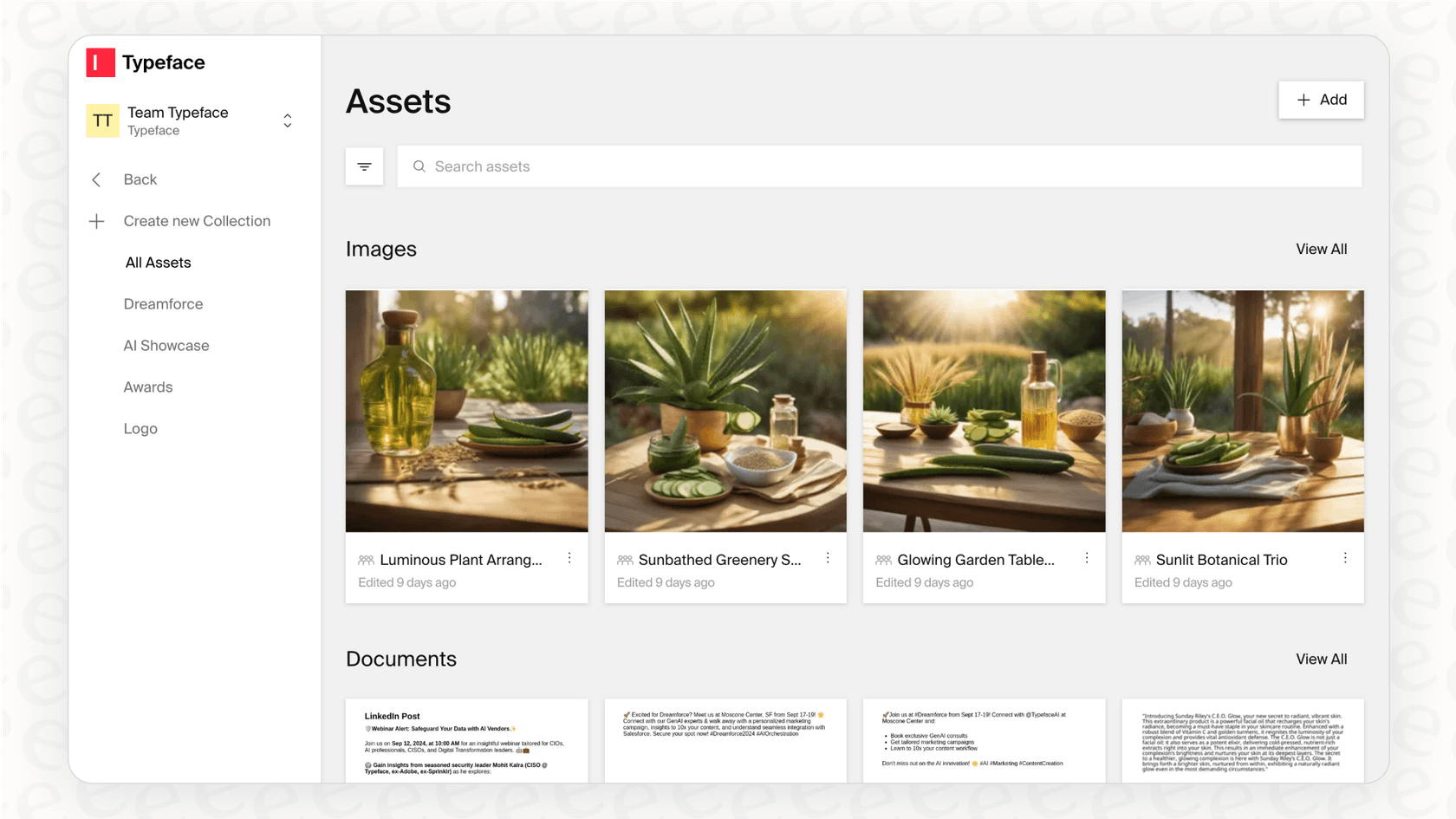
Think of the Brand Hub as more of an active, intelligent library for your brand than a static style guide buried in a folder somewhere. It pulls together all your company's assets, logos, product shots, brand guidelines, audience profiles, and old marketing content, to build a smart model of your brand's identity.
Here’s what that lets you do:
-
Find things easily: Your teams can search across all your connected files and documents using plain English, so finding that one specific image or document takes seconds.
-
Personalize on the fly: The hub uses your brand rules to automatically generate new content variations. It already knows your tone of voice and visual style and applies them for you.
-
Keep things on-brand: It acts as an automated brand cop, checking new content for compliance, tone, and consistency before it gets published.
Typeface AI Arc Agents: Your specialized AI marketing team
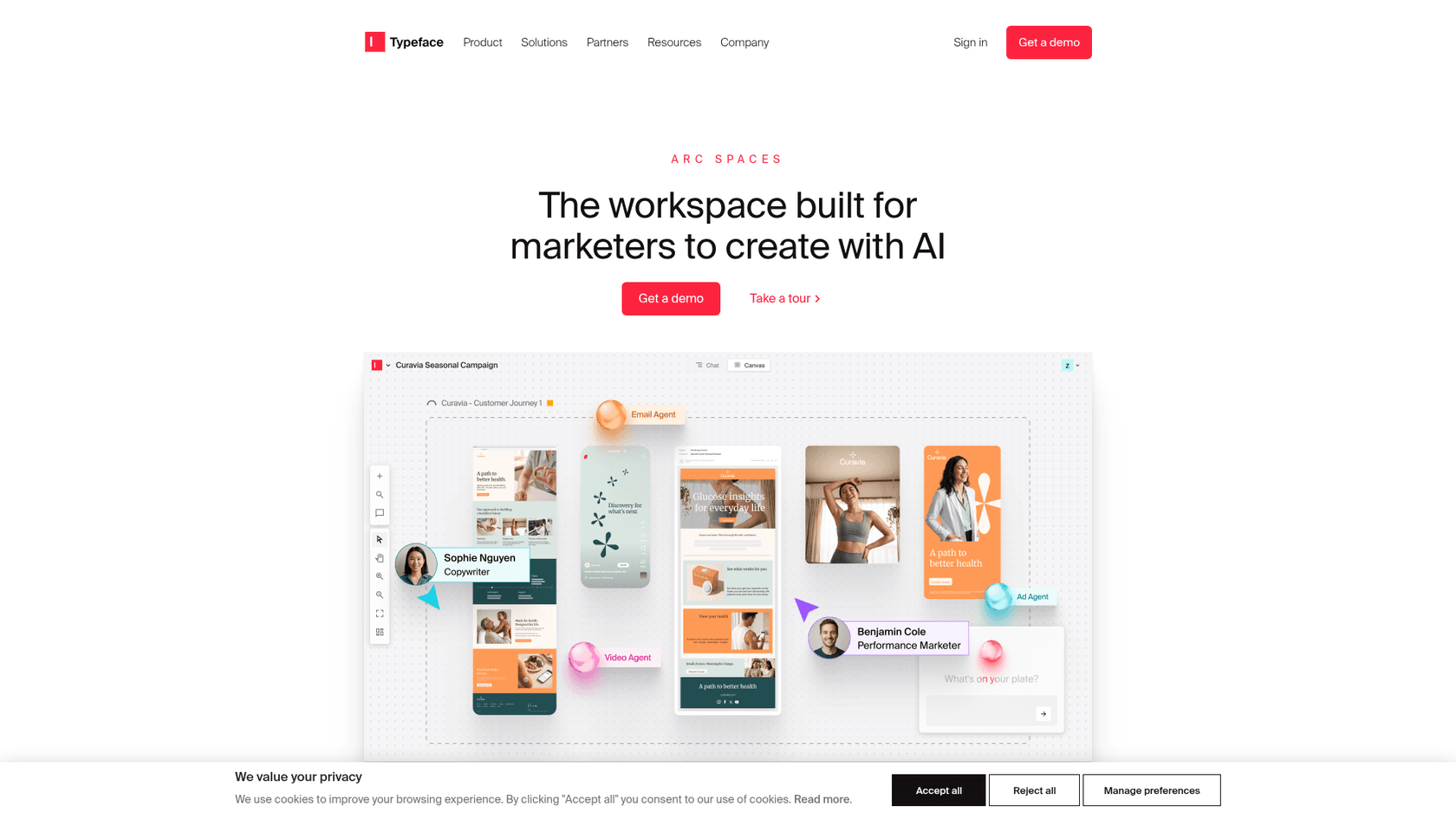
If the Brand Hub is the brain, the Arc Agents are the specialists who get the work done. Typeface describes them as specialists that work alongside your team on specific marketing jobs from beginning to end. Instead of one general AI, you get a whole crew of them.
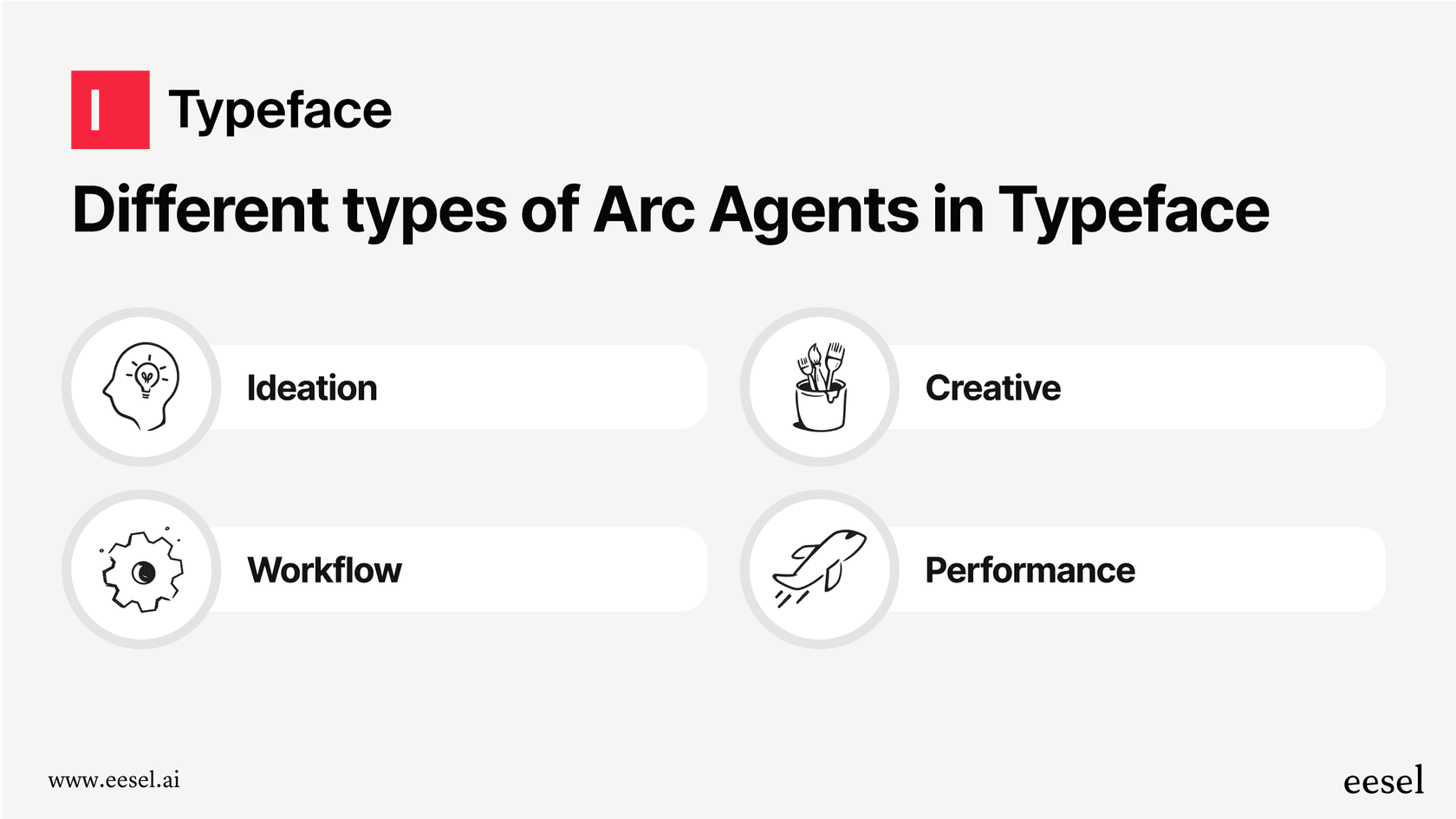
Here are the main agents on the team:
-
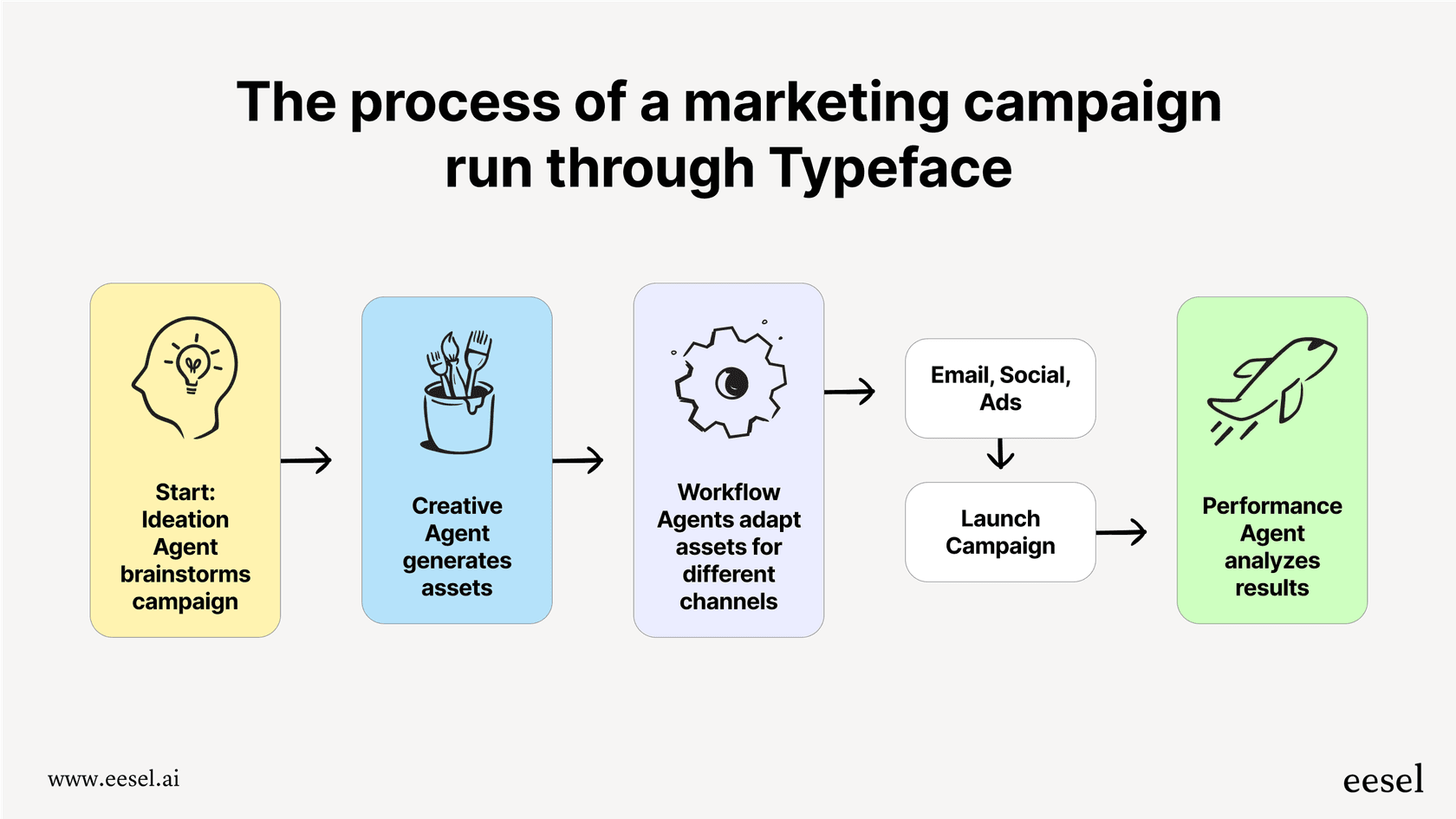
Ideation Agent: This one helps you brainstorm. It can generate campaign ideas and creative briefs that are already aligned with your brand and target audience.
-
Creative Agent: This is your content creator. It can produce all sorts of stuff, like images, documents, and video reels.
-
Workflow Agents: These agents know the ins and outs of specific channels. You get agents for email, social media, paid ads, and your website, each one fine-tuned for the job.
-
Performance Agent: Once a campaign is out in the wild, this agent looks at the performance data to spot trends and give you tips on how to make better content next time. Typeface now handles this job in Arc Loop, which takes results from Google Ads, Salesforce Marketing Cloud, HubSpot and BigQuery, or a CSV upload, and feeds them back into what the agents create next.
Typeface AI Spaces: A collaborative workspace for marketers and AI
Spaces (now Arc Spaces) is the dashboard that ties everything together. It's a clean workspace where your marketing team can work alongside the Arc Agents. It’s set up to manage the entire content creation process in one spot, from brainstorming and project management to final approvals. It also hooks into your other systems, which helps smooth out the workflow between different tools and teams.
Key use cases for Typeface AI
Because Typeface AI was built with enterprise marketing in mind, it’s really focused on solving the big, recurring headaches these teams deal with.
Running marketing campaigns from start to finish
One of the biggest draws of the platform is being able to plan and launch entire campaigns from one central place. A team could use the Ideation Agent to brainstorm a product launch, then have the Creative and Workflow Agents produce all the needed materials: blog posts, social media updates, an email newsletter series, and a bunch of different paid ad variations. The entire thing is coordinated and brand-consistent right from the get-go.
Creating hyper-personalized content at scale
This is where Typeface AI really flexes its muscles. It's great for creating content tailored to different audience segments. For instance, a global retail brand could use it to generate unique ad copy and images for different demographics, regions, or even local holidays, all based on a single set of product info. Doing that manually would require a huge team and a ton of time.
Centralized brand safety and governance
In any large organization, keeping everyone on-brand can feel like herding cats. The Brand Hub acts as a central checkpoint, making sure any content, whether it was made by a new marketing hire or an AI agent, lines up with company standards. This lowers the risk of off-brand messages going out and reduces the time spent on manual reviews, so teams can get work done faster.
Typeface AI limitations: Where it might not be the right fit
Typeface AI is a powerful tool, but its intense focus on marketing content means it's not the answer for every business problem. It’s important to know its limitations to figure out if it's right for you.
Why Typeface AI is not built for real-time customer support
Typeface AI is all about content creation. That's a very different process from handling real-time, conversational customer support. Its agents are designed for marketing workflows, not for independently solving customer tickets in a help desk like Zendesk or Freshdesk. It doesn't connect to your support channels to answer live customer questions, so if you're looking to automate customer service, you'll need a different kind of tool.
The high barrier to entry for Typeface AI: Complexity and cost
Let's be clear: Typeface is built for the big leagues. As an Axios report mentioned, its high-end offering, Typeface Arc, is aimed at large companies with budgets that can stretch into the "several hundred thousand dollars, or even millions." This enterprise focus usually comes with long sales processes, required demos, and complicated setup projects. For smaller teams or those that just need to get moving quickly, it’s not a practical option.
Typeface AI: A different tool for a different job
This gets to the heart of the difference between marketing AI and support AI. While Typeface AI learns from marketing assets to create new content, a platform like eesel AI is built to learn from your past support tickets, help centers, and internal documents in places like Confluence or Google Docs to automate support and answer questions instantly.
The two platforms solve completely different problems, and it really shows in how they operate:
-
Go live in minutes, not months: eesel AI is self-serve. You can connect your help desk with a single click and get started on your own. It's a completely different world from the typical enterprise sales model.
-
Test without the risk: With eesel AI, you can run the simulation skill against hundreds of your past tickets (or generated test cases) to score each answer and see how the AI responds before you turn it on for customers. This gives you a safer way to roll it out.
-
Clear pricing: You shouldn't have to jump on a sales call just to find out what something costs. eesel AI has public plans with one fixed monthly price (from $299/month for 500 credits, where 1 credit is one ticket or chat) and no per-seat fee, so a busy month doesn't change your bill unless you turn on capped overage.
| Feature | Typeface AI | eesel AI |
|---|---|---|
| Primary Use Case | Marketing content creation | Customer support & internal knowledge automation |
| Learns From | Brand guidelines, marketing assets, analytics | Past tickets, help centers, internal docs (Confluence, etc.) |
| Key Function | Generates campaign assets (ads, blogs, emails) | Resolves support tickets, drafts agent replies, powers Q&A |
| Setup Model | Enterprise sales, custom implementation | Self-serve, go live in minutes |
| Pricing Model | Custom enterprise contracts (high cost) | Fixed monthly plans (1 credit per ticket or chat), no per-seat fee |
Typeface AI pricing
As you'd probably guess from an enterprise platform, Typeface AI doesn't list its pricing publicly. To get a quote, you have to talk to their sales team.
Some sites mention starter plans around $49-$99 per user per month, but I couldn't confirm those figures with Typeface, and they likely don't represent the cost of the main enterprise platform, which is based on custom contracts. Typeface's Microsoft Marketplace listing shows Teams, Essentials and Enterprise plans only as private offers with $1.00 placeholder prices. As mentioned earlier, the actual price tag for a large company is going to be pretty hefty.
This lack of transparency can be a roadblock for teams that just want to try something out. It's a big contrast to platforms like eesel AI, where all the pricing information is right there on the website. You can see what each plan includes and get started without a long sales negotiation.
Typeface AI: A powerful tool for marketers, but what about everyone else?
Typeface AI is a seriously impressive platform that does exactly what it promises: helping large marketing teams create personalized content at scale while keeping everything on-brand. For a Fortune 500 company looking to modernize its content engine, it’s a very strong choice.
But it’s also a highly specialized tool. The need to scale knowledge and automate repetitive work isn't just a marketing problem; it exists across your entire organization. Your customer support and internal teams are feeling the same pressure, but they need a different kind of solution.
So, as you think about AI, consider what your most immediate needs are. If your main goal is to pump out marketing campaigns, Typeface AI is worth a look. But if you're trying to make your support team more efficient, lower your response times, and give your agents the right answers instantly, you'll need a tool that was built for that specific job.
Ready to automate your support, not just your marketing?
Your marketing team is in charge of telling your brand's story, but your support team has to live it every day with customers. eesel AI connects directly to your help desk and knowledge bases to handle frontline support questions, draft replies in seconds, and give your customers and employees a smooth AI chat experience.
You can get started in minutes, not months. Try eesel AI for free.
Frequently asked questions
How does Typeface AI ensure brand consistency across all generated content?
Typeface AI uses its Brand Hub as a central repository for all brand assets and guidelines. This smart model actively applies your brand's tone of voice, visual style, and compliance rules to every piece of content it generates, acting as an automated brand guardian.
What kind of content can Typeface AI generate for marketing teams?
Typeface AI is designed to produce a wide range of marketing content. This includes text for blogs and social media, images, and video reels, all tailored to specific campaigns and audience segments.
Is Typeface AI suitable for small businesses or startups looking for generative AI tools?
Typeface AI is primarily built for large enterprises due to its complexity and high cost, often stretching into hundreds of thousands or even millions of dollars. Smaller businesses would likely find it impractical and cost-prohibitive.
Can Typeface AI be used for automating customer support interactions?
No, Typeface AI is not built for real-time customer support. Its focus is on content creation for marketing workflows, not on independently resolving customer tickets or powering live chat in help desk environments.
What are the main components that make up the Typeface AI platform?
The Typeface AI platform consists of three core parts: the Brand Hub, which centralizes brand assets; Arc Agents, specialized AI agents for specific marketing tasks; and Spaces, a collaborative workspace for managing content creation. Typeface has since folded these into Arc Graph, Arc Fabric and Arc Loop.
How does pricing work for Typeface AI, and why isn't it publicly listed?
Typeface AI uses a custom enterprise pricing model, which is not publicly listed and requires direct consultation with their sales team. This approach is typical for high-end enterprise solutions with tailored implementations.
How is Typeface AI different from other general-purpose generative AI tools?
Typeface AI is highly specialized, focusing specifically on enterprise marketing content creation with built-in brand governance. Unlike general AI tools, it deeply integrates brand assets and workflows to produce on-brand, personalized marketing materials at scale.