


ServiceNow has a reputation for being an enterprise beast, the kind of platform massive organizations use to keep their IT, HR, and customer service operations from descending into chaos. So, naturally, they've been pouring money into artificial intelligence (AI) and machine learning (ML) to make their platform even smarter.
But what does that actually look like for the people using it every day? How does ServiceNow use AI and machine learning in a way that actually helps?
In this guide, we’ll cut through the marketing jargon to look at ServiceNow’s core AI engines, see how they’re used in the real world, and talk about what it really takes to get started, from setup to the sticker shock. We'll also cover the platform's limitations and explore why a more agile AI solution might make more sense if you're not in the market for a multi-year, consultant-driven headache.
What is ServiceNow?
At its heart, ServiceNow is a cloud platform for managing and automating business processes. It got its start in IT service management (ITSM), but it’s since grown to handle everything from HR to security. The main idea is to give companies a single system to connect workflows across departments and finally break down those frustrating internal silos.
As you'd expect from a platform this big, ServiceNow has been weaving AI and machine learning into its products for a while now. The goal is to go beyond simple automation and add intelligent features that help teams get more done.
ServiceNow's core AI engines
When you look past the buzzwords, ServiceNow's AI is powered by two main engines: Predictive Intelligence, its old-school machine learning foundation, and Now Assist, its newer generative AI toy. These two work in tandem to run most of the "smart" features you'll find on the platform.
Predictive Intelligence: The machine learning foundation
Predictive Intelligence is ServiceNow's classic machine learning toolset. Think of it as the quiet workhorse in the background, analyzing historical data to spot patterns, make predictions, and handle routine decisions. It’s not flashy, but it’s the bedrock of ServiceNow’s automation.
Here’s what it mainly does:
-
Classification: It reads the text in a new ticket or request and figures out what it’s about. For instance, it can see an email and tag it as a "Hardware Issue" or "Software Request" without a person having to look at it first.
-
Routing: After classifying a ticket, Predictive Intelligence can send it to the right team or agent automatically. This helps reduce the manual sorting that bogs down so many service desks.
-
Recommendations: The system can give agents a nudge by suggesting similar past incidents or helpful knowledge base articles, which can help them solve problems faster.
Limitation Spotlight: This all sounds fantastic, but getting it to work properly can be a huge project. Predictive Intelligence needs a mountain of clean, organized historical data to learn from. If your data is a mess (and whose isn't?), your predictions will be all over the place. Setting up and tweaking these models often means hiring data scientists or expensive consultants, so it's far from a simple plug-and-play tool for teams that need to move fast.
Now Assist: The generative AI layer
Now Assist is ServiceNow’s answer to the generative AI craze. It’s the copilot that brings features like text generation and summarization right into an agent's workflow.
A few of its key features include:
-
Case Summarization: It can scan a long, complicated ticket history and spit out a quick summary, letting an agent get the gist in seconds.
-
Text-to-Code: It helps developers build on the platform by generating code snippets, which can speed up custom app development.
-
Knowledge Creation: Once a problem is solved, Now Assist can help write a new knowledge base article based on the fix, making it easier to document solutions for the next person.
Limitation Spotlight: Here's where you run into the "walled garden" problem. Now Assist is pretty smart, but it's mostly confined to the data that lives inside ServiceNow. Most companies' knowledge isn't in one neat little box; it’s spread across Google Docs, Confluence, Slack, and a dozen other places. ServiceNow's AI can't see any of that, which means it often gives incomplete answers or generic advice that isn't very helpful.
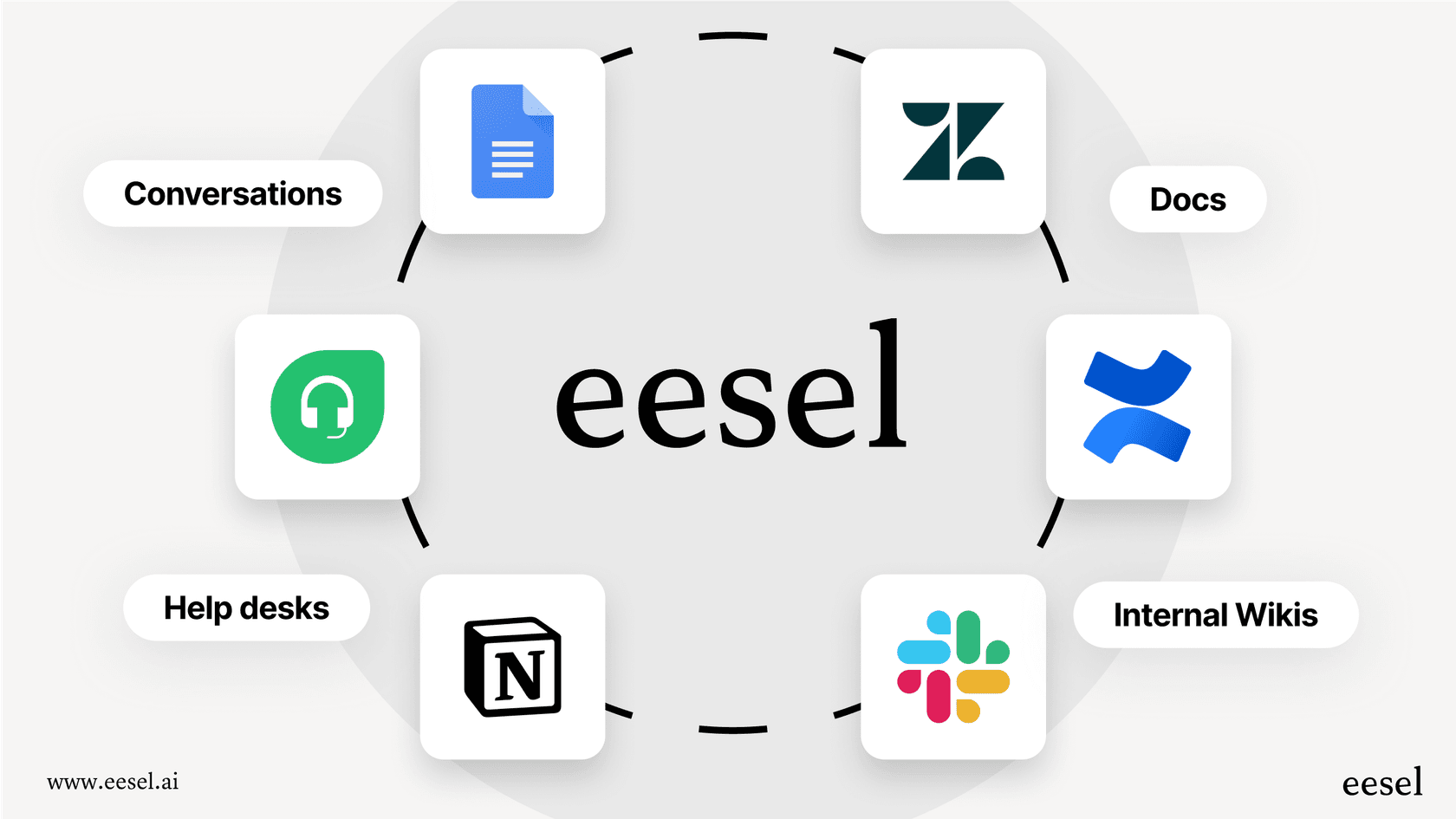
An alternative like eesel AI is built specifically to solve this. It connects to your help desk, internal wikis, chat tools, and documents to create a single brain for your AI. This ensures its answers are always based on your team's complete, up-to-date information, no matter where it's stored.
Practical use cases for AI in ServiceNow
So, how do these engines actually show up in the day-to-day work of support teams? ServiceNow has applied its AI to a few key areas to help streamline things.
Automating incident management
This is probably the most common use case. When an IT ticket arrives, AI steps in to categorize, prioritize, and route it. An email from someone saying their "VPN is not working" can be instantly identified as a high-priority network issue and sent to the right team, all before a human even lays eyes on it. The system can also spot major problems by clustering similar reports together, alerting IT to a widespread outage much faster than someone could manually.
Limitation Spotlight: The automation rules that make this happen can be surprisingly inflexible. If you have a unique workflow or need to make an exception for a specific customer, customizing the automation usually requires a developer. This slows you down and makes it tough for support managers to quickly adjust and improve their processes.
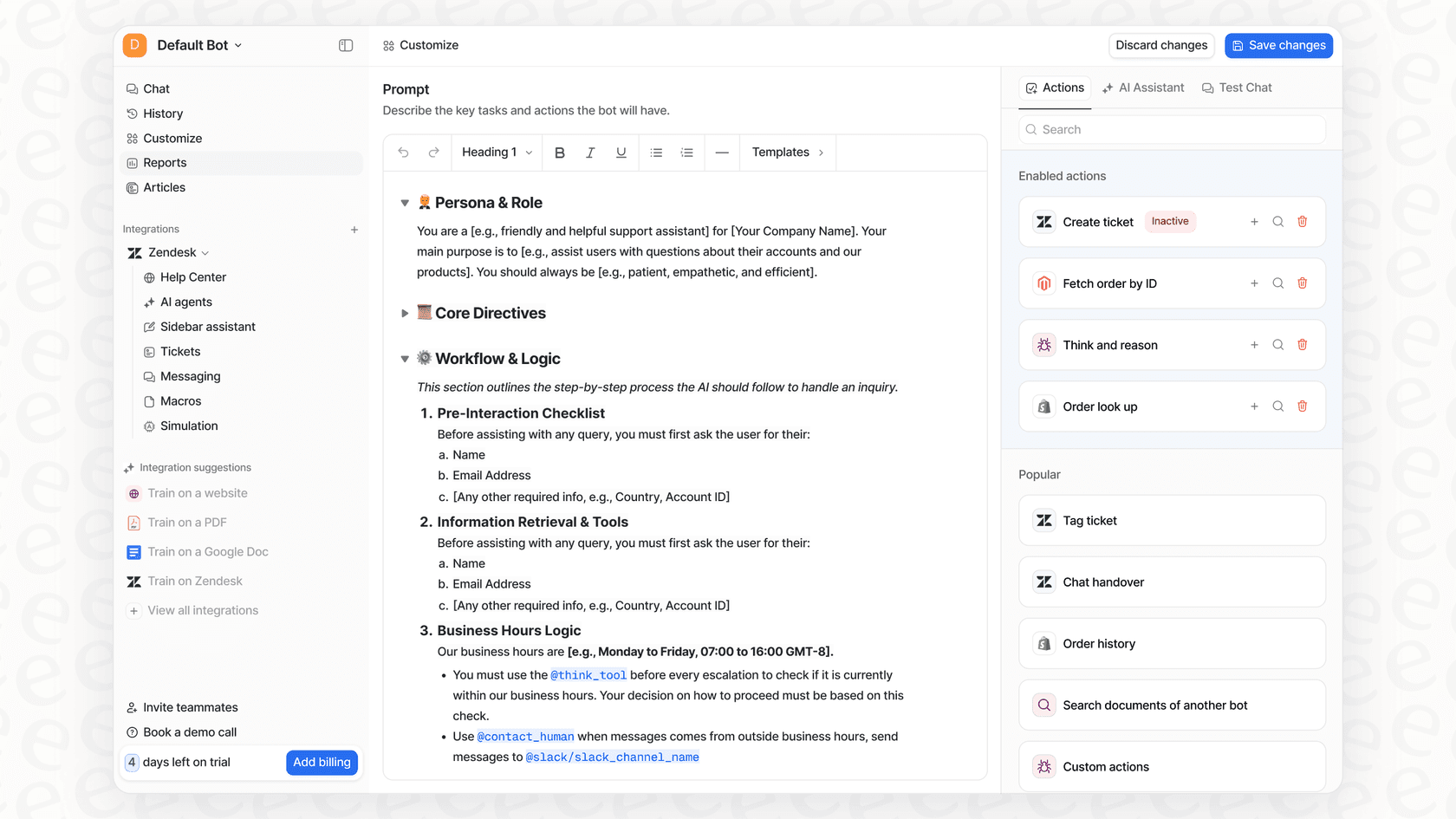
This is a totally different world from the flexibility you get with a tool like eesel AI. From a simple dashboard, you can decide exactly which tickets the AI should handle, create custom escalation paths, and even set up actions like looking up order details in Shopify, all without writing any code.
Enhancing the user experience with virtual agents
ServiceNow’s Virtual Agent is an AI chatbot designed to handle common requests like password resets, order status checks, or simple HR questions. It uses Natural Language Understanding (NLU) to try to understand what a user is asking for and give an automated response.
Limitation Spotlight: Building and training these chatbots is often a slow, painful process. They're only as smart as the knowledge you manually spoon-feed them inside the ServiceNow bubble. This makes them pretty useless for complex questions that require information from different sources. If the answer isn't in a ServiceNow knowledge article, the bot will probably just give up and pass the ticket to a human.
A different approach can make all the difference. eesel AI can be trained on your team's entire ticket history from day one. It learns your context, tone, and solutions automatically, so it can provide helpful, accurate answers almost immediately, without months of manual setup.
Improving reporting with AI analytics
ServiceNow uses its machine learning to analyze performance data and find useful insights. It can spot recurring problems, predict potential service issues, and point out areas for improvement. This helps managers make decisions based on data without having to sift through reports all day.
But again, how well this works depends on the quality of the data inside the platform. Here’s a quick rundown of how ServiceNow's AI promises often compare to reality.
| Feature | ServiceNow's Goal | Common Limitation |
|---|---|---|
| Automated Routing | Faster resolutions, less manual work. | Inflexible rules, a pain to customize. |
| Virtual Agent | 24/7 support, deflect common questions. | Long setup, knowledge is trapped in one place. |
| Predictive Analytics | Proactive problem-solving. | Needs tons of clean data and an expert to understand it. |
Getting started: Setup, integrations, and pricing
This is where things get real. While the AI features sound impressive, the reality of putting them into practice in ServiceNow can be a huge roadblock for many teams.
The implementation process
Getting AI up and running in ServiceNow is rarely a simple affair. The process usually involves picking a use case, gathering and cleaning up years of data, training the models, and then carefully testing everything.
More often than not, this requires bringing in ServiceNow's professional services or a certified consultant. This adds a ton of time, complexity, and money to the project, turning what should be a quick win into a six-month (or longer) ordeal.
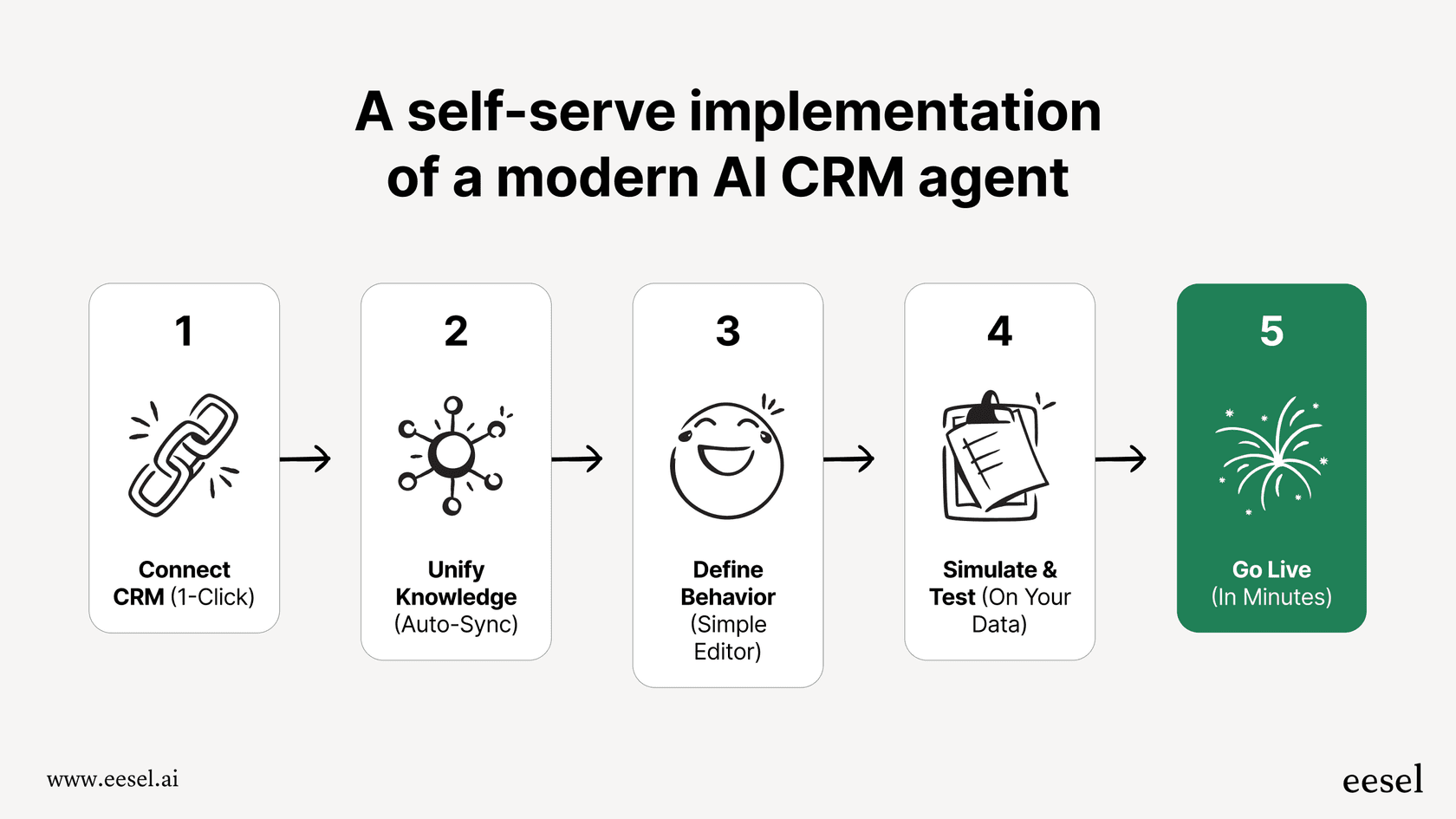
Modern AI platforms like eesel AI are designed to be the exact opposite: completely self-serve. You can connect your help desk like Zendesk or Jira Service Management, train the AI on your data, and see how it would have handled thousands of past tickets in just a few minutes. You know exactly how it will perform before you ever let it talk to a customer.
Pricing and packaging
Good luck trying to find pricing for ServiceNow's AI products online. They don't publish it, forcing you into a long sales cycle just to get a quote.
Their AI features are usually sold as pricey add-ons to their existing ITSM Pro or Enterprise plans. This lack of transparency makes it almost impossible to budget for. You could find yourself locked into a multi-year contract for a tool you haven't even had a chance to properly try out.
| ServiceNow Product | Key Function | Pricing Model |
|---|---|---|
| Predictive Intelligence | ML for classification & routing | Add-on; Contact Sales |
| Now Assist for ITSM | GenAI for summaries & notes | Add-on; Contact Sales |
| Virtual Agent | AI-powered chatbot | Add-on; Contact Sales |
| Task Intelligence | Document understanding | Add-on; Contact Sales |
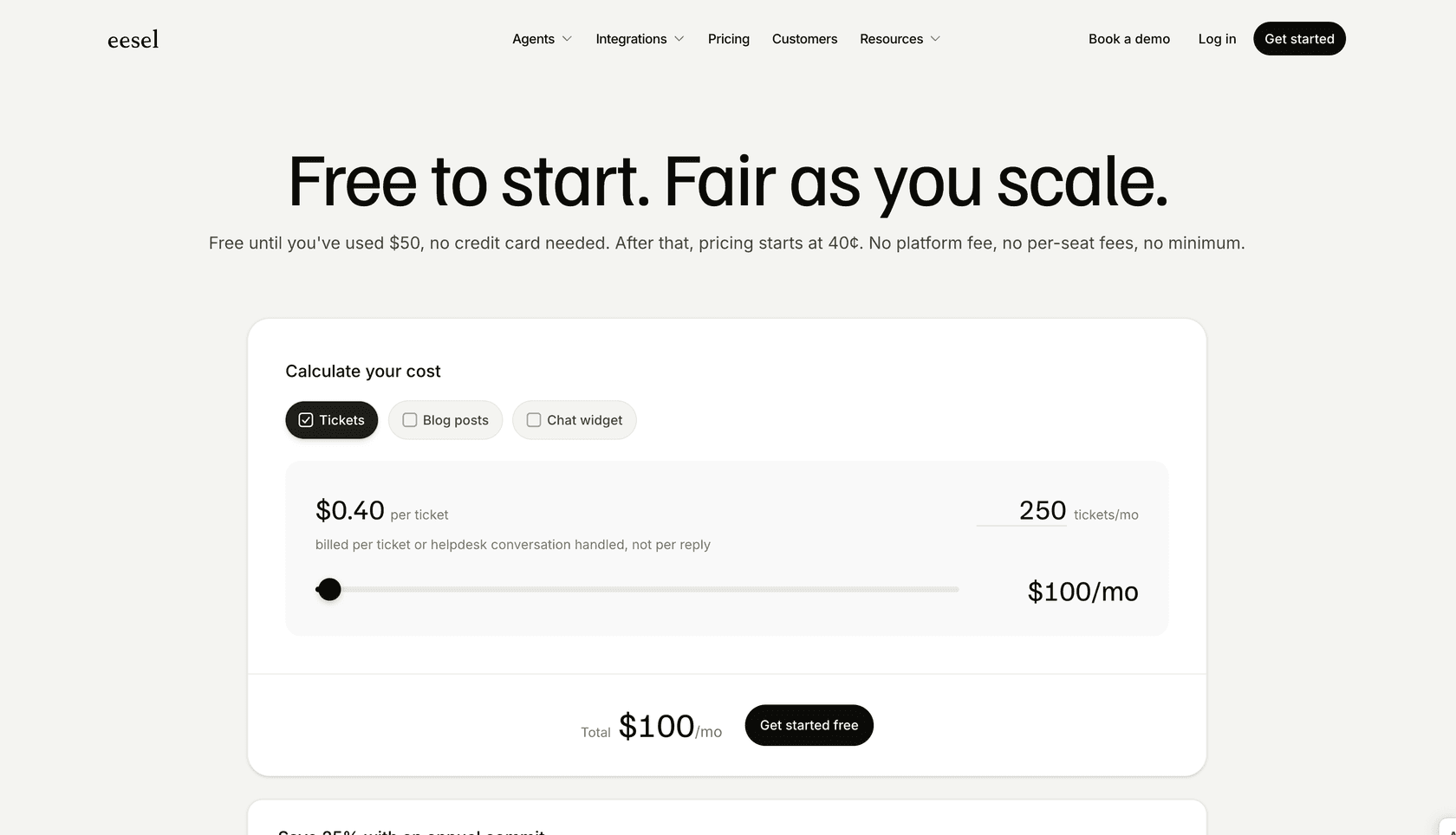
This opaque model is a far cry from the straightforward pricing of something like eesel AI. With clear fixed monthly plans sized by credits (from $299/month for 500 credits), no per-resolution fees that punish you for doing well, and the freedom to cancel anytime, you always know what you're paying for.
The verdict: Is ServiceNow AI right for you?
For huge companies that are already all-in on the ServiceNow ecosystem and have the budget for a long implementation, the AI suite can be a solid choice. Its main advantage is its tight integration with the rest of the platform.
However, for most teams, the downsides are just too big. The steep cost, confusing pricing, massive implementation effort, and a "walled garden" that ignores all your knowledge outside the platform make it a non-starter.
If your team needs an AI solution that's agile, affordable, and easy to set up with the tools you already use, a more modern platform is a much better fit.
That's where eesel AI comes in. It connects directly to the help desk and knowledge sources you use every day, goes live in minutes, and gives you full control over what you automate. It’s built for teams that want results now, not next year. Ready to see what a modern AI platform can do for your support? Start a free trial or book a demo to learn more.
Frequently asked questions
How does ServiceNow use AI and machine learning through its core engines like Predictive Intelligence and Now Assist?
ServiceNow primarily leverages its AI through two engines: Predictive Intelligence for classification and routing, and Now Assist for generative AI features like summarization and content creation. These work together to automate tasks and assist agents within the platform.
What are the data requirements for ServiceNow's AI and machine learning to operate effectively?
To be effective, ServiceNow's AI, particularly Predictive Intelligence, requires a substantial amount of clean, well-organized historical data. If the data is messy or incomplete, the predictions and automations will be inaccurate and less useful.
What are some practical applications of ServiceNow's AI and machine learning for support teams?
ServiceNow's AI assists support teams by automating incident classification and routing, enhancing the Virtual Agent for common customer queries, and providing insights through predictive analytics for reporting. This helps streamline workflows and improve efficiency.
What is involved in implementing ServiceNow's AI and machine learning features?
Implementing ServiceNow's AI features can be a complex and time-consuming process. It often involves extensive data preparation, model training, and typically requires professional services or consultants, adding significant cost and complexity to the project.
What is the pricing model for ServiceNow's AI and machine learning features?
ServiceNow does not publicly list pricing for its AI features. They are generally sold as expensive add-ons to existing ITSM Pro or Enterprise plans, requiring direct contact with sales for a quote and often leading to multi-year contracts.
Are there limitations on the knowledge sources ServiceNow's AI and machine learning can access?
Yes, a significant limitation is that ServiceNow's AI is largely confined to data within its platform ("walled garden"). It often cannot access or utilize knowledge spread across external tools like Google Docs, Confluence, or Slack, potentially leading to incomplete answers.
What types of organizations are best suited for ServiceNow's AI and machine learning?
While it can be a solid choice for large enterprises already deeply invested in the ServiceNow ecosystem and with substantial budgets for implementation, it may not be suitable for most teams or smaller organizations due to its steep cost and complexity.