

Let's be real, everyone's talking about AI in IT Service Management (ITSM). And why wouldn't they? The idea of bots handling boring tasks, resolving issues faster, and letting your team focus on the big picture is pretty appealing. ServiceNow is a massive player in this field, and they've poured a lot of resources into building their own AI tools.
But what does that actually mean for you on a Tuesday afternoon? If you're trying to sort through the marketing buzz to figure out which tools do what, and if they’re even right for your team, it can feel like a maze. This guide is here to give you a straight-talking, practical look at the main ServiceNow AI products. We'll break down what they do, some of the real-world hurdles you might face, and how they compare to more flexible tools that play nice with your existing setup.
What are ServiceNow AI products?
First things first, there isn't one big "on" switch for "ServiceNow AI." It’s a whole collection of AI and machine learning features that are part of the broader ServiceNow AI Platform. The main goal is to create a single source of truth for your entire company's data, workflows, and AI, covering everything from IT and HR to customer service.
This suite is basically split into two groups. You've got the more traditional machine learning stuff, like Predictive Intelligence, which has been handling tasks like ticket routing for a while. And then you have the new, flashy generative AI tools that get all the headlines, with Now Assist leading the pack.
Jumping into this world isn't a casual decision. It means you're committing your operations to the ServiceNow ecosystem. That’s a huge step, and it brings up some serious questions about cost, customization, and how long it’s going to take to get everything running smoothly.
A closer look at the main ServiceNow AI products
This section digs into the most important AI tools ServiceNow has on offer. We’ll look at what each one is supposed to do and, more importantly, the practical challenges teams run into when they try to use them.
Now Assist: The generative AI copilot
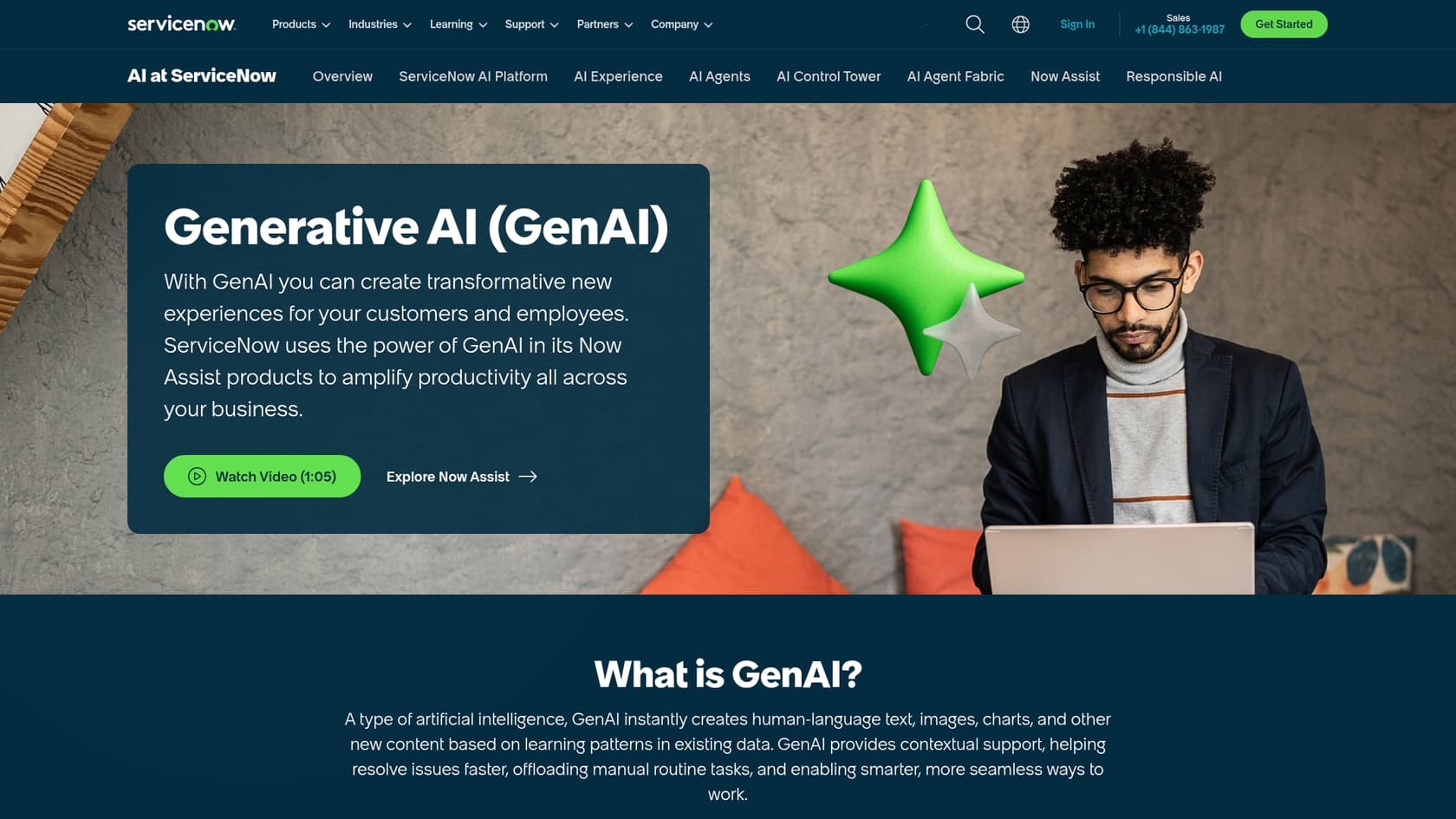
Now Assist is the star of the show, ServiceNow's big generative AI play. Think of it as a copilot that lives inside the platform, meant to give your agents and developers a hand.
What it does:
-
Summarization: It can quickly generate summaries of long incident histories or chat transcripts. This is genuinely helpful for agents getting up to speed on a ticket.
-
Code and flow generation: Developers working within ServiceNow can use plain English to get code snippets or suggestions for building out automated workflows.
-
AI search: Instead of just throwing a list of knowledge base articles at you, AI Search tries to understand your question and give you a direct answer.
The catch:
-
You have to live in their world: Now Assist is designed to work with data that's already inside ServiceNow. To get any real benefit, all your knowledge, workflows, and data need to be on their platform. For most companies, that’s a massive, multi-year undertaking.
-
Customization is tough: While it’s possible to tweak Now Assist or connect it to other large language models (LLMs), it's not exactly straightforward. You have to get your hands dirty with their "Generative AI Controller," which usually requires some specialized skills.
-
Pricing is by quote: Now Assist is packaged into the tiers. ServiceNow's ITSM pricing page lists a Now Assist and Platform AI tier in each of Foundation, Advanced and Prime, with no public price, so the AI cost depends on the package you negotiate.
But what if you aren't ready to move your entire company into a single platform? A tool like eesel AI offers a much quicker way to get similar (and often better) results. It plugs right into the help desk you already use, like Zendesk or Jira Service Management. You can connect knowledge from places you already work, such as Confluence or Google Docs, and have a working AI up and running in minutes, no migration project required.
AI agents and virtual agent: The automation bots
Next up are the bots. ServiceNow's AI Agents are pitched as programs that can handle tasks on their own, while the Virtual Agent is the user-facing chatbot that fields common questions. On the customer service side, both CSM Advanced and CSM Prime include unlimited Virtual Agent conversations, and Prime adds AI Specialists.
What they're used for:
-
Taking care of routine IT requests like password resets or software access.
-
Answering common HR or support questions 24/7 through a chat window.
-
Trying to proactively spot and fix issues by looking at system data.
-
Running governed ServiceNow actions for outside agents: ServiceNow's Action Fabric lets Claude, ChatGPT or Gemini call ServiceNow workflows through MCP and A2A.
On the governance side, ServiceNow's AI Control Tower inventories your agents, models and MCP servers and includes a kill switch.
The catch:
-
The "black box" problem: When an AI agent makes a call, it can be really difficult to understand why. This makes troubleshooting a nightmare when things go wrong and can erode your team's trust in the automation.
-
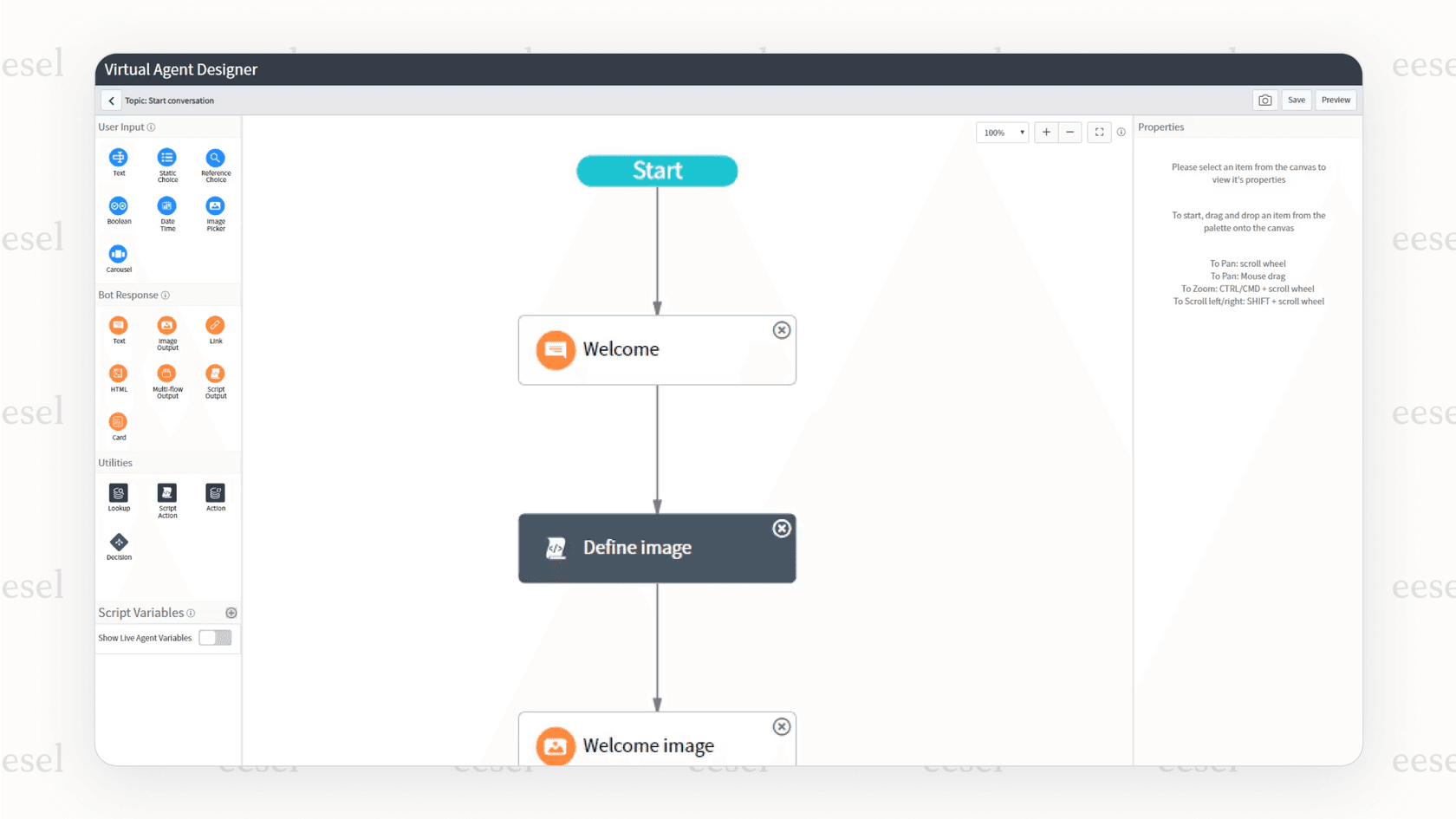
Rigid workflows: If you want to change how a bot behaves or teach it something new, you’re stuck working within ServiceNow's specific and often clunky automation tools. This takes deep platform knowledge and makes it hard to adapt on the fly.
This is a pretty different experience from a tool like eesel AI, which gives you full control over your AI through a customizable workflow engine. You can use a simple prompt editor to define the AI's exact tone of voice and personality. Even better, you can build custom actions that let it do real work, like checking an order status in Shopify or updating ticket fields in your help desk. You can start small, automating just one type of ticket, and build from there with full confidence that it's doing exactly what you want it to.
Predictive and document intelligence: The old-school ML tools
These tools are the old guard of ServiceNow's AI, the machine learning features that have been around for a bit.
-
Predictive intelligence: This feature uses your past data to do things like automatically categorize new tickets and send them to the right team.
-
Document intelligence: This one is built to scrape specific data points from documents like invoices or forms, which helps cut down on manual data entry.
The catch:
-
They're data-hungry: For these tools to be effective, you need a massive amount of clean, perfectly organized historical data already living in your ServiceNow instance. Prepping that data and keeping the models trained is a significant, ongoing effort.
-
They're pretty niche: While handy for certain tasks, these tools don't offer the broad, conversational AI that most teams are after today. They're just one small piece of a much larger puzzle.
Modern AI platforms are built to avoid this kind of heavy lifting. For instance, eesel AI can start learning from your team's past ticket conversations from the moment you connect it. It automatically picks up on your brand's voice, common issues, and best-practice solutions without needing you to manually label data or train a model. It can even help you fill gaps in your documentation by turning great ticket resolutions into draft knowledge base articles.
The real costs and challenges of ServiceNow AI products
Getting started with AI in ServiceNow is about more than just flipping a switch. It’s worth understanding the practical roadblocks that many companies hit.
Tricky pricing and licensing
Let's talk about the elephant in the room: the price tag. One of the most common frustrations you'll hear from ServiceNow users is about the pricing. They don’t publish their prices publicly, and that has some real consequences.
For one, you can't just try it out. You have to go through a sales rep, which starts a long and often complicated process just to see if it’s a good fit. The AI features are also bundled into different packages (ITSM Foundation, Advanced and Prime, and CSM Advanced and Prime), making it hard to work out the cost of the tools you actually want. Finally, because everything is quoted, you can't estimate the AI portion before you talk to sales.
| Feature | ServiceNow | eesel AI |
|---|---|---|
| Pricing model | Custom quote, requires sales call | Public plans |
| Billing basis | Set in the quote | Fixed monthly plan by credits (1 credit per ticket or chat), from $299/month |
| Contract | Terms set in the quote | Monthly plans available, cancel anytime |
| Free trial | Demo-based | Self-serve free plan (100 credits), set up in minutes |
The reality of implementation and vendor lock-in
Choosing ServiceNow for AI isn't just about buying software; it's a huge strategic commitment. To really make their AI sing, you have to move your entire service management world onto their platform. That's the textbook definition of vendor lock-in.
Migrating all your data, retraining your entire team, and rebuilding years of workflows is a project that can easily drag on for months, if not years. Once you're that deep in, switching to another tool becomes incredibly painful and expensive, even if ServiceNow's AI strategy no longer aligns with your needs. This high switching cost can leave you feeling stuck and slow you down when you want to innovate with other tools.
A more flexible way to get AI in your ITSM
So, what if you want the benefits of AI without completely overhauling your entire setup? There are tools built for just that, and eesel AI is a great example of this more flexible approach. Instead of trapping you in a walled garden, it works with the tools you already know and use.
Go live in minutes, not months The biggest difference is that you can do it all yourself. You can sign up, connect your help desk, add your knowledge sources, and launch a working AI agent in a single afternoon. You don't have to talk to a single salesperson.
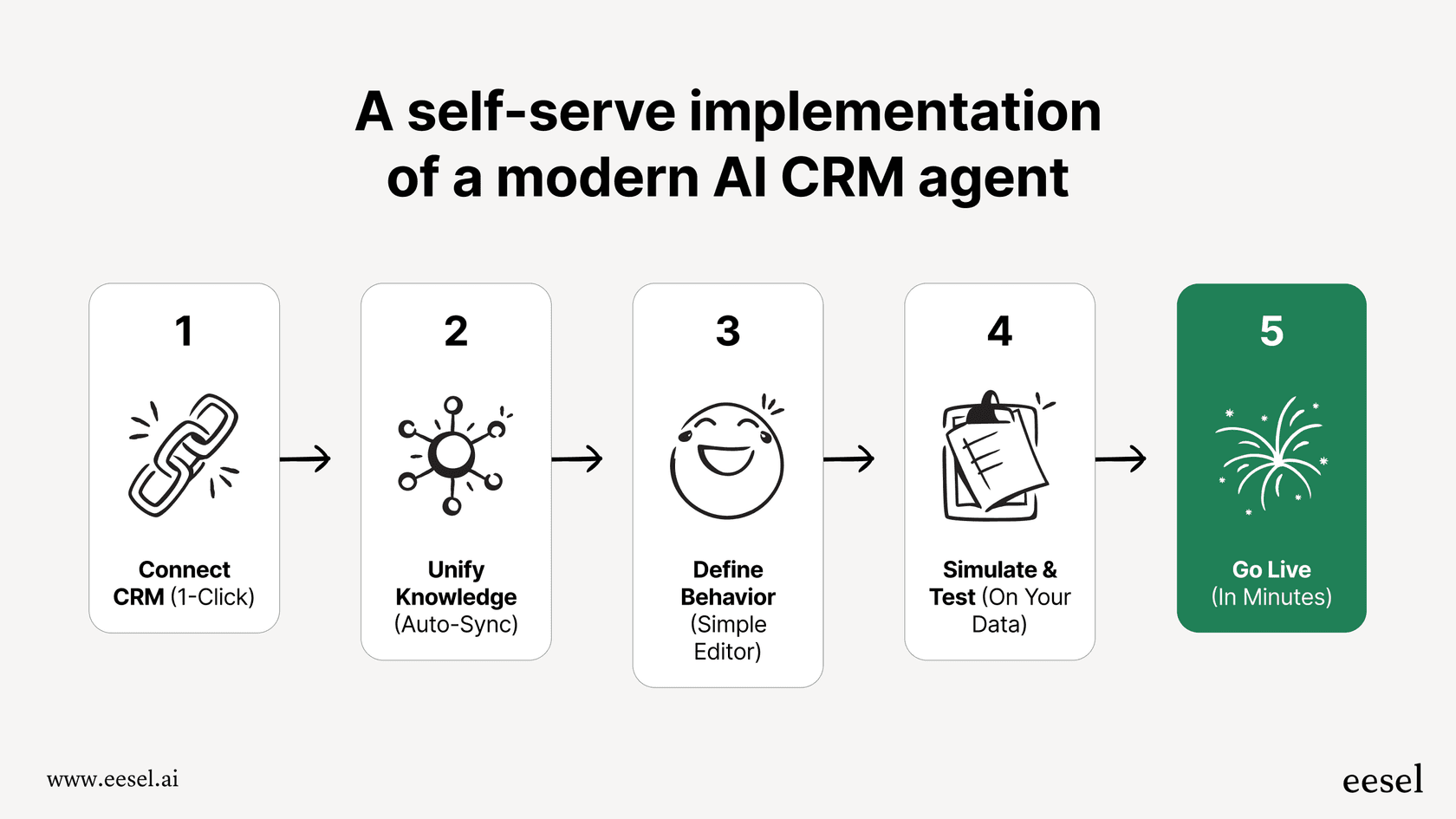
Unify your actual knowledge ServiceNow's AI works best when your data is already neatly tucked away in its ecosystem. But in reality, your team's knowledge is spread all over the place. eesel AI connects to all of it: your ticket history in Freshdesk, your internal guides in Notion, your technical docs on a public website, and your team's chats in Slack. It pieces together a single, powerful brain from all your scattered information.

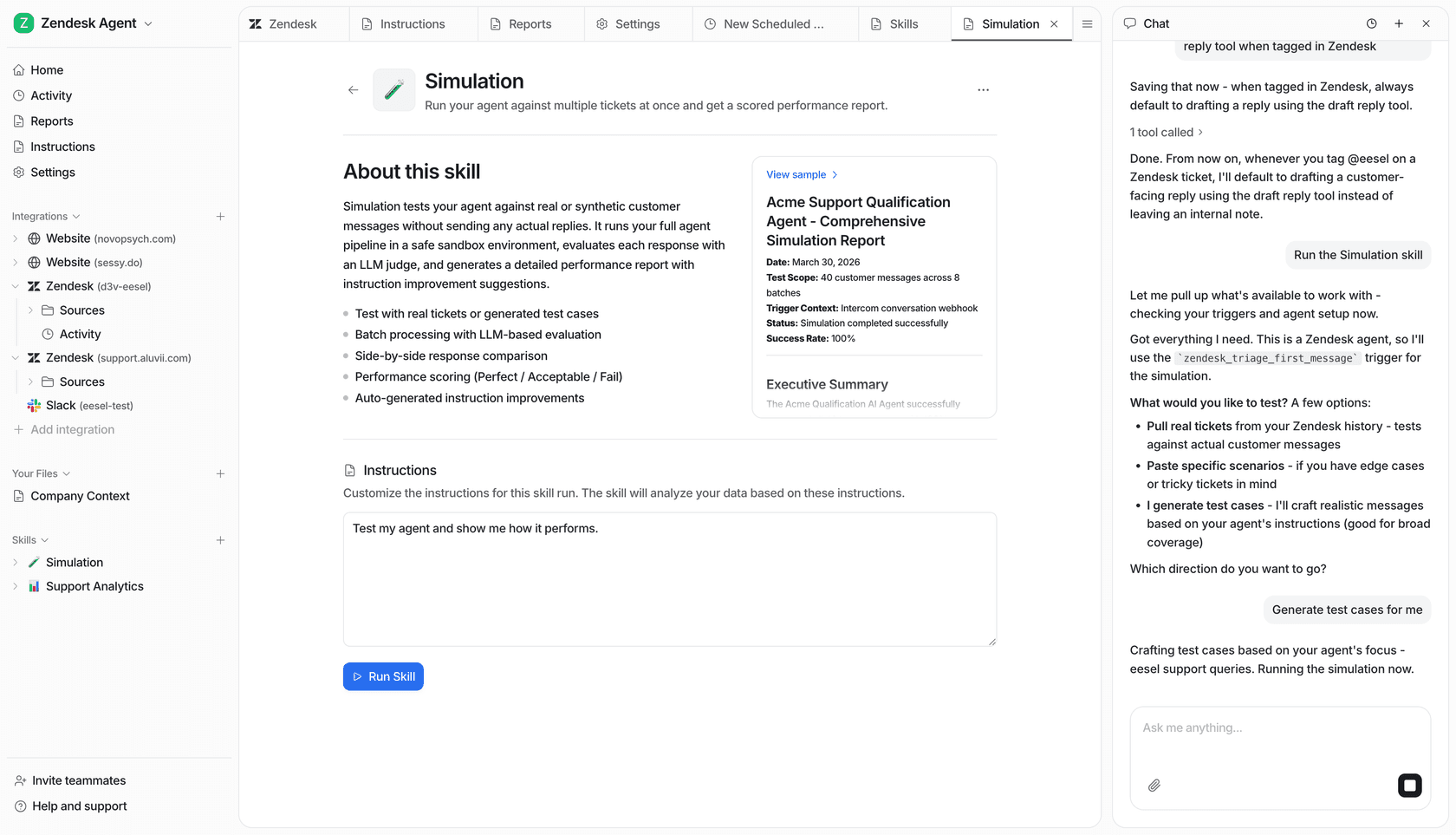
Test with confidence One of eesel AI's standout features is its simulation mode. You can test your AI setup against hundreds of your own past tickets, with each answer scored and fixes suggested for your instructions, before it ever interacts with a real user. This risk-free approach is useful for teams that need to prove the value of AI and make sure it meets their quality standards from day one.
What's the verdict on ServiceNow AI products?
Look, the ServiceNow AI products are a serious suite of tools for big companies that are already all-in on the platform. If you live and breathe ServiceNow, Now Assist and their AI Agents offer a unified, though complex, solution.
However, that power comes with a hefty price tag and a major commitment. Adopting ServiceNow's AI means locking yourself into a single ecosystem, complete with confusing pricing and a real risk of being stuck. For many teams, a more agile, integrated approach simply makes more sense. Solutions that plug directly into your current workflows offer a faster, more flexible, and more affordable way to bring powerful AI to your ITSM and customer support teams.
Ready to try an AI that works with your tools, not against them?
Get started with eesel AI in minutes. Connect your help desk and knowledge sources, and see how quickly you can automate frontline support and empower your team.
Frequently asked questions
What are the core ServiceNow AI products available to businesses?
The core ServiceNow AI offerings include Now Assist for generative AI capabilities, AI Agents and Virtual Agent for automation and user interaction, and older machine learning tools like Predictive Intelligence and Document Intelligence for tasks such as ticket routing and data extraction.
Are advanced ServiceNow AI products like Now Assist included in a standard ServiceNow license?
Not on its own. Now Assist is packaged into ServiceNow's tiers rather than sold at a public price. ServiceNow now lists a Now Assist tier inside each of its ITSM packages (Foundation, Advanced and Prime), all sold on a custom quote, so what you pay depends on the package you negotiate.
What are the biggest challenges companies face when implementing ServiceNow AI products?
Key challenges include the opaque and unpredictable pricing models, the extensive multi-month or multi-year implementation efforts, and the significant vendor lock-in that requires consolidating all data and workflows within the ServiceNow ecosystem.
How do ServiceNow AI products handle existing company data and knowledge?
ServiceNow AI products are designed to work best with data already residing within the ServiceNow platform. For optimal performance, companies usually need to undertake a massive, multi-year project to migrate all their knowledge, workflows, and historical data into the ecosystem.
To what extent can I customize the behavior of ServiceNow AI products like AI Agents?
While some customization is possible, it often requires specialized skills and working within ServiceNow's specific, sometimes rigid, automation tools. This can make it difficult to quickly adapt or modify the AI's behavior to evolving needs.
Who would most benefit from adopting ServiceNow AI products within their IT Service Management?
These products are primarily designed for large enterprises that are already deeply committed to and heavily invested in the broader ServiceNow platform. For such companies, the integrated suite offers a unified, though complex, solution.