


Trying to figure out AI pricing can be a real headache. You look at a platform like Sieve AI, and the questions start piling up. Are you paying per minute? Per API call? Something else entirely? It’s not always clear, and it gets even more confusing when you realize there are a couple of different "Sieve AIs" out there.
This guide is here to help you cut through the clutter. We’ll get clear on the different Sieve products, unpack the Sieve AI pricing model from the developer platform at sievedata.com, and talk about its limitations. We'll also show you why, for business needs like customer support, an all-in-one platform with predictable costs might save you a lot of time and money.
What is Sieve AI? (and which one are we talking about?)
First things first, let's clear something up. When you search for "Sieve AI," you'll find two different products that can easily be mixed up:
-
AI Sieve ("aisieve.app"): This was a learning tool for summarizing and chatting with podcasts and webinars, built for individual users. The domain no longer loads as of October 2026.
-
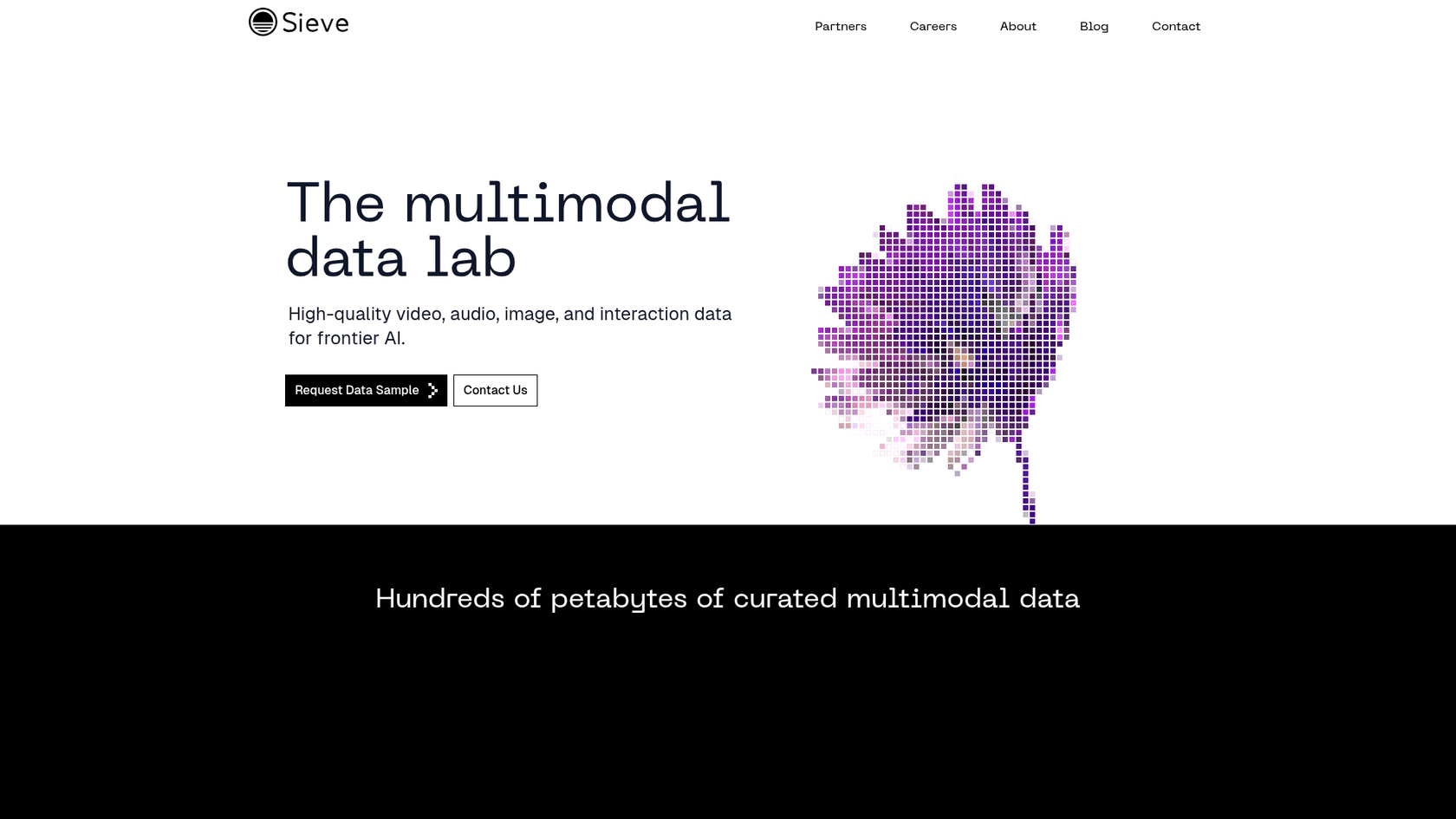
Sieve ("sievedata.com"): It began as a much bigger, developer-focused cloud platform with APIs and infrastructure for building AI applications that work with video and audio. In its March 2026 post, Sieve says it moved to supplying multimodal datasets, and its site now calls it a multimodal data lab.
This guide is all about the second one: Sieve from sievedata.com. This is the platform you’d use if you wanted to build AI features from the ground up, and its pricing is a whole different ballgame. It’s a box of parts for developers, not a finished product you can use right away.
Key features of the Sieve AI platform
At its core, Sieve is a powerful toolkit for developers. It gives them the raw ingredients, APIs and infrastructure, to build advanced audio and video AI features into their own apps, without having to manage all the complex server stuff themselves.
Here’s a quick rundown of what the API platform could do before the shift (its docs at docs.sievedata.com no longer resolve, so I could not re-check these):
-
Audio Transcription: Sieve has a very competitive audio transcription service. They've fine-tuned OpenAI's Whisper model to offer it at a price they claim is much lower than many competitors.
-
Video and Audio Intelligence: Its APIs can do some pretty cool stuff, like AI-powered video dubbing, removing backgrounds from images, translating audio, and creating summaries from media files.
-
Custom AI Model Deployment: If your team already has its own machine learning models, Sieve gives you the infrastructure to get them up and running at scale without the headache of managing servers.
-
Video Datasets: Sieve also provides high-quality video datasets for AI research teams who are training the next wave of AI models for things like video generation.
Basically, Sieve hands you the raw materials. It's then up to your engineering team to take these pieces and build them into a real, working application that your users or customers can interact with.
A detailed look at Sieve AI pricing
Okay, this is where things can get a bit confusing. Sieve AI pricing isn't based on simple monthly plans. It’s a usage-based model, which can be great for flexibility but a nightmare for budgeting.
The pay-as-you-go model
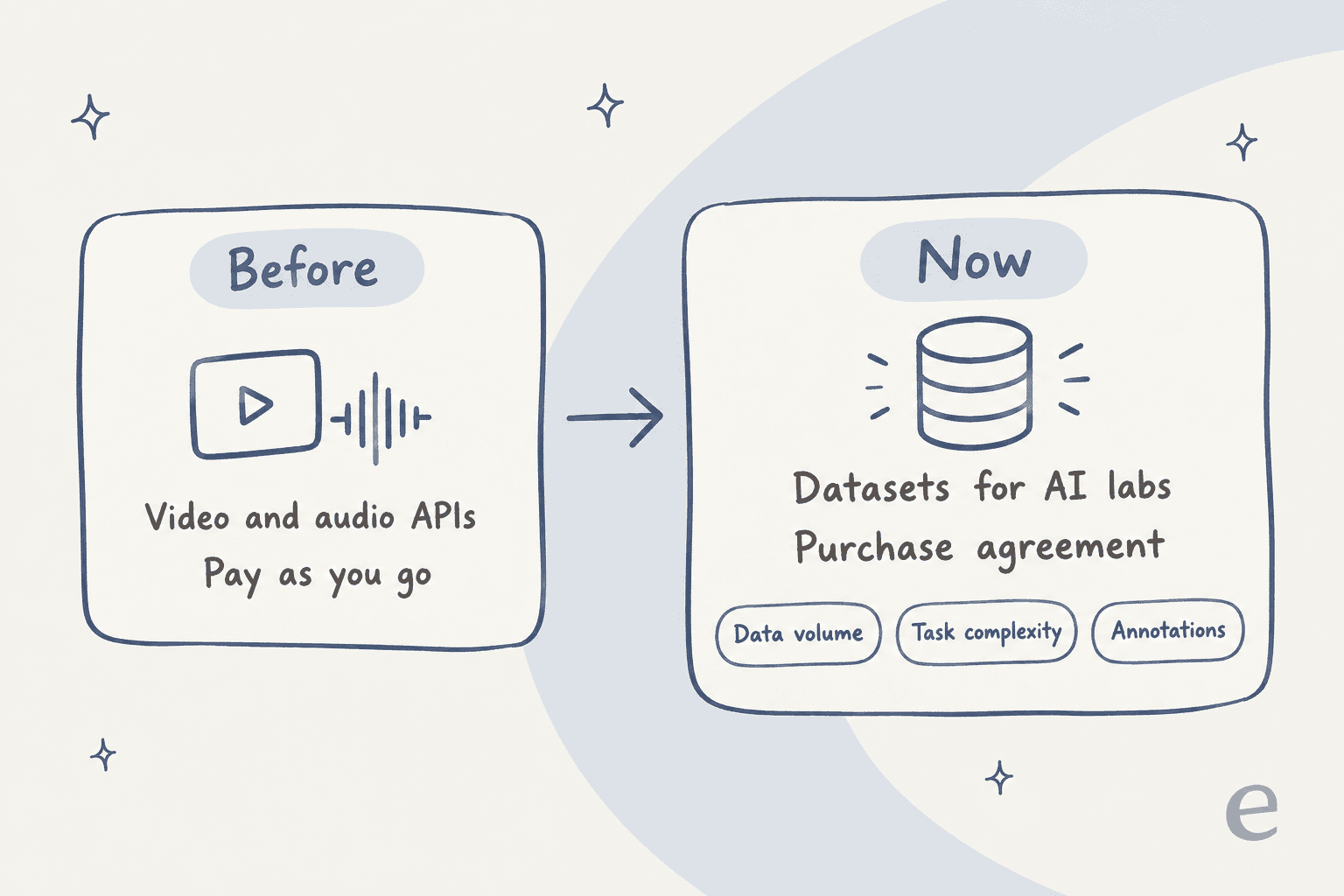
Sieve's main API pricing was pay-as-you-go. You were charged for the computing power your API calls used, measured down to the second, so your monthly bill tied directly to how much your application used the service. Its former docs said every new account got $20 in free credits (that docs page no longer loads).
Today the price is a quote: datasets are sold under a purchase agreement based on data volume, task complexity, and annotations.
Pricing for transcription services
Audio transcription was one of Sieve's main draws, and it was priced aggressively. By optimizing open-source models, Sieve got its costs down significantly.
Here's how it stacked up against others, based on Sieve’s own analysis (that post is no longer online):
| Solution | Cost per Hour |
|---|---|
| Sieve (speed_boost) | $0.05 |
| Sieve (decode_boost) | $0.179 |
| Deepgram (Nova 2) | $0.258 |
| AssemblyAI | $0.65 |
| RevAI | $1.20 |
For reference, Deepgram now lists Nova-3 at $0.0043 per minute on pay as you go, which works out to the same $0.258 per hour as the Nova 2 row. Those numbers are definitely eye-catching, but it's important to remember this pricing applied to Sieve's own transcription service. The cost for using other features or models can be a completely different story.
The hidden costs of using third-party models
While Sieve's in-house services were cheap, here’s a detail that mattered. When you used Sieve to run popular models from other companies, things could get expensive. According to analysis from competitors like Camb AI, Sieve added a hefty markup on APIs from providers like ElevenLabs (for voice generation) or OpenAI.
What does that mean for you? If you want to build a workflow that uses top-tier models from different providers, running them all through Sieve could have cost you way more than using those services directly. This lack of clear pricing makes it really tough to forecast your budget and can lead to some nasty surprises on your bill.
Limitations of the building-block approach
Look, Sieve is a great tool if you're a developer with a specific task in mind. But for a business team that just needs a solution that works, this "build-it-yourself" approach has some serious downsides.
It's a huge project for your developers
Sieve gives you APIs, not a ready-to-use product. To get any real value out of it, you need a team of developers to do all the heavy lifting:
-
Integrate the APIs with your current systems.
-
Build a user interface so people can actually use it.
-
Maintain the whole thing and fix bugs as they pop up.
This isn't a weekend project. It often means months of development work and a big internal investment before you even start to see a payoff.
Why costs are unpredictable
As we've seen, Sieve's former pay-as-you-go pricing made your monthly bill a guessing game, and today's dataset quotes are set deal by deal. What happens if you get a sudden spike in customer questions? Your bill could shoot up unexpectedly. For any business that needs a stable budget, this kind of volatility is a major problem. You're paying for raw compute time without really knowing what the final cost will be.
It doesn't understand your business
Sieve is a general platform. It has no idea what customer support is, or IT service management, or any other business process. If you want to build an AI agent that can figure out what a customer wants, know when to escalate a ticket, or tag issues correctly, you have to design and code every single piece of that logic from scratch.
eesel AI: The all-in-one alternative for support automation
So, if your goal is to actually automate customer support or make your internal help desk more efficient, building everything from scratch with a tool like Sieve is probably the longest, most expensive way to get there. A much better path is an all-in-one platform like eesel AI, which is built for exactly this job.
Go live in minutes, not months
Unlike Sieve, eesel AI is a self-serve platform that requires zero developers. Seriously. You can connect your help desk and knowledge bases with one-click integrations for tools you already use, like Zendesk, Freshdesk, and Slack. You can have a fully working AI agent up and running in a few minutes.
Transparent and predictable pricing
With eesel AI, you get simple, clear pricing plans based on a set number of credits per month (1 credit per ticket or chat), from $299/month for 500 credits, plus a free plan with 100 credits. There are no hidden per-resolution fees or confusing calculations based on compute seconds. You know exactly what you’re paying each month, which makes it easy to manage your budget and show a return on your investment. It's a world away from the guesswork of usage-based Sieve AI pricing.
A complete solution, not just building blocks
eesel AI isn't a box of parts; it's the whole machine. It comes with smart, pre-built workflows that you can tweak from a simple dashboard.
-
It learns from your data: eesel AI automatically connects to your knowledge bases in places like Confluence and learns from your past support tickets. This helps it understand your business and reply to customers in your brand's voice.
-
It comes with powerful tools: You get an AI Agent to resolve tickets on its own, an AI Copilot to give your human agents superpowers, and AI Triage to automatically route and tag incoming questions.
-
You can test it with confidence: With a simulation mode, you can test your AI on thousands of your actual past tickets to see exactly how it would have performed. This lets you dial everything in perfectly before you turn it on for your customers. You just can't do that with an API-first platform like Sieve.
The build vs. buy decision: Which is right for you?
When you get down to it, the choice between Sieve and a platform like eesel AI is the classic "build vs. buy" decision.
Sieve is a fantastic platform for well-funded engineering teams that need to build completely custom AI applications for audio and video. Its former usage-based pricing offered a lot of flexibility, but it came with a big dose of complexity and unpredictability.
For most business teams, especially in customer support, IT, or internal operations, the choice is much simpler. eesel AI gives you a complete, intelligent automation solution that you can set up in minutes, with costs you can predict and a clear path to getting value. It frees you up to focus on making your customer experience better, not managing a long and complicated engineering project.
Ready to see what a truly self-serve AI platform can do? Start your free trial of eesel AI today.
Frequently asked questions
How is Sieve AI pricing structured for developers using "sievedata.com"?
Sieve AI pricing used to be pay-as-you-go, with API calls billed for compute time measured to the second. Today sieve.ai sells datasets under a purchase agreement based on data volume, task complexity, and annotations, with no public price list.
What are the costs associated with Sieve AI pricing for audio transcription services?
Before its pivot, Sieve published very competitive transcription rates: "speed_boost" at $0.05 per hour and "decode_boost" at $0.179 per hour, per a Sieve blog post that is no longer online. I could not confirm current API rates, since its former docs no longer resolve.
Why might Sieve AI pricing be considered unpredictable for a business budget?
Sieve AI's former API pricing was usage-based, meaning costs fluctuated with your application's activity. Unexpected spikes in usage, such as increased customer interactions, can lead to unpredictable and potentially high monthly bills, making financial forecasting difficult.
How does the Sieve AI pricing model compare to all-in-one solutions for customer support automation?
Unlike Sieve's former usage-based, compute-centric Sieve AI pricing or its custom dataset quotes, all-in-one platforms like eesel AI offer transparent and predictable monthly pricing plans. These plans are based on a set number of credits (1 credit per ticket or chat), starting at $299/month for 500 credits, providing clear costs without hidden fees.
Can I try Sieve AI before fully committing to its Sieve AI pricing model?
Sieve's former API docs offered $20 in free credits to new accounts, but those docs no longer load. Its current dataset offer starts with a data sample request instead.